

Pakistan growth could reach 4% or more this fiscal year, Aurangzeb says
Finance minister outlines further Panda bonds, sukuk and a rupee-denominated, dollar-settled international bond as Pakistan seeks cheaper, longer-term financing

Business Desk
The Business Desk tracks economic trends, market movements, and business developments, offering analysis of both local and global financial news.
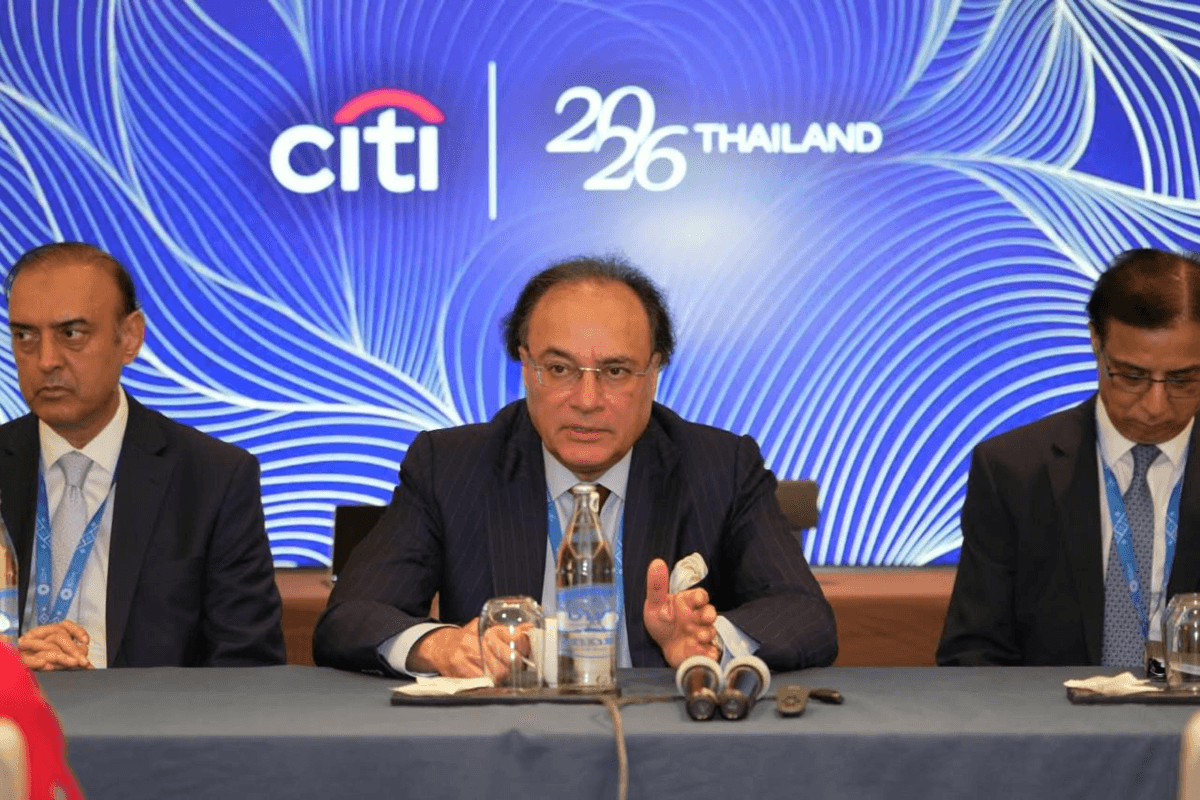
Federal Minister for Finance and Revenue, Senator Muhammad Aurangzeb, participated in the Citi Macro Forum Session and briefed international investors on Pakistan’s economic outlook and reform priorities.
Finance Division
Pakistan’s economic growth could reach or exceed 4% during the current fiscal year, Finance Minister Muhammad Aurangzeb said at the Citi Macro Forum in Bangkok on Wednesday, where he briefed international investors on the country’s economic outlook and reform priorities.
Aurangzeb highlighted continued macroeconomic stabilization, three consecutive years of primary surpluses, a fiscal deficit at a 22-year low and stronger foreign exchange buffers, according to the Finance Division.
What is Pakistan’s economic and financing strategy?
Pakistan is seeking to preserve macroeconomic stability while broadening its funding base, lowering borrowing costs and extending debt maturities. Aurangzeb said the government plans further Panda bond issuances, sukuk and a rupee-denominated, dollar-settled international bond, alongside tax-base expansion, stronger enforcement and closer provincial coordination under the IMF program.
Panda bonds are yuan-denominated bonds issued by foreign borrowers in China’s domestic market.
Aurangzeb said Pakistan’s capital-market strategy was focused on diversifying funding sources, lowering borrowing costs and extending debt maturities.
He also discussed progress under Pakistan’s International Monetary Fund program, including tax-base expansion, stronger enforcement and coordination with provincial governments to sustain fiscal discipline.
Middle East conflict and climate risks also discussed
Addressing the impact of the Middle East conflict, Aurangzeb outlined measures to maintain energy supplies and provide targeted relief to vulnerable groups within existing budgetary allocations.
The discussions also covered climate resilience, disaster preparedness and the effective use of development financing.
Aurangzeb reaffirmed Pakistan’s commitment to sustained economic reforms and a transition from aid toward trade and investment in its partnerships with other countries.





Comments
See what people are discussing