

Pakistan households eat less despite signs of economic stability
New survey shows broad decline in food consumption and rising food insecurity

Haris Zamir
Business Editor
Experience of almost 33 years where started the journey of financial journalism from Business Recorder in 1992. From 2006 onwards attached with Television Media worked at Sun Tv, Dawn Tv, Geo Tv and Dunya Tv. During the period also worked as a stringer for Bloomberg for seven years and Dow Jones for five years. Also wrote articles for several highly acclaimed periodicals like the Newsline, Pakistan Gulf Economist and Money Matters (The News publications)
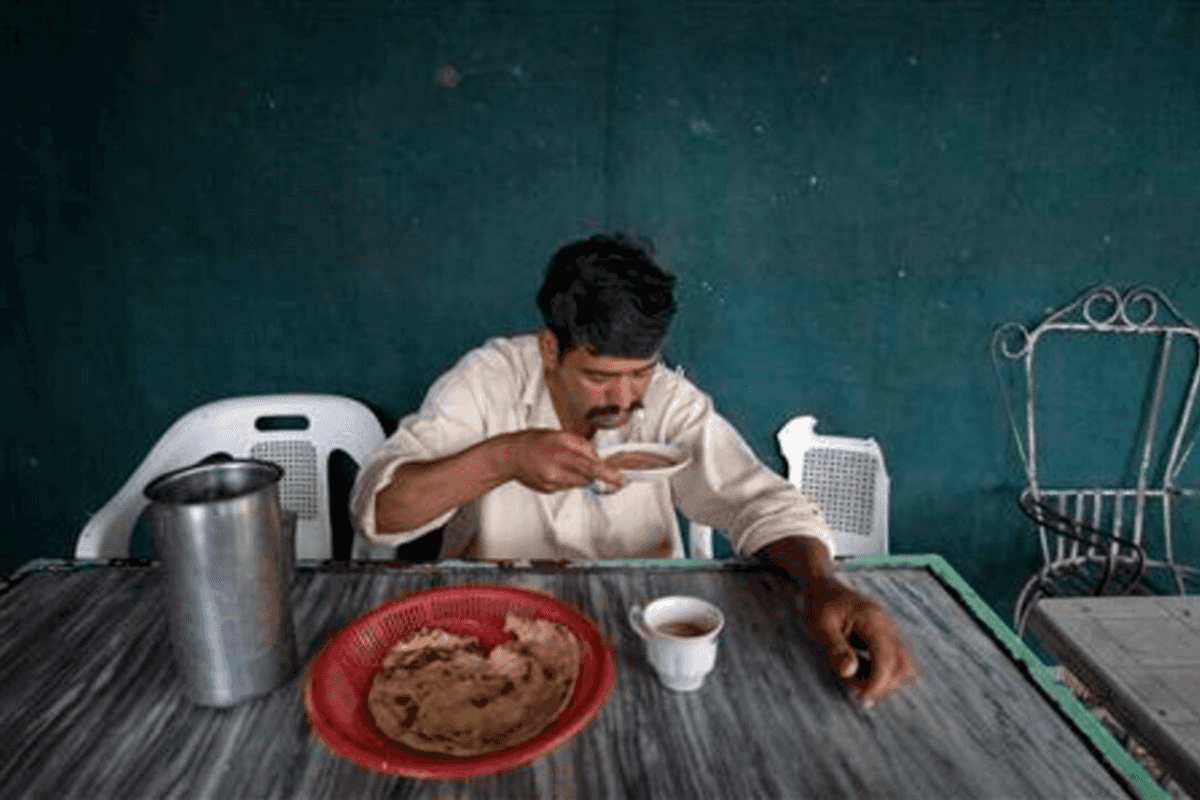
Pakistan’s economy appears steadier on the surface, with easing inflation, a buoyant stock market and a more stable external account. But a new government survey shows that households across the country are consuming less food than they did years ago, highlighting a growing gap between macroeconomic indicators and everyday living conditions.
The latest Household Integrated Economic Survey (HIES) for 2024-25, released this week, shows a broad-based decline in per capita food consumption compared with the previous survey in 2018-19. The drop cuts across income groups, regions and demographic categories, suggesting that the trend is not limited to the poorest households.
In several staple foods, consumption is even lower than it was two decades ago, according to the survey. Economists say the data points to a prolonged erosion of household welfare rather than a short-term adjustment.
The survey also found that about 24% of households face moderate to severe food insecurity, up sharply from 16% in 2018-19. Analysts say the increase undermines arguments that falling consumption of wheat and rice reflects healthier or more diversified diets.
“This does not look like a population making lifestyle-driven food choices,” said one economist familiar with the data. “It looks like households cutting back because food has become less affordable.”
Consumption of pulses — a key and relatively inexpensive source of protein for millions of Pakistanis — remains well below levels recorded two decades ago. Milk intake has also declined despite population growth and increasing urbanization. Beef and mutton consumption has continued a long downward trend, while gains in chicken consumption have stalled.
Wheat and wheat flour consumption has steadily fallen over time, and rice has not made up the difference. Cooking oil consumption has increased, but economists say this likely reflects coping behavior, as oil is a cheaper way to add calories to meals when other foods are out of reach.
Tea consumption, by contrast, continues to rise — a pattern some analysts view as emblematic of households stretching limited food budgets.
The findings come as Pakistan’s government has pointed to slowing inflation and improving financial indicators as signs of stabilization after years of economic turmoil. While price increases have moderated, many households are still grappling with the cumulative impact of higher costs for energy, housing, transport and basic services.
“Real incomes have been squeezed for years, and sharply so in the past three to four years,” said another analyst. “Food is being crowded out of household budgets by expenses people cannot avoid.”
Health experts warn that the consequences of sustained underconsumption may take time to become visible but could be severe. Reduced intake of protein and dairy is linked to higher rates of stunting, weaker immune systems and lower cognitive outcomes, all of which can weigh on long-term productivity and raise future health care costs.
The survey’s authors and independent economists say the data should be treated as a warning rather than a routine statistical update.
“If people are eating less today than they did five, 10 or 20 years ago, even during periods of relative economic calm, it suggests a deeper problem in how growth and stability are being achieved,” one economist said.
As policymakers highlight calmer financial conditions, the HIES data suggests that for many Pakistani households, stability has yet to reach the dinner table.





Comments
See what people are discussing