

Pakistan agrees to sweeping anti-corruption reforms under IMF loan deal
Fund hails recent report on transparency, stresses need to ‘resist pressures to weaken fiscal discipline’

Business Desk
The Business Desk tracks economic trends, market movements, and business developments, offering analysis of both local and global financial news.
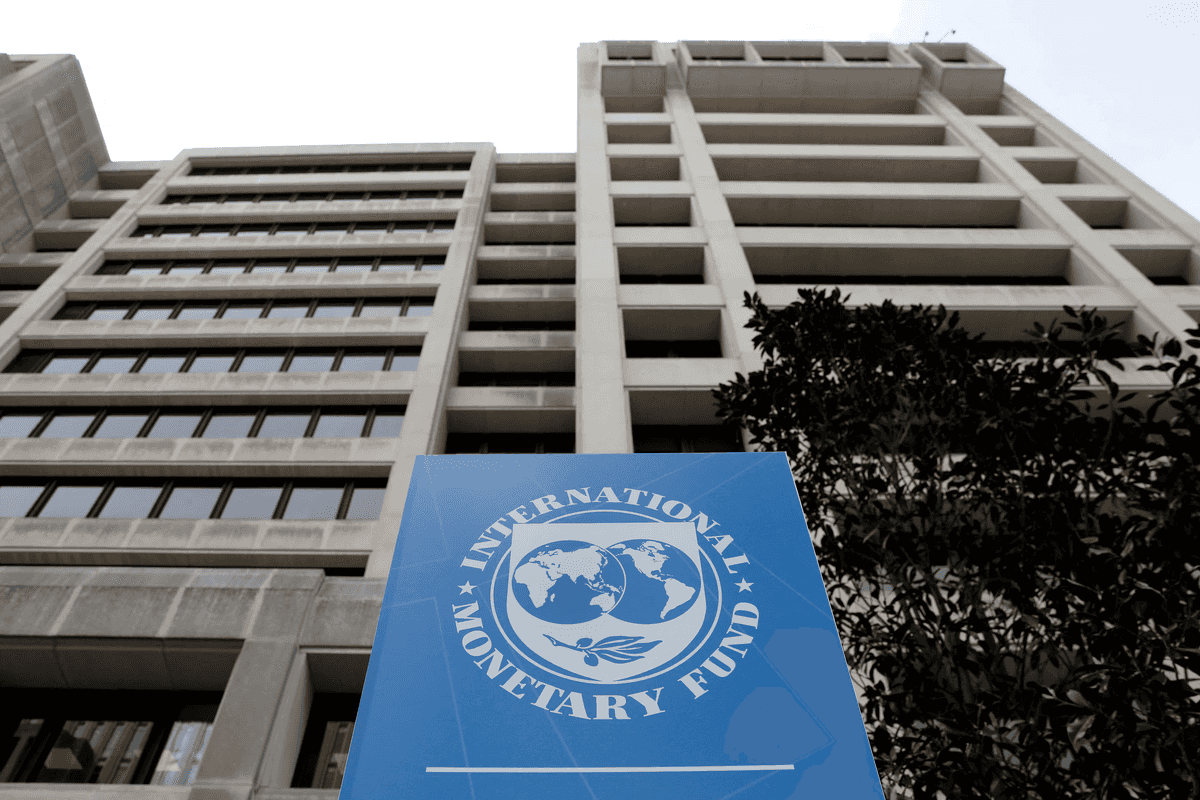
The International Monetary Fund (IMF) headquarters building in Washington
Pakistan has committed to sweeping transparency reforms just days before the International Monetary Fund (IMF) approved the country’s latest loan installment, according to the Fund’s country report.
The IMF said the Governance and Corruption Diagnostics (GCD) report, a key prior action for the loan tranche, had been delayed for months due to “the need for thorough consultations with government agencies,” but was ultimately completed and published ahead of the Board’s approval.
The Fund called the report an essential step toward strengthening anti-corruption institutions and unlocking long-term economic growth.
“The publication of the GCD report and amendments to asset-declaration frameworks are advancing transparency,” the IMF said in its country report, adding that authorities had reiterated their determination to pursue structural reforms and resist pressures that weaken fiscal discipline.
Under the program, Pakistan must adopt a series of governance measures—including action plans, regulatory reforms and enhanced public disclosures—that the IMF describes as foundational for “strong and sustainable growth.”
The centerpiece of the new governance reforms is the digitization and publication of asset declarations for high-level public officials.
After Parliament amended the Civil Servants Act of 1973—a structural benchmark for June—the government is now preparing detailed regulations to be issued by the end of December 2025.
According to the IMF, these regulations will include a centralized digital system for asset declarations for high-level federal civil servants. They will also have to disclose domestic and foreign assets beneficially owned by officials and their families
The regulations will also entail “sufficient safeguards” for privacy and risk-based verification procedures.
Once these regulations are in place, the IMF said, Pakistan will make the asset declarations of senior federal civil servants publicly available on a government website by the end of December 2026.
The authorities are also committed to expanding the digital-declaration requirement to all senior officials in federal and provincial governments, covering officers from BPS 17 to 22 or equivalent, including those serving in state-owned companies and autonomous bodies.
Banks to gain access for AML/CFT monitoring
By the end of December, the Federal Board of Revenue will issue a notification granting banks access to asset declarations of all high-level public servants for anti–money laundering and counter-terrorism financing (AML/CFT) purposes.
This access will apply across federal and provincial governments as well as public corporations.
The IMF report says Pakistan will conduct an institutional-level corruption risk assessment, led by the National Accountability Bureau in coordination with civil society and governance experts.
The exercise will identify the ten government departments with the highest corruption vulnerabilities and produce a mitigation plan to be published following Federal Cabinet approval. This reform is now a new structural benchmark for end-October 2026.
Strengthening provincial anti-corruption bodies
Meanwhile, Provincial Anti-Corruption Establishments (PACEs) will receive upgraded capacity to conduct financial investigations.
A federal notification — due by December 2026 — will designate PACEs as authorized agencies for probing money-laundering cases tied to corruption and allow them to request financial intelligence from the Financial Monitoring Unit.
The IMF welcomed the publication of the report and the planned overhaul of governance frameworks, warning that failure to advance these reforms would risk investor confidence and growth prospects.
“We will strengthen our institutional capacities to fight corruption to support inclusive growth and provide a level playing field for businesses and investments,” the authorities told the IMF.
The Fund stressed the need to “resist pressures to weaken fiscal discipline” and to maintain momentum on anti-corruption reforms—conditions it considers essential for continued financial support.





Comments
See what people are discussing