

Pakistan inflation eases to 10.26% in September as energy costs rise
Annual CPI slows from 11.15% in August but prices rise 1.27% during the month, with electricity and motor fuel costs remaining key pressure points

Business Desk
The Business Desk tracks economic trends, market movements, and business developments, offering analysis of both local and global financial news.
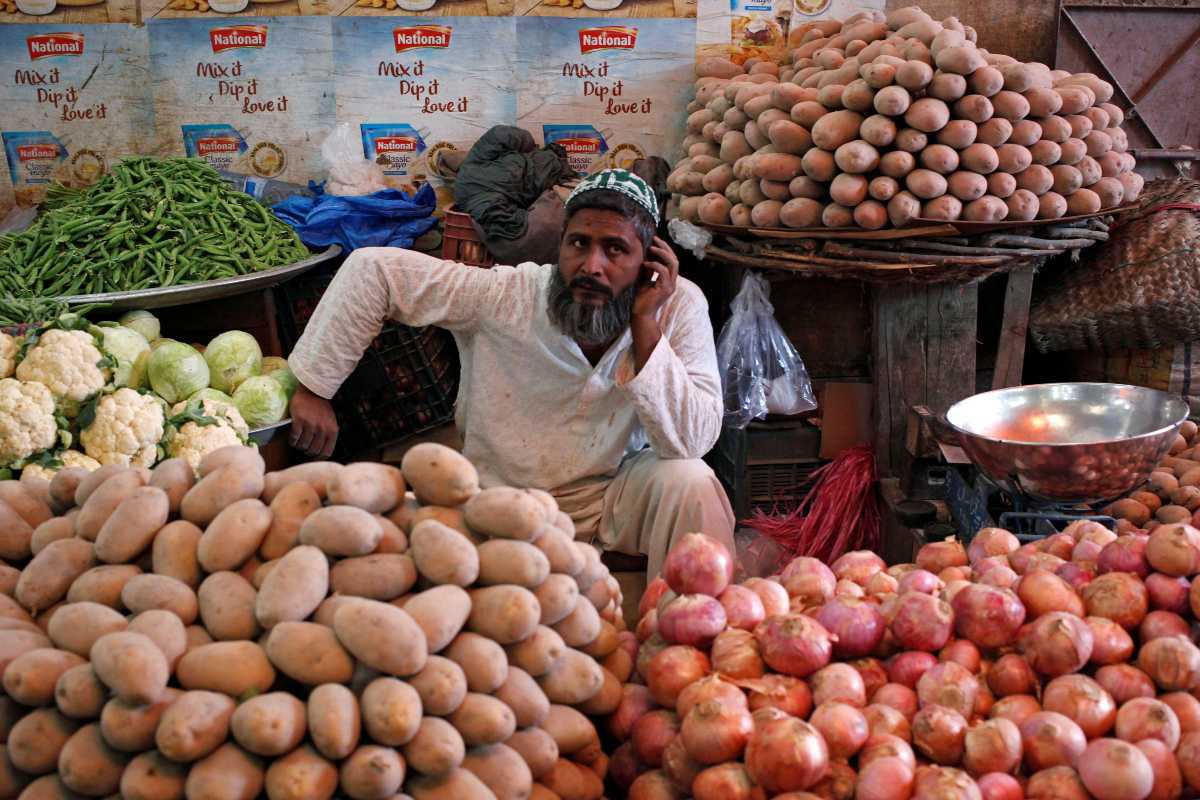
The September CPI reading was broadly in line with market expectations
Reuters
Pakistan’s annual consumer inflation eased to 10.26% in September from 11.15% in August, while the Consumer Price Index (CPI) rose 1.27% during the month, according to the Pakistan Bureau of Statistics (PBS).
Despite easing from August, annual inflation remained well above the 5.76% recorded in September 2025.
The September reading was broadly in line with market expectations. Topline Research said the 10.26% inflation rate was close to the 10.2% estimate in a Bloomberg survey.
Urban core inflation, measured by non-food non-energy inflation, eased to 8.6% in September from 8.8% in August, but remained above the 7% recorded in September 2025.
Inflation averaged 10.20% during the first quarter of fiscal year 2027, compared with 4.30% during the same period of fiscal year 2026.
Urban inflation stood at 10.12% year on year and increased 1.31% during September, while rural inflation was 10.47% year on year and rose 1.23% during the month.
At the national level, food and non-alcoholic beverage prices increased 0.19% during September and were 8.20% higher than a year earlier.
The September data showed mixed food-price movements across urban and rural areas, while sharp increases in electricity and motor fuel prices added pressure during the month. Onions rose strongly, while tomatoes, chicken, eggs and potatoes became cheaper in both urban and rural baskets.
Which food prices changed the most in September?
Urban food prices moved in both directions in September, with onions up 29.17% and wheat 3.86%, while tomatoes fell 24.67% and chicken 8.14%. Rural consumers saw an even sharper 39.38% increase in onion prices, while tomatoes dropped 27.87% and chicken fell 7.57%.
In urban areas, besan prices increased 2.74%, wheat flour rose 2.28%, pulse gram 1.82%, wheat products 1.60%, masoor lentils 1.56% and dry fruits 1.27%.
Among urban food items that became cheaper, eggs fell 5.92%, potatoes 4.19%, moong lentils 2.09%, fresh vegetables 1.49% and sugar 0.88%.
In rural areas, gram lentils increased 2.42%, wheat flour 1.72%, gram whole 1.10%, wheat 1% and fresh vegetables 0.87%.
Rural consumers also saw moong lentils fall 3.41%, eggs 2.92%, fresh fruits 2.56%, potatoes 2.30% and sugar 1.70%.
The figures represent month-on-month changes in the urban and rural CPI baskets and show that individual food prices moved sharply in both directions even as overall national food prices increased only modestly during September.
How much did energy prices rise?
Energy-related prices rose sharply during September. In urban areas, electricity charges increased 15.28%, motor fuel rose 10.76% and liquefied hydrocarbons increased 5.37%. In rural areas, electricity charges also rose 15.28%, while motor fuel increased 11.13% and liquefied hydrocarbons climbed 7.58%.
Urban prices for drugs and medicines increased 0.98% during the month.
The increases in electricity and fuel came as overall urban prices rose 1.31% during September and rural prices increased 1.23%.





Comments
See what people are discussing