


Razi Wani
Producer - News Desk
Razi Ud Din Ahmed Wani is a multimedia journalist and digital storyteller with a strong background in fact-checking, South Asian politics, documentary filmmaking, scriptwriting, and digital content production. With an MA in Mass Communication from the University of Karachi, he has experience directing and scripting web series and socio-political satires. And has worked across various media and digital platforms, focusing on emerging trends and storytelling formats.
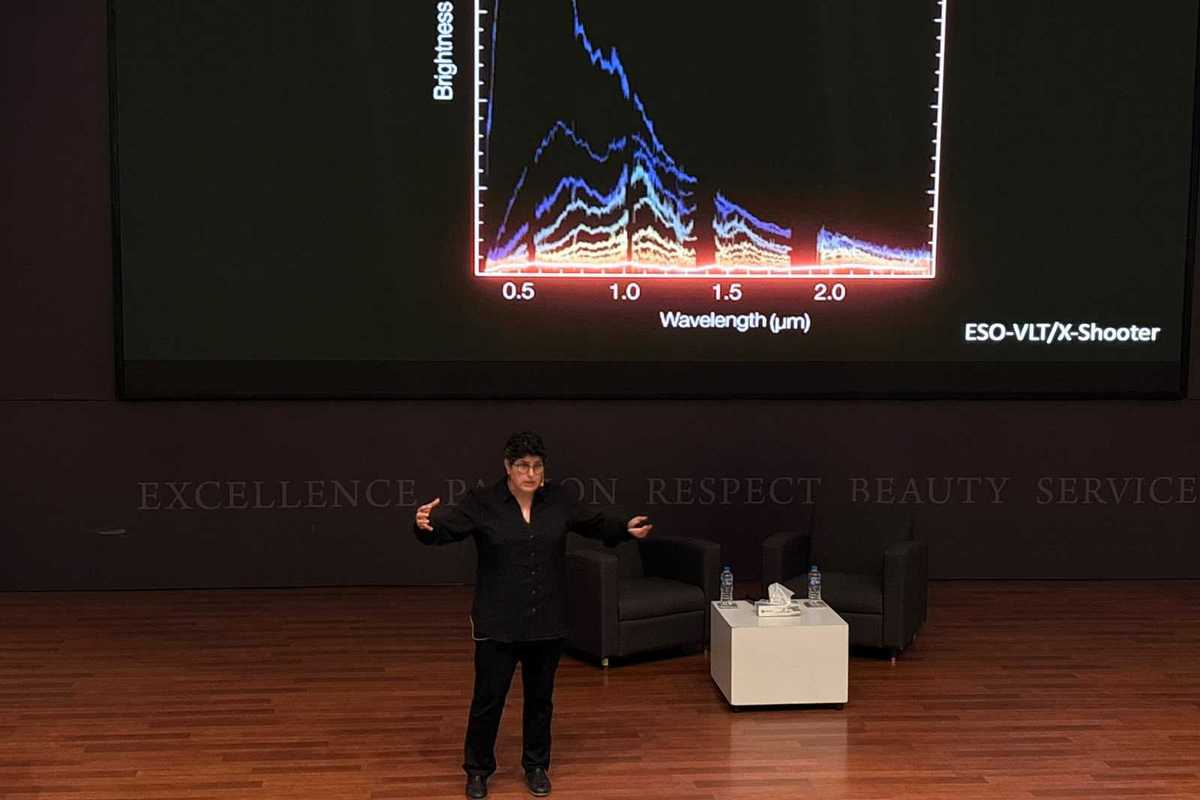
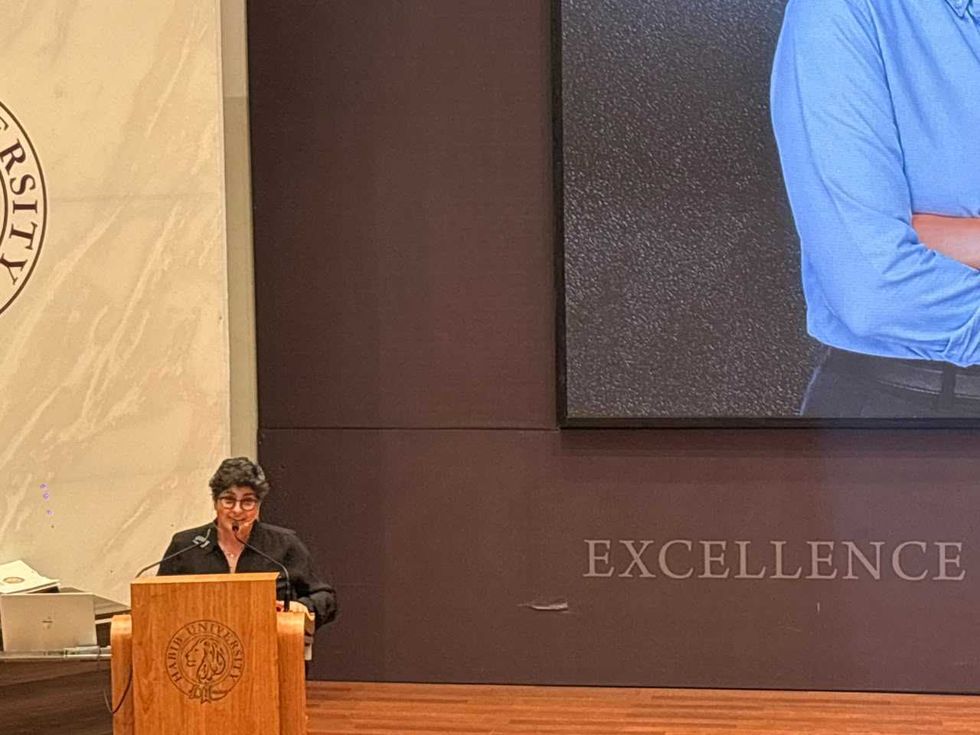
Nergis Mavalvala delivering Habib University’s 10th Yohsin Lecture in her hometown of Karachi on Friday.
Nukta
Every child is born with an instinct to question, experiment and understand the world around them, physicist and MIT School of Science Dean Nergis Mavalvala said Friday, calling for curiosity-driven research and critical thinking at a time when scientific knowledge faces growing skepticism.
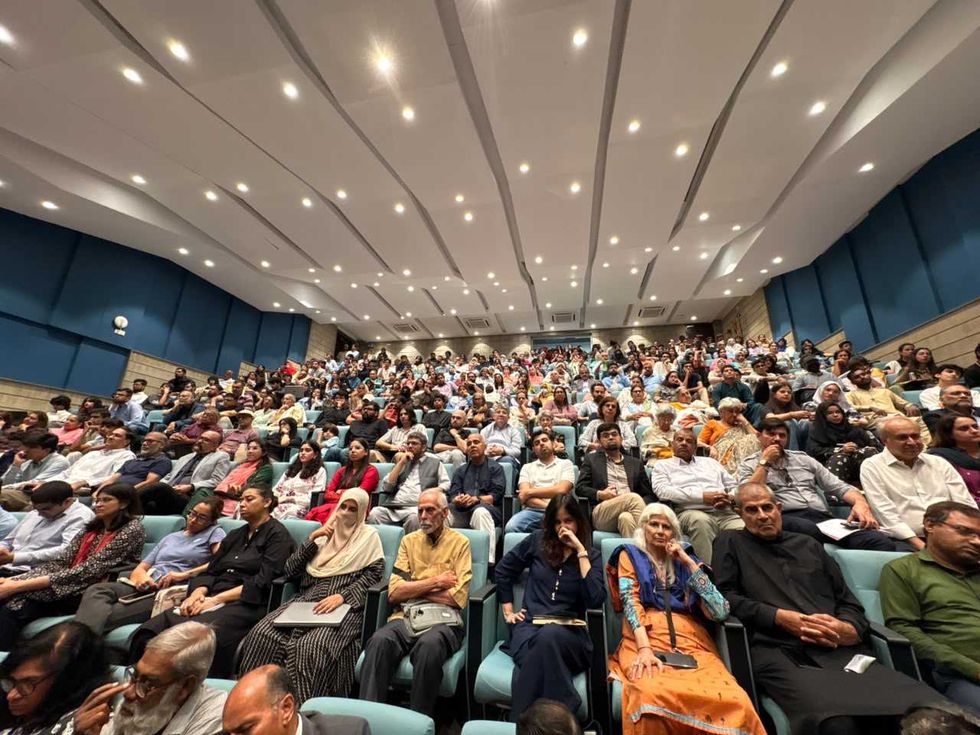
“Every single person at birth is research-minded. There is not a child that isn’t doing experiments every moment of their cognition,” Mavalvala said while delivering Habib University’s 10th Yohsin Lecture in her hometown of Karachi.
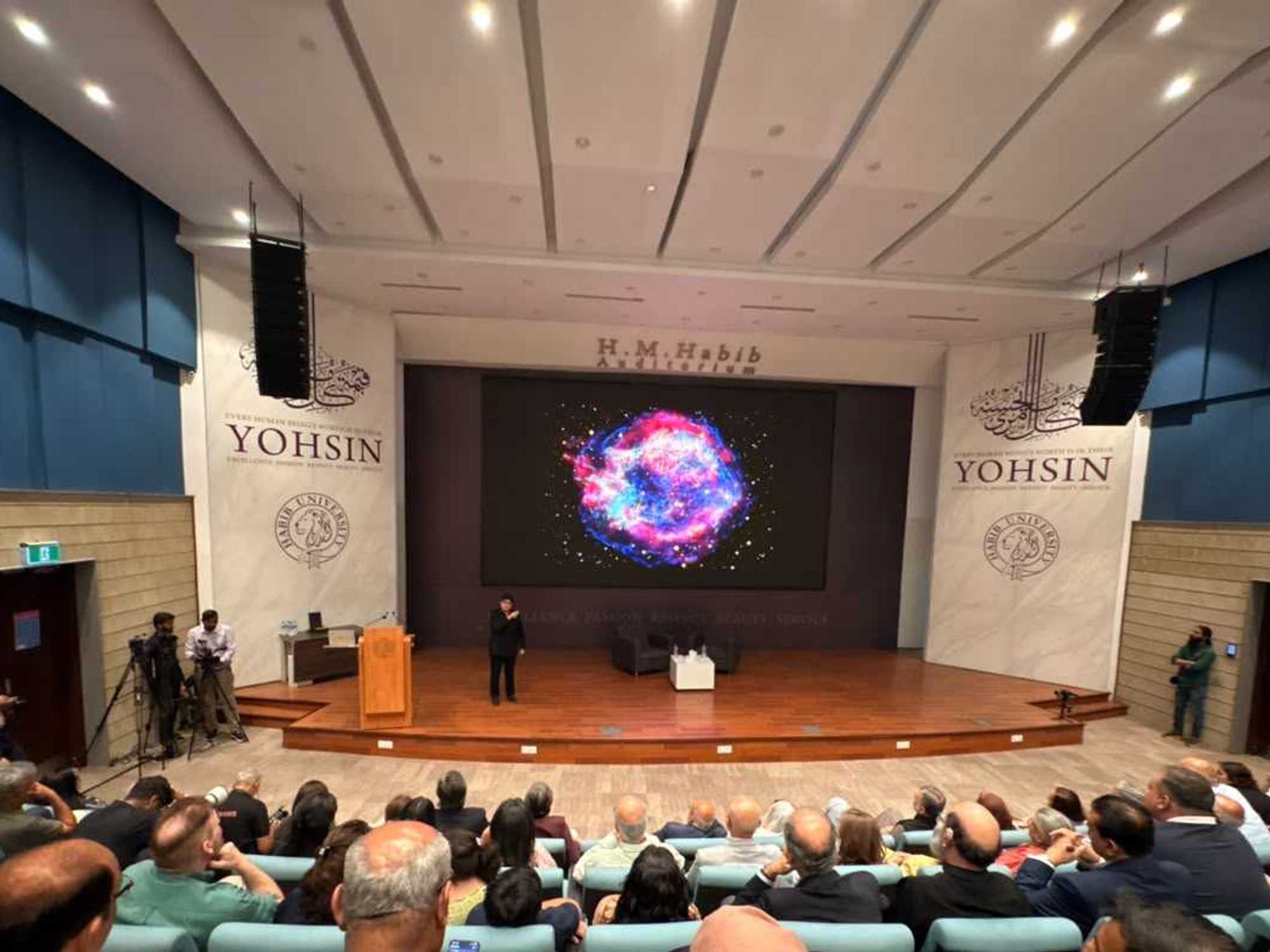
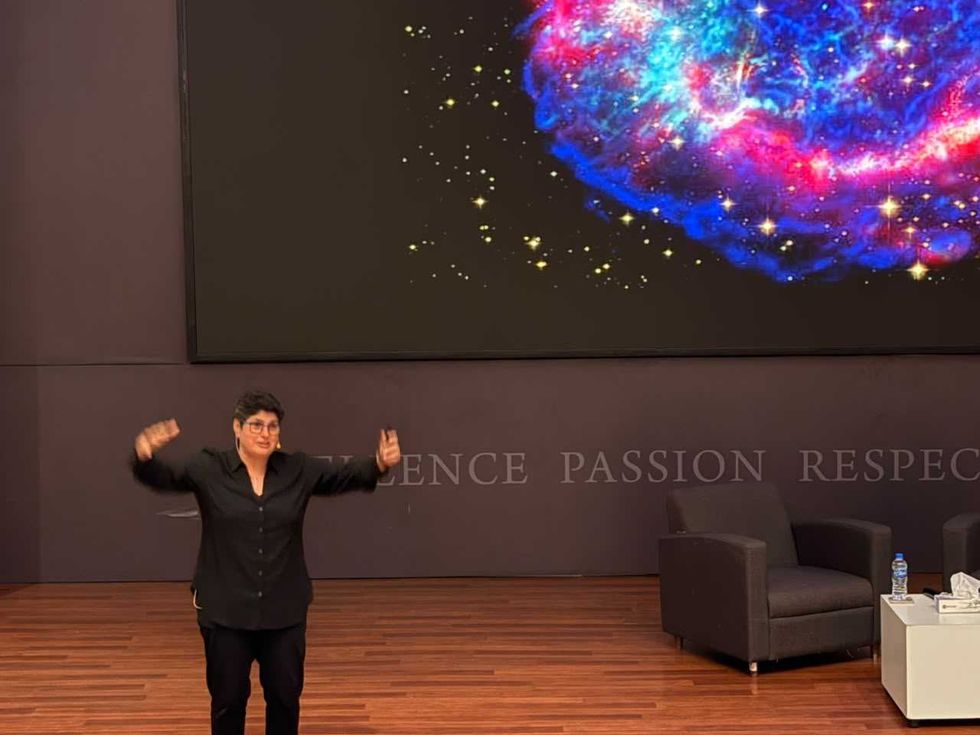
Titled “The Joy of Discovery: Curiosity, Science, and the Pivotal Role of Universities,” the lecture drew on Mavalvala’s scientific journey, the history of gravitational-wave detection and her views on the opportunities and risks posed by artificial intelligence.
From Karachi to MIT
Mavalvala was born in Lahore and raised in Karachi before leaving Pakistan to study in the United States. She earned an undergraduate degree in Physics and Astronomy from Wellesley College and a PhD in Physics from the Massachusetts Institute of Technology. She joined MIT’s Physics faculty in 2002 and became dean of its School of Science in 2020, the first woman to hold the position.
Her career has been closely tied to the search for gravitational waves, tiny ripples in spacetime produced by the movement of massive objects such as merging black holes.
The discovery of gravitational waves
As a graduate student at MIT, Mavalvala worked with physicist Rainer Weiss on an early prototype of a gravitational-wave detector. She later joined the LIGO Laboratory and became a leading member of the scientific collaboration behind the Laser Interferometer Gravitational-Wave Observatory.
In September 2015, LIGO detected a signal produced by the merger of two black holes. The discovery, announced in February 2016, marked the first direct detection of gravitational waves and opened a new way of observing the universe.
Mavalvala used that achievement to make a broader case for investing in fundamental science, saying discoveries whose practical applications are not immediately obvious can eventually produce technologies that shape everyday life.
She pointed to GPS as an example, explaining how Einstein’s theories affect the clocks used by satellites.
“If you didn’t make the correction that the clock on the Earth and the clock on the satellite are drifting because of these general relativistic effects, your GPS would be off by about 11 kilometers a day,” she said. “Within two days, you would be in the ocean.”
She also described the technological demands of experiments such as LIGO, where scientists had to develop highly specialized systems to make measurements with extraordinary precision.
“When you make a measurement of such precision, every technology you have to invent for yourself – there’s nothing you can go to the store and buy,” Mavalvala said.
The broader lesson, she said, is that the value of fundamental research cannot always be measured by its immediate practical applications. Technologies developed while pursuing basic scientific questions can have consequences much later.
“AI has enormous promise”
Mavalvala then turned to artificial intelligence, describing it as a technology with “enormous promise” but also significant risks.
She highlighted AlphaFold, an AI system that has transformed the prediction of protein structures, as an example of how machine learning can accelerate scientific research and potentially contribute to drug discovery.
But she warned that AI systems also raise serious concerns.
“AI is a technology that has enormous promise, but also has very big perils and hazards,” she said, describing current AI tools as unreliable and insufficiently regulated.
For Mavalvala, the answer is not to abandon technology but to strengthen people’s ability to question and evaluate what they encounter.
She stressed the importance of critical thinking and a broad liberal arts education in preparing people to navigate increasingly powerful AI systems.
Returning to the broader question of science and society, Mavalvala ended her lecture with a call for people to defend the pursuit of knowledge.
"Science under attack"
“At a time when science is under attack, legitimacy of knowledge is under attack, and we, all of us in this room, have to be the ones to stand up and say no,” she said.
“The arc of scientific discovery is long, but it bends toward nature’s truth, and it ensures a society’s well-being.”
For Mavalvala, the message also carried a personal connection. The scientist who returned to Karachi on Friday began her journey in the same city, developing the curiosity that eventually took her from Pakistan to Wellesley, MIT and the LIGO collaboration.
Habib University had previously described her childhood interest in taking things apart and repairing her bicycle as an early example of the curiosity that later became central to her scientific career.
Speaking to Nukta, Dr. Mavalwala opened up about what comes next for astrophysics. "Among the things that I would love to see are the very first gravitational waves from the Big Bang," she said, adding that scientists still don't even know what they don't know yet about deep space. The Pakistani-born physicist also shared insights from her journey from Karachi to making groundbreaking cosmic discoveries.





Comments
See what people are discussing