

Pakistan's Justice Ayesha Malik honored for work on equality, women's rights
Pakistan's Justice Ayesha Malik has been honoured internationally for her rulings on dignity, equality and women's rights within the justice system

Aamir Abbasi
Editor, Islamabad
Aamir; a journalist with 15 years of experience, working in Newspaper, TV and Digital Media. Worked in Field, covered Big Legal Constitutional and Political Events in Pakistan since 2009 with Pakistan’s Top Media Organizations. Graduate of Quaid I Azam University Islamabad.
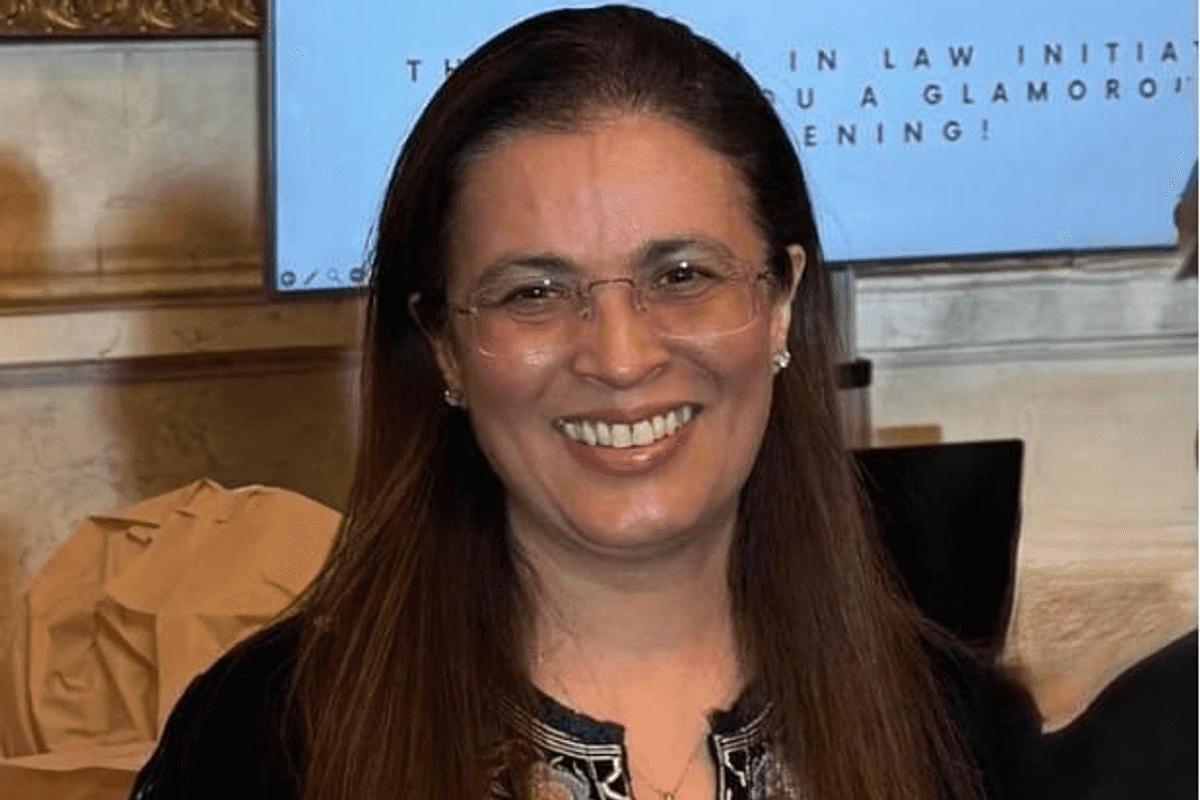
Ayesha A. Malik is a Supreme Court of Pakistan judge known for her jurisprudence on gender equality, human dignity and women's rights.
Reporter
Pakistan Supreme Court Justice Ayesha A. Malik has received an international award recognizing her judicial work on equality, human dignity and women's rights.
The honor reflects a body of jurisprudence that has made the justice system more responsive to women's lived experiences in Pakistan.
Who is Justice Ayesha Malik?
Ayesha A. Malik is a judge on the Supreme Court of Pakistan, where her rulings have focused on gender equality, human dignity and access to justice for women.
Her jurisprudence emphasizes that courts must consider the social and practical realities women face, rather than apply formal legal rules in isolation.
In her remarks after receiving the award, Malik said equality should extend beyond formal legal guarantees to reflect the practical realities women encounter in the legal system. She argued that legal principles and judicial institutions must respond more effectively to those realities, and that courts should protect dignity while promoting substantive equality.
Malik also spoke about aspects of her own jurisprudence relating to dignity, equality and the treatment of women within the justice system. The award reflects international recognition of her judicial contribution, and comes as Pakistani judges and legal institutions gain greater representation in global discussions on equality, human rights and access to justice.
How has Malik advanced gender-sensitive justice in Pakistan?
A central feature of Malik's jurisprudence is her insistence that courts consider the real-life circumstances of women, rather than applying seemingly neutral legal rules without examining their practical impact.
Before joining the Supreme Court, she worked on initiatives for women judges and gender-sensitive court processes. She chaired a committee addressing issues faced by female judicial officers and helped launch the Punjab Women Judges Conference.
That conference contributed to measures including gender-based violence courts, a gender-equality policy at the Lahore High Court, and facilities for women and children on court premises. Malik also became prominent for her approach to the treatment of women in sexual-violence cases, with her Lahore High Court jurisprudence contributing to the rejection of so-called virginity and two-finger tests used in rape investigations.
Her reasoning held that a woman's dignity and credibility should not be judged through intrusive or scientifically unreliable examinations of her sexual history. This approach helped promote a more victim-sensitive understanding of sexual violence.
How has Malik ruled on khula and marital cruelty?
More recently, Malik has addressed women's autonomy in marriage through a Supreme Court judgment on khula, the Islamic form of dissolution of marriage initiated by a woman. Her judgment held that a woman's right to seek khula should not effectively depend on her husband's willingness to end the marriage.
It also recognized that cruelty is not necessarily limited to physical violence, since psychological and emotional abuse can make a marriage intolerable. The approach shifts the legal focus from whether a woman has suffered physical abuse to whether she can remain in the marriage with dignity, security and emotional wellbeing.
In a 2025 Supreme Court ruling, Malik treated psychological and emotional abuse as potentially constituting cruelty for the purposes of dissolving a marriage. That judgment also addressed circumstances involving a husband's second marriage and the rights of the existing wife, reflecting a broader principle in her jurisprudence that legal standards should account for women's lived realities rather than narrowly defined forms of harm.
How has Malik ruled on women's economic and legal equality?
Malik has also authored judgments on women's financial and property rights. In 2025, she wrote a judgment holding that a divorced daughter could be entitled to her deceased father's pension, upholding a decision in favor of Sorath Fatima. Such cases show that gender equality extends beyond courtroom treatment to economic security, inheritance, pensions and women's access to financial resources.
Human dignity is another recurring theme in her jurisprudence. Her approach does not treat equality as simply requiring men and women to be treated identically, but recognizes that circumstances may be unequal and that genuine equality can require the legal system to account for those differences. This reflects the principle of substantive equality, under which the law seeks fair outcomes in practice rather than merely equal treatment in formal terms.
What other legal work has Malik done?
Malik's contribution extends beyond women's rights to environmental and constitutional jurisprudence.
She has taken part in international discussions on the right to a clean, healthy and sustainable environment, and has stressed the importance of climate science in judicial decision-making, including questions of causation, accountability and enforcement in climate litigation.




Comments
See what people are discussing