

Economic indicators improve, but Pakistan struggles on the ground
Kamran Khan says Pakistan’s macro gains have yet to benefit ordinary citizens

News Desk
The News Desk provides timely and factual coverage of national and international events, with an emphasis on accuracy and clarity.
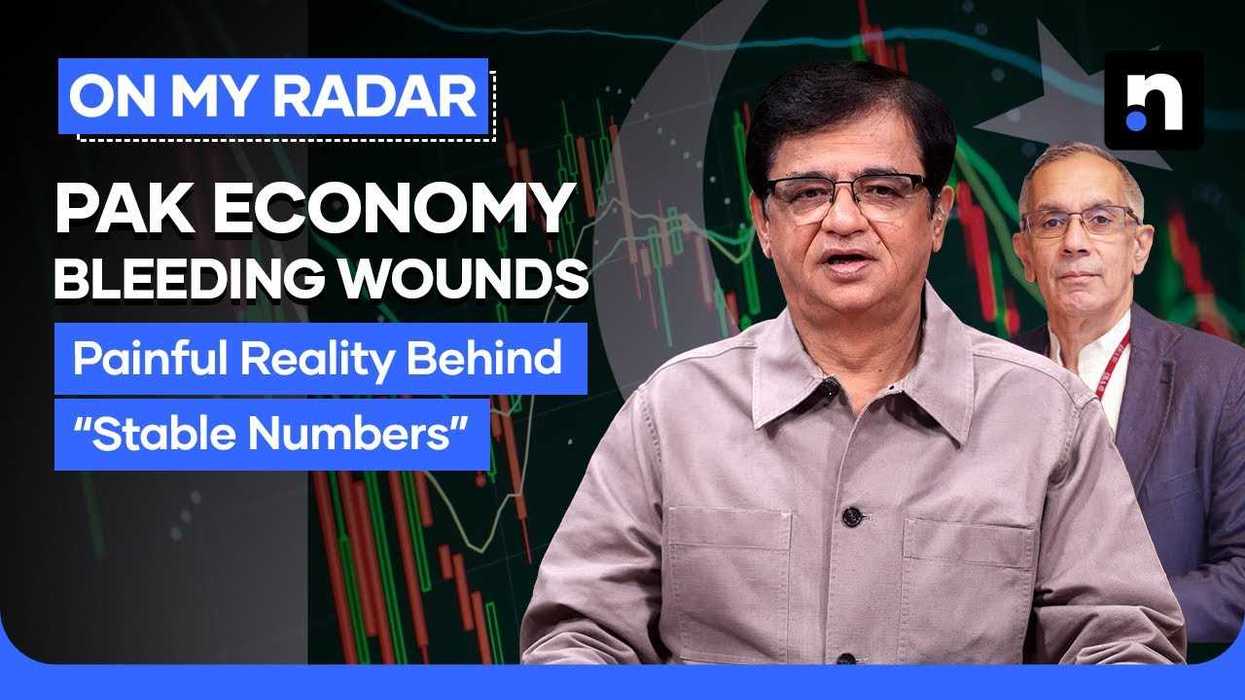
While Pakistan’s government promotes a narrative of macroeconomic stabilization, key indicators on the ground reveal an economy struggling to achieve meaningful growth.
Despite improvements in inflation, interest rates, remittances, exchange rates, and foreign reserves, the average citizen sees little tangible benefit, with investment, employment, manufacturing, and exports failing to gain momentum.
In the latest episode of On My Radar, Kamran Khan highlighted these disparities, noting that while official data suggests stabilization, the economy has yet to deliver real improvements for the population, especially in terms of jobs and household incomes.
Macroeconomic growth has remained muted. In emerging economies, a GDP growth rate of at least 5 percent is generally considered satisfactory. Pakistan, however, has struggled to surpass 3 percent GDP growth for the past three years. Between 2019 and 2022, growth even dipped into negative territory at times. Over the past three years, GDP expanded at an average annual rate of just 1.8 percent, even as tax collection doubled.
The country’s sluggish performance is stark against regional peers. Last year, India posted 6.5 percent growth, Vietnam 7 percent, Sri Lanka, Maldives, and Bhutan 5 percent each, and Bangladesh 4.2 percent despite political instability. By contrast, Pakistan’s low growth persists in a nation of 250 million, where 64 percent of the population is under 30.
Foreign direct investment (FDI) has largely stagnated. In 2025, Pakistan attracted $2.45 billion in FDI, but roughly $650 million was offset by outflows from portfolio investment and bond markets. The Special Investment Facilitation Council (SIFC), operational since June 2023 to attract foreign investment, has faced ongoing challenges due to bureaucratic red tape, regulatory uncertainty, and structural inefficiencies.
Investment by domestic and foreign actors has also slowed. Pakistan’s investment-to-GDP ratio has dropped to 13 percent, the lowest in 52 years. Private investment in manufacturing has nearly halved over six years, from PKR 706 billion in 2019 to PKR 377 billion in 2025. According to the All Pakistan Textile Mills Association (Aptma), 144 textile mills and nearly 400 cotton ginning factories have closed, leaving thousands unemployed.
Unemployment is now at a 21-year high of 7.1 percent, disproportionately affecting youth. Each year, approximately 3.5 million young Pakistanis enter the labor market. Real incomes have fallen roughly 20 percent over the past three years due to inflation and tax increases. Consequently, per capita income, once above Bangladesh and India, now lags behind, with Bangladesh’s per capita income 53 percent higher and India’s 71 percent higher in 2024.
Declining income levels have impacted living standards, reflected in Pakistan’s falling position on the United Nations Human Development Index, which slipped from 161st in 2020-21 to 168th in 2025. Reports also estimate that corruption siphons around $20 billion annually from the economy, further eroding growth potential.
Although the government has celebrated rising remittances as a positive for exchange rates and the current account, much of the inflow comes from citizens leaving the country due to unemployment, corruption, and governance issues. In 2024, approximately 720,000 Pakistanis migrated abroad for work, and by November 2025, another 700,000 had departed.
Pakistan’s economy, therefore, appears to be running in parallel tracks: macroeconomic indicators suggest progress, but the real economy remains stagnant. Analysts argue that sustainable growth requires fresh investment - both domestic and foreign - curbing losses from unprofitable state-owned enterprises, reforming the tax system to broaden the base, and improving institutional efficiency.
Without structural reforms and commercialization efforts, Pakistan’s GDP growth and economic development are likely to remain sluggish, delaying the benefits of policy and stabilization efforts by civil and military leadership.


Comments
See what people are discussing