

Pakistan moves from stabilization toward structural reforms, ICMA report says
ICMA says Pakistan's economic indicators improved through early 2026, but employment, SOE reform and implementation gaps still hold back progress.
Haris Zamir
Business Editor
Experience of almost 33 years where started the journey of financial journalism from Business Recorder in 1992. From 2006 onwards attached with Television Media worked at Sun Tv, Dawn Tv, Geo Tv and Dunya Tv. During the period also worked as a stringer for Bloomberg for seven years and Dow Jones for five years. Also wrote articles for several highly acclaimed periodicals like the Newsline, Pakistan Gulf Economist and Money Matters (The News publications)
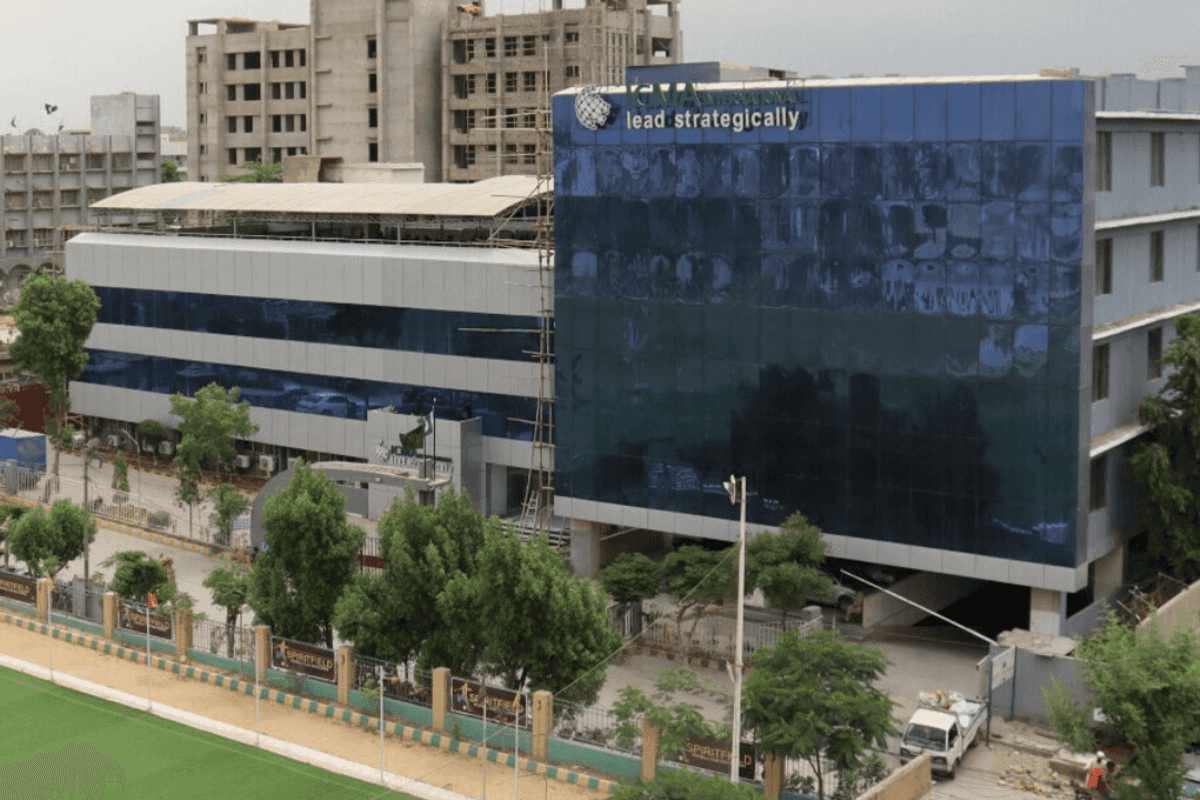
ICMA report highlights that citizens’ concerns remain concentrated around politics, jobs, inflation, and extreme weather.
The Institute of Cost and Management Accountants of Pakistan (ICMA) has released its Accountability Report: Pakistan 2026 Progress – From Policy Momentum to Measurable Outcomes, presenting a comprehensive evaluation of government actions against public priorities.
The report underscores visible progress in macroeconomic stabilization, fiscal consolidation, and external sector resilience. Supported by cautious monetary policy, improved remittance inflows, and exchange rate stability, Pakistan’s economy accelerated to 3.7 percent in FY2026, while the fiscal deficit narrowed significantly to 0.7 percent of GDP.
The assessment notes that the improvement was supported by stronger fiscal discipline and external-sector performance. During July–March FY2026, the primary surplus increased to 3.2 percent of GDP from 3.0 percent a year earlier, while the current account recorded a marginal surplus of US$72 million. Workers’ remittances increased by 8.2 percent, and the exchange rate remained stable at around PKR 281.1 per US dollar, supporting external-sector stability and trade competitiveness.
Youth-focused initiatives such as skill development programs, concessional financing, and the launch of digital hubs demonstrate a commitment to human capital investment and inclusive growth. Climate resilience has advanced through significant allocations for urban planning and green subsidies, while digital transformation is being strengthened through AI hubs, advanced training, and citizen-centric governance reforms. International partnerships have expanded through CPEC Phase-II, Gulf investments, and U.S. cooperation, reinforcing Pakistan’s economic horizons.
The report also highlights that citizens’ concerns remain concentrated around politics, jobs, inflation, and extreme weather. In response, the Government approved PKR 3.915 billion through a Technical Supplementary Grant for the Prime Minister Youth Skill Development Program, expanded concessional financing for SMEs, farmers and young entrepreneurs, and introduced the Digital Youth Hub. Climate-related allocations for FY2026–27 totaled PKR 690 billion, including direct spending and green subsidies, while consultations on a National Urban Strategy aimed to strengthen climate-resilient planning for cities.
The assessment further identifies uneven implementation as a key concern. Employment, AI and entrepreneurship programs remain at an early stage with limited measurable outcomes, while climate resilience and digital public-service reforms have progressed but are not yet being implemented uniformly. Investment initiatives also need to translate more effectively into local job creation, technology transfer and industrial growth. At the structural level, continued dependence on external financing, high debt-servicing obligations, partially implemented SOE reforms, and political and institutional uncertainty continue to constrain fiscal space and policy continuity.
Despite these achievements, the report identifies implementation gaps in employment generation, AI-driven skills, and entrepreneurship programs, which remain at early stages. Structural risks such as external financing dependence, incomplete SOE reforms, and political constraints continue to challenge governance and policy continuity.
The report’s overall assessment is that Pakistan’s first half of 2026 marks a shift from macroeconomic stabilization toward broader structural reforms. Government initiatives are increasingly aligned with public priorities, but sustained implementation, stronger institutional capacity and continued reform momentum will be critical to convert policy momentum into measurable improvements in employment, public services, climate resilience and citizens’ quality of life.
Vice President Muhammad Yasin, FCMA, emphasized that accountability is not simply about documenting progress but about ensuring discipline, foresight, and continuity in implementation. He noted that Pakistan’s path forward must rest on three pillars: investment in human capital, institutional strengthening, and climate resilience.
The report concludes that while Pakistan has made meaningful strides in aligning government initiatives with citizen priorities, sustained reform momentum and stronger institutional capacity are essential to translate policy frameworks into tangible improvements in livelihoods, governance, and resilience.


Comments
See what people are discussing