

Pakistan PM says major petrol price relief on the cards as global oil prices slide
PM Shehbaz Sharif says Pakistan will announce a major petrol price cut Friday, citing falling global oil rates after the US-Iran deal

News Desk
The News Desk provides timely and factual coverage of national and international events, with an emphasis on accuracy and clarity.
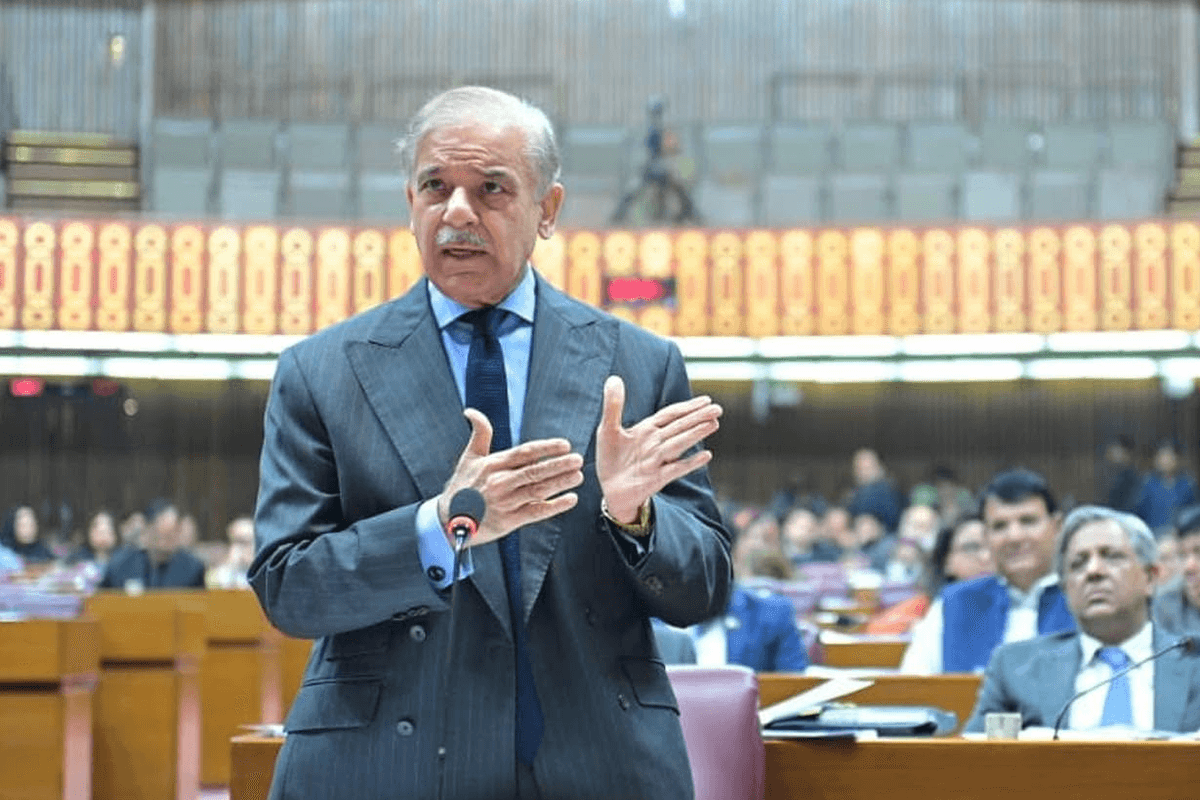
A file photo of Prime Minister Shehbaz Sharif addressing a National Assembly session.
PMO/Facebook
Prime Minister Shehbaz Sharif said on Friday that Pakistan will announce a "significant" reduction in fuel prices later in the day.
He cited a sharp decline in global oil markets following a Pakistan-facilitated US-Iran understanding to end hostilities.
Will petrol prices decrease in Pakistan?
Yes. Prime Minister Shehbaz Sharif confirmed that a significant petrol price cut will be announced as part of the weekly revision, in line with falling global oil rates. He said the government would pass on this international relief to consumers, following its established pricing mechanism.
Addressing the National Assembly, the prime minister said, "Today, we have to announce the weekly revision in oil and petrol prices. And I will say just this much: as promised by the government to pass on the relief to the people after oil prices fall, a significant decrease in the prices will be announced today."
Why are global oil prices falling?
Global oil prices have retreated after Washington and Tehran signed a memorandum of understanding aimed at de-escalating tensions. The agreement includes a framework for ending hostilities, reopening key maritime routes and continuing talks over a defined timeline.
It follows months of disruption in global energy markets during the US-Israel-Iran confrontation, which had pushed crude prices higher amid concerns over supply routes, including the Strait of Hormuz, a critical chokepoint for global energy shipments.
How has Pakistan responded to fuel price volatility?
Pakistan has faced repeated fuel-price volatility in recent months and responded earlier in the year with sharp domestic adjustments and austerity measures as global oil surged. Petroleum prices have since been revised weekly in line with international benchmarks.
Shehbaz said prices had spiked during the height of the conflict, fueling inflationary pressure at home, but added that conditions were now reversing. "Surely, they will decline further," he said, referring to global oil trends.
The prime minister said Pakistan had worked to stabilize the domestic economy during the earlier phase of volatility. He noted that Rs128 billion was spent to cushion inflationary pressures. "While the people of Pakistan made every humanly possible effort to save the economy, the federal government immediately spent Rs128 billion rupees to bring inflation down to the lowest possible level," he said.
He added that improving international conditions were now creating room for relief, saying "the sun of progress and prosperity is about to rise." Sharif also credited provincial governments for their cooperation during the adjustment period, saying they had "extended their full support and left no stone unturned in providing relief to the people."
What role did Pakistan play in the US-Iran deal?
Sharif highlighted Pakistan's diplomatic role in facilitating engagement between Tehran and Washington, saying the outcome had brought international recognition for Islamabad. "Pakistan is being acknowledged around the world for helping bring about this peace deal," he said, describing it as evidence of the country's growing diplomatic influence.
He thanked military leadership, including Field Marshal Syed Asim Munir, along with Deputy Prime Minister and Foreign Minister Ishaq Dar and Interior Minister Syed Mohsin Naqvi, for their contributions to regional stabilization efforts. Sharif also said he had received a phone call from Iranian President Masoud Pezeshkian, who expressed gratitude for Pakistan's support.
He said he had invited the Iranian president to visit Islamabad, while Tehran had extended an invitation for him to attend the funeral prayers of Iran's Supreme Leader Ayatollah Ali Khamenei.
Pakistan is planning to send a delegation. The prime minister said the easing of tensions was expected to improve economic conditions regionally, reiterating hopes for stronger Pakistan-Iran ties alongside broader regional stability.




Comments
See what people are discussing