

Pakistan PM rules out mini-budget, orders relief for salaried class and industry
PM directs focus on tax relief, growth and IMF engagement ahead of next budget

Business Desk
The Business Desk tracks economic trends, market movements, and business developments, offering analysis of both local and global financial news.

Prime Minister Shehbaz Sharif addresses a gathering in Pakistan's Khyber Pakhtunkhwa province on January 20, 2026
PID
Prime Minister Shehbaz Sharif has directed economic managers that no mini-budget be introduced before the upcoming federal budget while instructing officials to prepare wide-ranging relief measures for salaried individuals and industrial sectors, government sources said Tuesday.
According to officials familiar with the discussions, the prime minister issued special instructions to focus the next budget on easing the burden on the salaried class and encouraging industrial growth through tax reforms.
Sharif ordered that “every possible relief” be explored for the next fiscal year, directing ministries to prepare multiple proposals aimed at boosting economic activity without imposing additional taxes, the sources said.
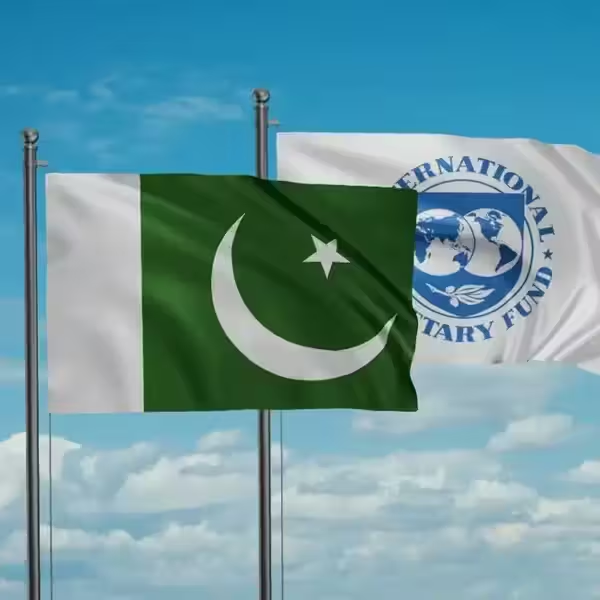
Instead of introducing new taxation measures to address the revenue shortfall, the government plans to increase tax income through improved collection and economic expansion, according to officials. Islamabad also intends to persuade the International Monetary Fund not to insist on further tax hikes as part of ongoing engagement, the sources added.
Steps to provide relief to salaried individuals are already being initiated in line with the prime minister’s directives, officials said.
New industrial policy
Sharif has also instructed authorities to prepare proposals to reduce tax rates for industries, particularly manufacturing.
Under the proposed new industrial policy to be announced in the next budget, the super tax rate for the manufacturing sector could be reduced, sources said. Reforms under consideration would gradually lower the super tax over four years.
Officials indicated that the super tax rate for manufacturing may be reduced to 5% over the next four years. If the government achieves a primary balance surplus, the super tax could be abolished entirely in the fifth year.
In addition, the threshold for imposing super tax on minimum income for the manufacturing sector is proposed to be increased from PKR 200 million to PKR 500 million. For the 10% super tax slab, the threshold may be raised significantly from PKR 500 million to PKR 1.5 billion in the upcoming budget, according to the sources.
Economic analysts say the signals suggest a shift in policy tone.
“The government appears to be moving away from repeated tax shocks toward structural reforms and relief-driven growth,” said an Islamabad-based macroeconomic analyst. “Reducing the super tax and raising thresholds could help restore investor confidence, particularly in manufacturing.”
Another fiscal expert cautioned that implementation will be key. “Relief measures must be balanced with credible revenue strategies, especially under IMF oversight,” the analyst said. “Without broadening the tax base, the pressure on public finances will remain.”
Pakistan’s economy has faced high inflation, weak growth and fiscal stress in recent years, with salaried individuals and formal-sector industries bearing a disproportionate tax burden. The upcoming budget is widely seen as a test of the government’s ability to balance reform commitments with political and economic realities.


Comments
See what people are discussing