

Pakistan seeks bigger private-sector role through PPPs, privatization
Pakistan pushes ahead with public-private partnerships and privatisation to attract investment, building on its $36 billion PPP track record
Haris Zamir
Business Editor
Experience of almost 33 years where started the journey of financial journalism from Business Recorder in 1992. From 2006 onwards attached with Television Media worked at Sun Tv, Dawn Tv, Geo Tv and Dunya Tv. During the period also worked as a stringer for Bloomberg for seven years and Dow Jones for five years. Also wrote articles for several highly acclaimed periodicals like the Newsline, Pakistan Gulf Economist and Money Matters (The News publications)
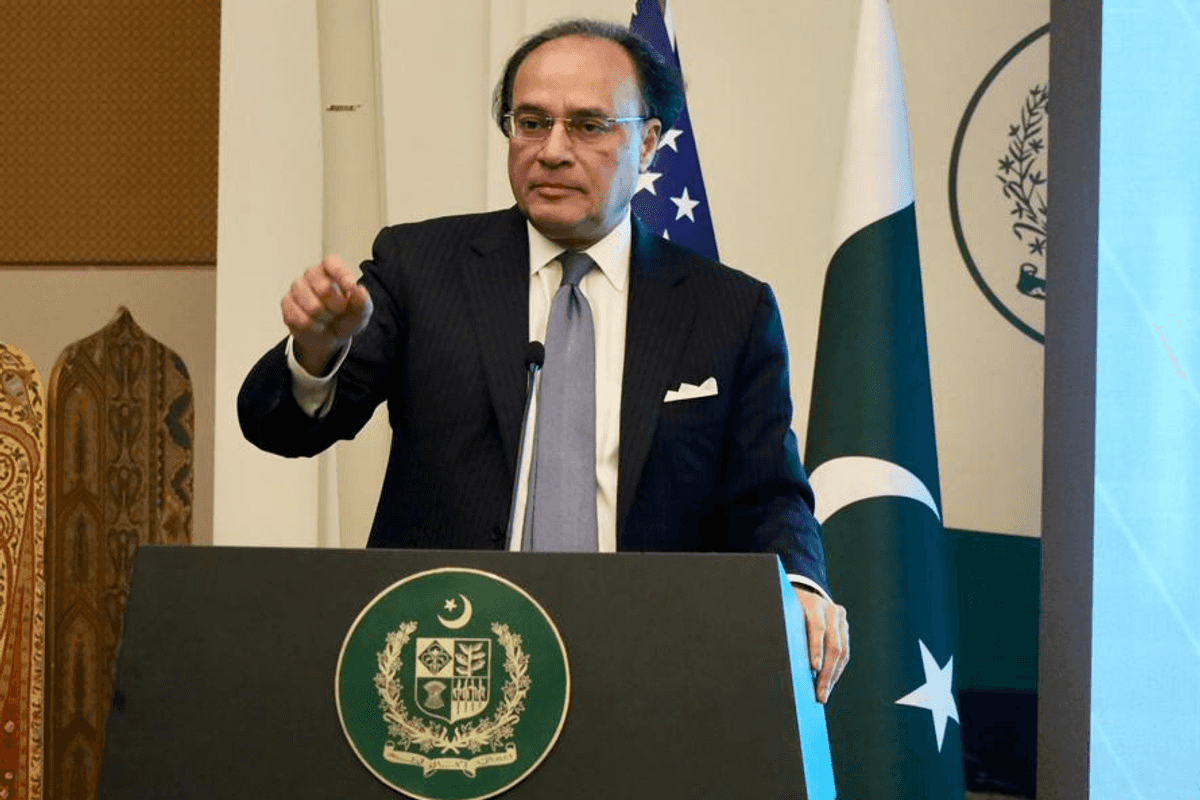
Pakistan Finance Minister Muhammad Aurangzeb.
Pakistan is seeking to expand private-sector participation in the economy through public-private partnerships (PPPs) and privatization, the government reaffirmed at a National Strategic Dialogue in Islamabad on Friday.
Officials said the push aims to attract investment, improve efficiency and accelerate long-term growth.
What did Pakistan's finance minister say about PPPs?
Finance Minister Muhammad Aurangzeb said the private sector must lead Pakistan's next phase of growth, describing PPPs and privatization as key tools for attracting investment and improving efficiency. He said the government was building a stronger pipeline of investable projects and converting those opportunities into actual investment and economic activity.
Why does Pakistan see PPPs and privatization as complementary?
Muhammad Ali, Adviser to the Prime Minister on Privatization, said Pakistan's infrastructure and development needs could not be met through public spending alone. Greater private-sector involvement was essential in financing, developing and managing infrastructure and other economic assets, he said.
He said PPPs and privatization should be treated as complementary tools rather than competing models. PPPs can bring private capital and expertise into infrastructure and public services, while privatization can introduce private ownership or management into state-owned commercial enterprises to improve efficiency and service delivery.
Asset monetization offers another avenue for bringing private capital, technology, management expertise and greater accountability into sectors where government resources are limited. "We have already started to give the reins of economic growth to the private sector," Ali said, calling for the privatization program to be completed and the PPP pipeline significantly expanded.
How big is Pakistan's PPP track record?
Pakistan has already built a substantial track record in public-private partnerships, according to the newly launched Pakistan PPP Monitor. The monitor says 154 PPP projects have reached financial close since the 1990s, attracting nearly $36 billion in investment.
The federal PPP pipeline currently includes 38 projects worth about $6.5 billion across roads, railways, aviation, healthcare and industrial infrastructure.
Which companies are being privatized in Pakistan?
The government is pursuing a 27-transaction privatization program covering power distribution companies, major airports, insurance companies and specialized banks. Recent progress includes the privatization of Pakistan International Airlines with management control, while work continues on power distribution companies and airport concessions.
What role is the ADB playing in Pakistan's private-sector push?
ADB Vice President Yingming Yang welcomed Pakistan's efforts to increase private-sector participation and pledged continued support for mobilizing large-scale private investment. "Mobilizing private capital and expertise is essential," Yang said, adding that well-structured PPPs could supplement limited public resources, improve efficiency and support the long-term maintenance of infrastructure and public services.
He also highlighted the Pakistan PPP Monitor as a tool to give investors greater visibility into the country's PPP track record, project pipeline and available opportunities. The dialogue brought together federal and provincial PPP institutions, highlighting the need for closer coordination across levels of government to unlock more private investment.
What comes next for Pakistan's PPP and privatization plans?
Privatization Commission Secretary Usman Bajwa said the government would maintain momentum on both fronts, focusing on a clear project pipeline, stronger coordination, transparency and a professional and predictable interface for investors.
The government said Pakistan now has the institutional framework, PPP experience and pipeline needed to attract private investment, with the focus shifting towards completing transactions and delivering investment-led growth.





Comments
See what people are discussing