

Pakistan's FY27 budget cuts taxes for salaried class, targets record Rs15.264tn revenue
Pakistan's FY27 budget offers tax relief for salaried workers and property buyers while targeting record FBR revenue of Rs15.264 trillion.

Haris Zamir
Business Editor
Experience of almost 33 years where started the journey of financial journalism from Business Recorder in 1992. From 2006 onwards attached with Television Media worked at Sun Tv, Dawn Tv, Geo Tv and Dunya Tv. During the period also worked as a stringer for Bloomberg for seven years and Dow Jones for five years. Also wrote articles for several highly acclaimed periodicals like the Newsline, Pakistan Gulf Economist and Money Matters (The News publications)
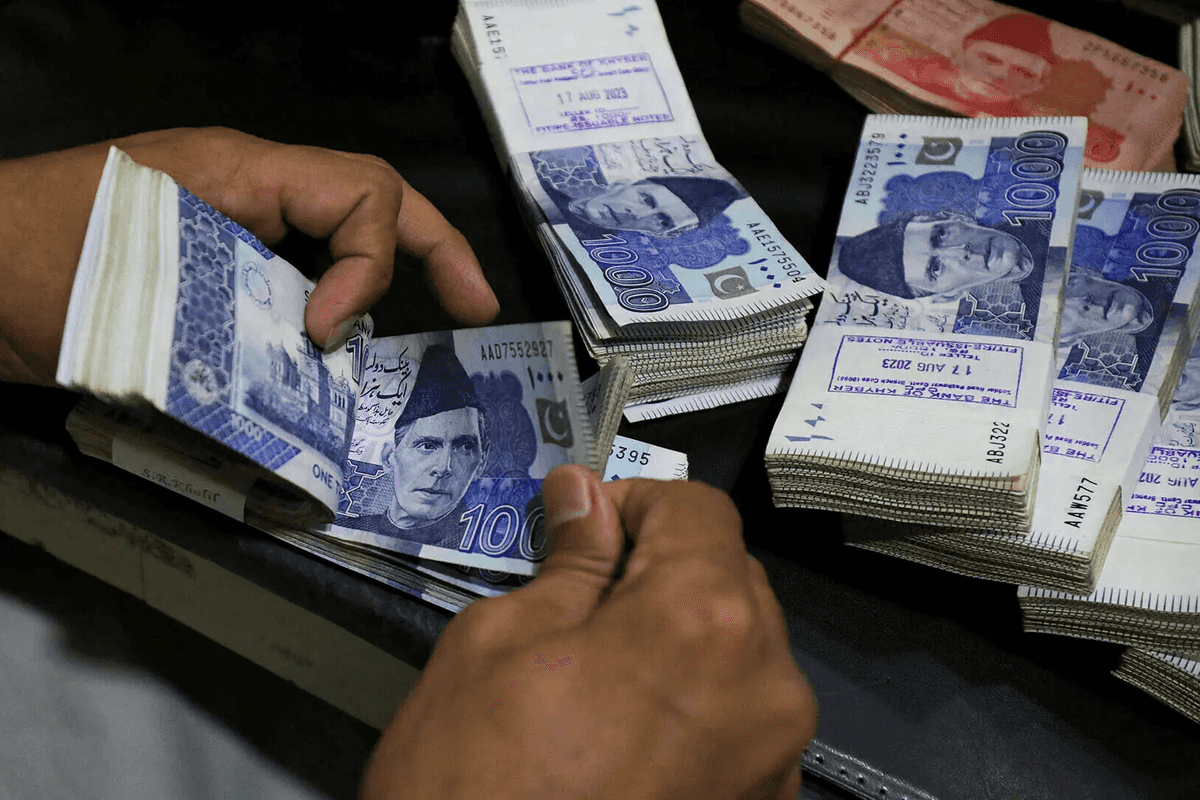
Pakistan's government has set a record tax collection target of 15.264 trillion rupees ($54.3 billion) for the Federal Board of Revenue in the 2026-27 fiscal year. Alongside this goal, it announced tax relief for salaried workers, the property sector and parts of the corporate sector, while raising levies on luxury vehicles and certain services.
How much tax relief will salaried workers get in Pakistan's FY27 budget?
The budget proposes lower income tax rates across several salary brackets and abolishes the additional 10% surcharge that previously applied to higher earners. This relief is part of a broader package that also covers the property sector and parts of the corporate sector. The changes are designed to ease the burden on salaried individuals while the government pursues a record revenue target.
What is Pakistan's FY27 tax collection target?
The FBR aims to collect 15.264 trillion rupees during the next fiscal year, according to officials. Of this, 650 billion rupees is expected to come from enhanced enforcement and compliance measures rather than new taxes. The target forms part of the government's broader push to expand the tax base and improve compliance across sectors.
How will the property sector benefit from the new budget?
The government proposed lower withholding taxes on the purchase and sale of property to support the real estate market. Officials said the move is intended to encourage investment and improve activity in a sector that has seen reduced transactions in recent years. The change applies to property transactions broadly, without singling out specific categories of buyers or sellers.
What tax relief is proposed for international air travelers?
The budget proposes a sharp cut in the Federal Excise Duty on business-class air tickets. For flights to the United States, the duty would fall to 50,000 rupees from 350,000 rupees. For business-class travel to Europe, Australia and Far Eastern destinations, the duty would drop to 40,000 rupees from 210,000 rupees.
What new taxes target luxury vehicles in Pakistan?
The government proposed higher taxes on luxury vehicles and high-value consumption as part of the same budget. Electric vehicles priced above 20 million rupees would become subject to Federal Excise Duty, while those valued above 30 million rupees would face a 40% excise duty. Vehicles with engine capacities exceeding 3,000cc would be taxed at an 81% FED rate under the proposal.
How will social media income and professional services be taxed?
The budget introduces a new tax framework for social media content creators, allowing them to deduct up to 30% of eligible business expenses before calculating taxable income. Separately, the government proposed a 15% tax on professional services, including those provided by doctors, lawyers and other professionals. Both measures are aimed at broadening the tax net beyond traditional salaried and corporate taxpayers.
What other tax changes are included in the Finance Bill?
For businesses, the government proposed easing the Super Tax regime by abolishing the levy for companies with annual income of up to 500 million rupees. In the tobacco sector, the Federal Excise Duty on e-liquid used in electronic cigarettes would rise from 10,000 rupees per kilogram to 16,500 rupees per kilogram.
To strengthen sales tax collection, the budget proposes applying sales tax based on printed retail prices across 21 categories of goods. Officials estimate this measure alone could generate an additional 50 billion rupees in revenue during FY27. Together, these proposals form part of the government's wider strategy to improve revenue collection while offering targeted relief to selected taxpayers and businesses.




Comments
See what people are discussing