

Pakistan's listed refineries face PKR 9.4Bn monthly hit under new petrol pricing rule
Petrol remains at PKR 377.91 per liter as the government shifts higher import costs onto domestic refiners, putting their profit margins under pressure

Haris Zamir
Business Editor
Experience of almost 33 years where started the journey of financial journalism from Business Recorder in 1992. From 2006 onwards attached with Television Media worked at Sun Tv, Dawn Tv, Geo Tv and Dunya Tv. During the period also worked as a stringer for Bloomberg for seven years and Dow Jones for five years. Also wrote articles for several highly acclaimed periodicals like the Newsline, Pakistan Gulf Economist and Money Matters (The News publications)
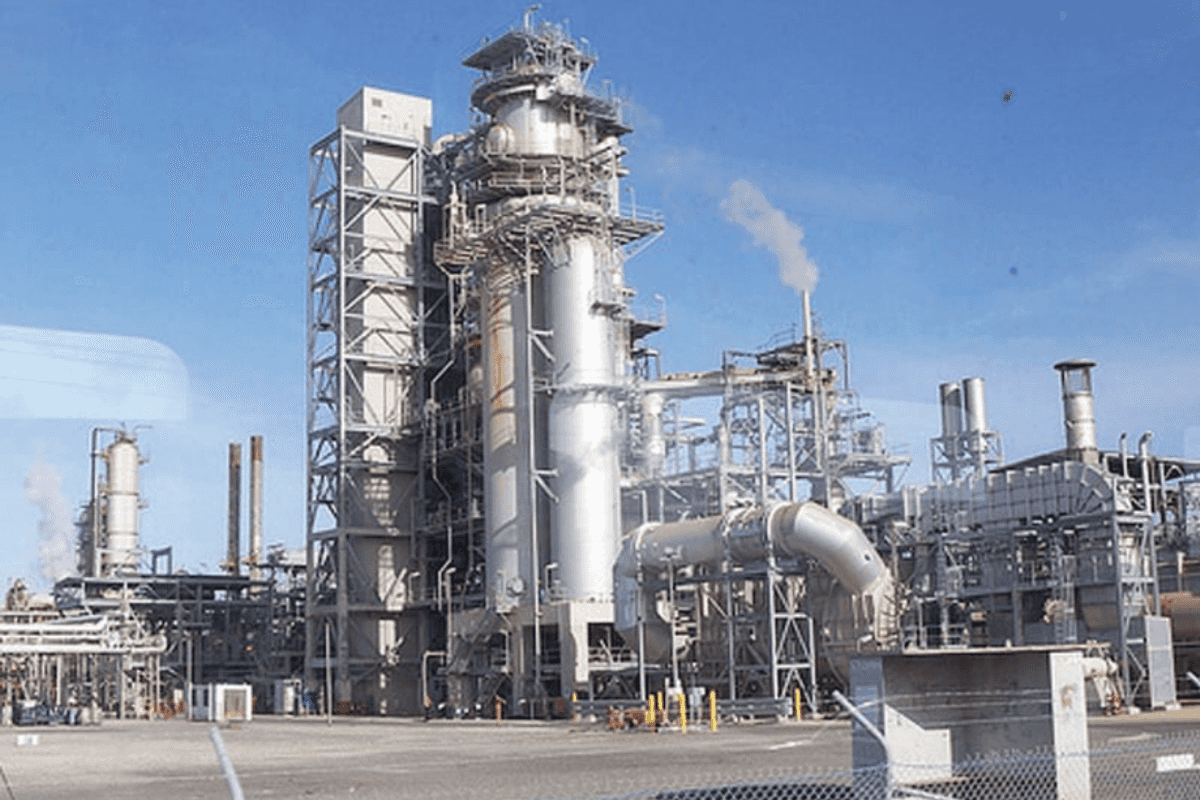
Pakistan's listed oil refineries face an estimated monthly financial burden of PKR 9.4 billion after the government shifted the impact of higher petrol import costs onto domestic refiners to keep retail prices unchanged, according to research reports by Arif Habib Limited (AHL) and Intermarket Securities.
The revised pricing mechanism, approved by the federal cabinet on October 30 and reflected in the Oil and Gas Regulatory Authority's (OGRA) pricing notification effective October 31, requires local refineries to surrender part of the petroleum levy to offset higher import costs.
How did the government keep petrol prices unchanged?
The government kept petrol at PKR 377.91 per liter despite higher import costs. The petroleum development levy remained unchanged at PKR 80 per liter, while a separate PKR 14.71 per liter adjustment was recovered through domestic refineries rather than passed on to consumers.
The increase in import costs was driven by a rise in the petrol import premium from USD 19.88 to USD 25.52 per barrel and an increase in customs duty from PKR 20.56 to PKR 26.15 per liter.
According to OGRA's pricing calculations, the benchmark ex-refinery/import price increased by PKR 15.13 per liter to PKR 282.26. The increase was offset by the PKR 14.71 petroleum levy adjustment and a PKR 0.42 per liter decline in the inland freight equalization margin (IFEM), keeping the ex-depot price unchanged.
Why must refineries surrender PKR 49.02 per liter?
Domestic refineries meet only around 30% of Pakistan's petrol demand, while the remainder is supplied through imports. Because the PKR 14.71 adjustment is calculated against total national consumption but recovered from domestic refineries, the effective amount rises to PKR 49.02 per liter of petrol sold by refineries to oil marketing companies (OMCs).
OGRA's October 31 price calculation confirms that refineries must surrender PKR 49.02 per liter on their petrol sales to OMCs.
Intermarket Securities estimated that this would translate into approximately USD 28 per barrel, pushing gross refining margins (GRMs) on petrol from around USD 4.8 per barrel into negative territory at approximately minus USD 23 per barrel.
The brokerage said the adjustment would be recalculated every two weeks based on changes in the import premium, customs duty differential and domestic petrol supply share.
Which refineries face the biggest financial impact?
AHL estimates that the measure will impose a pre-tax burden of around PKR 9.4 billion, or approximately PKR 5.9 billion after tax, on the listed refining sector in November. Its estimate excludes Pak-Arab Refinery Limited (PARCO).
According to the supplied company-level estimates, Attock Refinery Limited (ATRL) would bear 34.8% of the total burden, with the highest estimated after-tax earnings impact of PKR 19.35 per share.
Cnergyico would account for 28.3% of the burden, with an estimated post-tax impact of PKR 0.31 per share, while Pakistan Refinery Limited (PRL) would absorb 20%, translating into an impact of PKR 1.89 per share.
National Refinery Limited (NRL) would account for the remaining 16.9%, with an estimated post-tax earnings impact of PKR 12.51 per share.
Intermarket Securities' separate estimates, based on average monthly sales during the first quarter of fiscal year 2027, showed a combined monthly pre-tax impact of PKR 12.43 billion across the four listed refineries.
Under its calculations, ATRL would face a monthly impact of PKR 4.1 billion, NRL PKR 2.93 billion, PRL PKR 2.71 billion and Cnergyico PKR 2.69 billion.
Could the new pricing rule affect refinery upgrades?
Intermarket Securities described the measure as a significant regulatory risk for the refining sector, noting that petrol is among the industry's higher-margin products and the levy surrender could substantially erode profitability.
The brokerage also raised concerns that the adjustment effectively offsets the increase in customs duty on petrol, despite the Brownfield Refinery Policy providing for deemed duty proceeds to be held in dedicated accounts to help finance refinery upgrades.
However, Intermarket Securities said it had not incorporated the full impact into its earnings estimates, citing industry resistance and its understanding that the measure could be temporary.
The cabinet-approved pricing arrangement is initially for 30 days, with refinery pricing components linked to their March 7, 2026 levels. The separate petroleum levy notification should not be interpreted as automatically expiring after that period.
Both brokerage estimates highlight the financial uncertainty facing domestic refiners as the government seeks to shield consumers from higher petrol costs by shifting part of the adjustment to the refining sector.




Comments
See what people are discussing