

Pakistan's MHIL signs USD 2.25 billion lithium battery plant deal
Rawalpindi facility could begin producing lithium-ion cells within six to eight months of government policy approval, says EDB official

Haris Zamir
Business Editor
Experience of almost 33 years where started the journey of financial journalism from Business Recorder in 1992. From 2006 onwards attached with Television Media worked at Sun Tv, Dawn Tv, Geo Tv and Dunya Tv. During the period also worked as a stringer for Bloomberg for seven years and Dow Jones for five years. Also wrote articles for several highly acclaimed periodicals like the Newsline, Pakistan Gulf Economist and Money Matters (The News publications)
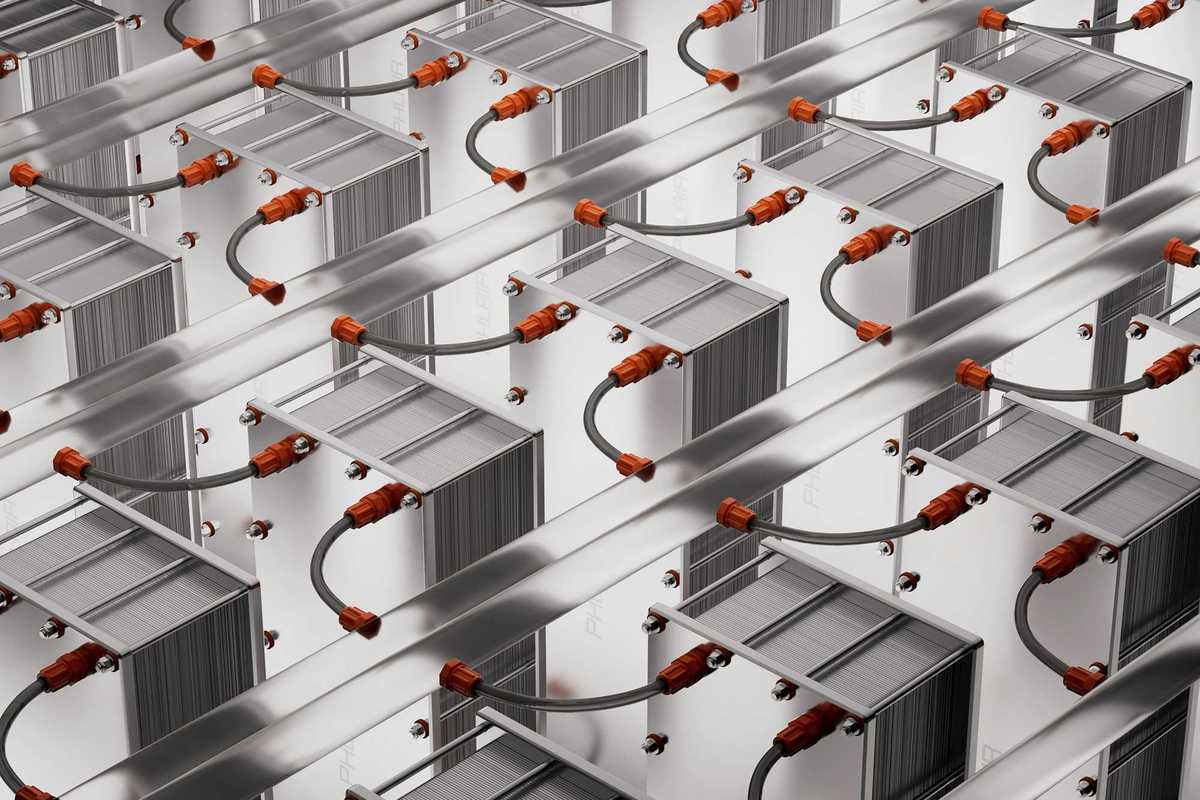
A large group of different types of batteries.
Pakistan's Margalla Heavy Industries Limited (MHIL) has signed an agreement with Chinese partners and a local investor to establish a USD 2.25 billion lithium-ion battery manufacturing plant in Rawalpindi, Hamad Ali Mansoor, who was appointed chief executive officer of the Engineering Development Board (EDB) in 2025, told Nukta.
The facility is expected to begin production within six to eight months after the government approves its proposed lithium battery manufacturing policy.
“The building is ready, the machines are installed, so after the policy comes, the production will start within six to eight months,” Mansoor said.
When will Pakistan's lithium-ion battery plant begin production?
Production could begin six to eight months after government approval of the proposed policy, although no approval date has been announced.
According to Mansoor, the factory will initially produce batteries with a capacity of around 200 MW to 300 MW before gradually reaching its planned annual capacity of more than 1,000 MW.
Mansoor said the agreement was signed in July with a Chinese company he described as one of China's top-tier manufacturers and a local private-sector investor. He declined to identify the investors.
“They are investing USD 2.25 billion in Pakistan,” he told Nukta.
The facility will manufacture lithium-ion cells used in batteries for electric vehicles and energy storage.
MHIL operates at Heavy Industries Taxila in Rawalpindi district. Its activities include manufacturing defense equipment, electric vehicles and battery energy storage systems.
How much battery storage will Pakistan need by 2030?
The EDB estimates that Pakistan's demand for battery energy storage systems could reach 80,000 MW to 100,000 MW by June 2030, depending on economic growth, according to Mansoor.
“If our economy grows by 5% or more, then by June 2030, our demand will be up to 100,000MW,” Mansoor said. “And if our GDP grows by less than 3%, then our demand will be up to 80,000MW.”
Demand is expected to come from households, commercial buildings, industrial users and electric vehicles, including two-wheelers, three-wheelers, cars, buses and trucks.
Mansoor estimated that stabilizing the electricity grid alone could require 3,000 MW to 5,000 MW of battery storage.
Meeting the country's broader projected requirements would need four to five gigafactories, each costing between USD 1 billion and USD 1.25 billion, he said.
What is Pakistan's lithium battery manufacturing policy?
The government has prepared a lithium battery manufacturing policy, submitted to the Ministry of Industries in March, which is awaiting approval.
The proposed policy envisages four major factories, three in Punjab's Lahore, Faisalabad and Rawalpindi divisions and one in Karachi.
It would require manufacturers to export a specified percentage of their production, although Mansoor declined to disclose the proposed target before formal approval.
“We will manufacture it in Pakistan and export it,” he said, adding that the policy incorporates international safety and performance standards.
Separately, Prime Minister Shehbaz Sharif has approved the proposed Automotive and Auto Parts Manufacturing Policy 2026–2031, which remains subject to further approvals, including discussions with the International Monetary Fund over proposed electric vehicle tax incentives and their potential impact on government revenue.
How could local battery manufacturing benefit Pakistan?
Pakistan currently assembles around 3,000 MW to 4,000 MW of batteries, alongside components such as motors, controllers and chargers, Mansoor said.
He said the country needs to move beyond assembly toward domestic manufacturing to reduce its reliance on imported components.
“All these parts we will start manufacturing 100% in Pakistan by next year,” he said.
Domestic lithium-ion cell manufacturing could help reduce Pakistan's dependence on imported energy technology and support electric vehicles and renewable energy.
However, the timing of production at the proposed Rawalpindi plant remains dependent on government approval of the lithium battery manufacturing policy.





Comments
See what people are discussing