

Pakistan's refineries set for a profit surge on planned upgrades
Topline Research sees PRL and ATRL earnings soaring once brownfield expansions come online

Haris Zamir
Business Editor
Experience of almost 33 years where started the journey of financial journalism from Business Recorder in 1992. From 2006 onwards attached with Television Media worked at Sun Tv, Dawn Tv, Geo Tv and Dunya Tv. During the period also worked as a stringer for Bloomberg for seven years and Dow Jones for five years. Also wrote articles for several highly acclaimed periodicals like the Newsline, Pakistan Gulf Economist and Money Matters (The News publications)
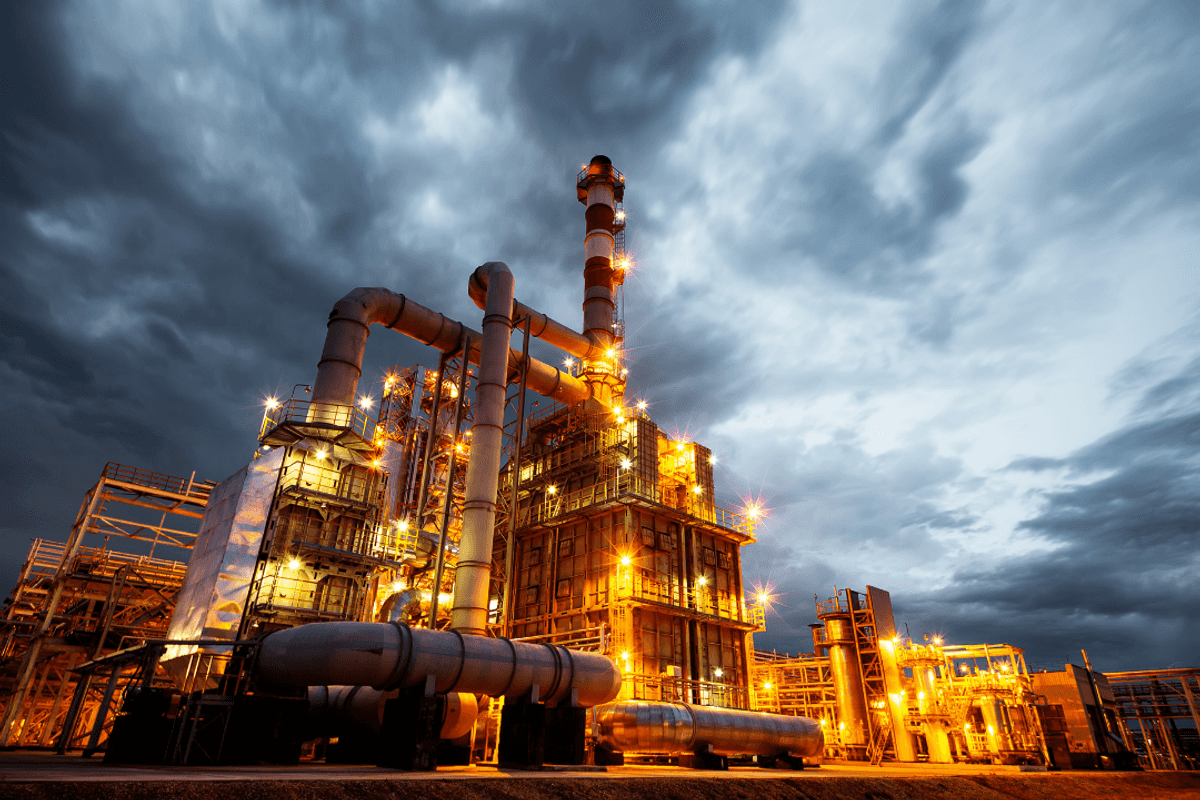
Pakistan’s listed refineries are poised for a sharp improvement in profitability as planned brownfield upgrades are expected to boost margins, reduce losses from furnace oil and increase production of higher-value products, according to Topline Research.
The refinery sector has been among the strongest performers on the Pakistan Stock Exchange in the fiscal year 2027 (FY27) so far, gaining about 56%, compared with a 1.6% decline in the benchmark KSE-100 index, the research house said in a report Thursday.
The rally followed the government’s approval of an amended refinery policy on July 21 and the removal of general sales tax on imported refinery equipment and machinery in the FY2027 budget. Exceptionally strong gross refinery margins, amid uncertainty surrounding the reopening of the Strait of Hormuz and disruptions to global oil supplies, have provided an additional boost.
Topline Research expects refineries to sign the amended policy in the coming days, followed by the announcement of engineering, procurement, construction and financing contractors and, most importantly, financial close.
PRL seen as biggest beneficiary
Pakistan Refinery Ltd. is viewed as the biggest potential beneficiary of the upgrade cycle, although its large financing requirement remains a key consideration.
The proposed upgrade is expected to cost PRL between USD 1.5 billion and USD 2 billion, equivalent to roughly PKR 450 billion to PKR 600 billion, according to the research.
Topline estimates that refinery upgrades could improve margins by USD 3 to USD 8 per barrel by reducing negative furnace-oil and residual-product margins and increasing production of motor gasoline and high-speed diesel.
Refineries would also benefit from the removal of penalties for failing to meet Euro V product specifications and sulfur-content requirements once upgraded plants begin operations. Such penalties currently amount to about USD 1 to USD 2 per barrel for PRL and Attock Refinery Ltd., the report said.
If refinery margins remain elevated for another two to 2.5 years, PRL could potentially finance its equity contribution through internally generated cash, Topline said.
However, a return of margins to historical levels could force the company to raise capital through a rights issue or bring in strategic investors, potentially diluting existing shareholders.=
Topline expects refinery margins to remain above average for about the next four quarters before gradually normalizing, depending on developments involving Iran and the United States and the reopening of the Strait of Hormuz.
ATRL backed by strong balance sheet
Attock Refinery Ltd. faces a smaller upgrade bill of about USD 500 million to USD 600 million, or approximately PKR 150 billion to PKR 180 billion.
Topline expects financing to be less of a concern for ATRL because of the company’s strong balance sheet.
The research house expects both refineries to benefit from elevated margins during the construction and installation period. Under the policy, deemed duties linked to capital expenditure could provide additional accounting income during the transition.
For PRL, Topline estimates after-tax deemed income could contribute roughly PKR 6 to PKR 13 per share annually based on current shares. For ATRL, the estimated annual contribution ranges from PKR 12 to PKR 121 per share on a realized basis until the upgrade project begins operations.
Earnings could surge after upgrades
Profitability is expected to rise sharply once the upgraded facilities become operational because of improved product yields, higher refinery margins, continued deemed-duty benefits, removal of product-quality penalties and increased production.
Topline expects PRL to post profits of PKR 41.6 billion in FY2031 and PKR 51.9 billion in FY2032, compared with an average profit of about PKR 3.4 billion over the previous three to four years, excluding FY26.
Assuming an 80% rights issue, the research house estimates PRL earnings per share at PKR 36.7 and PKR 45.8 in FY2031 and FY2032, respectively. That would put the stock at estimated price-to-earnings multiples of 2.5 times and 2 times.
For ATRL, Topline forecasts post-expansion EPS of PKR 188 in FY2032 and PKR 217 in FY2033, compared with an average EPS of PKR 179 over the previous four years.
First-quarter earnings expected to remain strong
Refinery margins have remained exceptionally strong amid geopolitical tensions and supply disruptions. High-speed diesel cracks recently reached about USD 65 per barrel, according to the report.
Despite a government cap on the HSD crack spread, Topline expects both PRL and ATRL to benefit from elevated margins during the first quarter of FY2027.
Based on average margins over the past 50 days, including HSD margins of USD 53 to USD 62 per barrel, motor gasoline margins of USD 31 to USD 33 per barrel and negative furnace-oil margins of USD 18 to USD 22 per barrel, Topline estimates PRL could post first-quarter earnings of PKR 8 billion to PKR 10 billion, or EPS of PKR 13 to PKR 16.
ATRL is estimated to post quarterly earnings of PKR 10 billion to PKR 15 billion, equivalent to EPS of PKR 118 to PKR 138.
BUY ratings maintained
Topline Research maintained its positive view on Pakistan’s refining sector and retained BUY ratings on PRL and ATRL.
It set a September 2027 target price of PKR 138 per share for PRL and PKR 1,570 per share for ATRL.
The PRL target assumes an 80% rights issue and a resulting 1.134 billion shares, while Topline expects ATRL to avoid a rights issue.
For PRL, every 10-percentage-point change in the size of the rights issue is estimated to affect the target price by about PKR 6 to PKR 7 per share.
Key risks include delays or adverse changes to the amended brownfield refinery policy, reversal of tax incentives, appreciation of the Pakistani rupee against the U.S. dollar, weaker-than-historical crack spreads, project delays or cost overruns and financing risks at PRL because of the scale of its refinery expansion and upgrade project.




Comments
See what people are discussing