

Pakistan shifts from aid to trade, investment as it seeks new markets: Aurangzeb
Finance minister says Islamabad wants deeper commercial ties with Gulf states, China, the US and regional economies while diversifying exports and imports

Business Desk
The Business Desk tracks economic trends, market movements, and business developments, offering analysis of both local and global financial news.
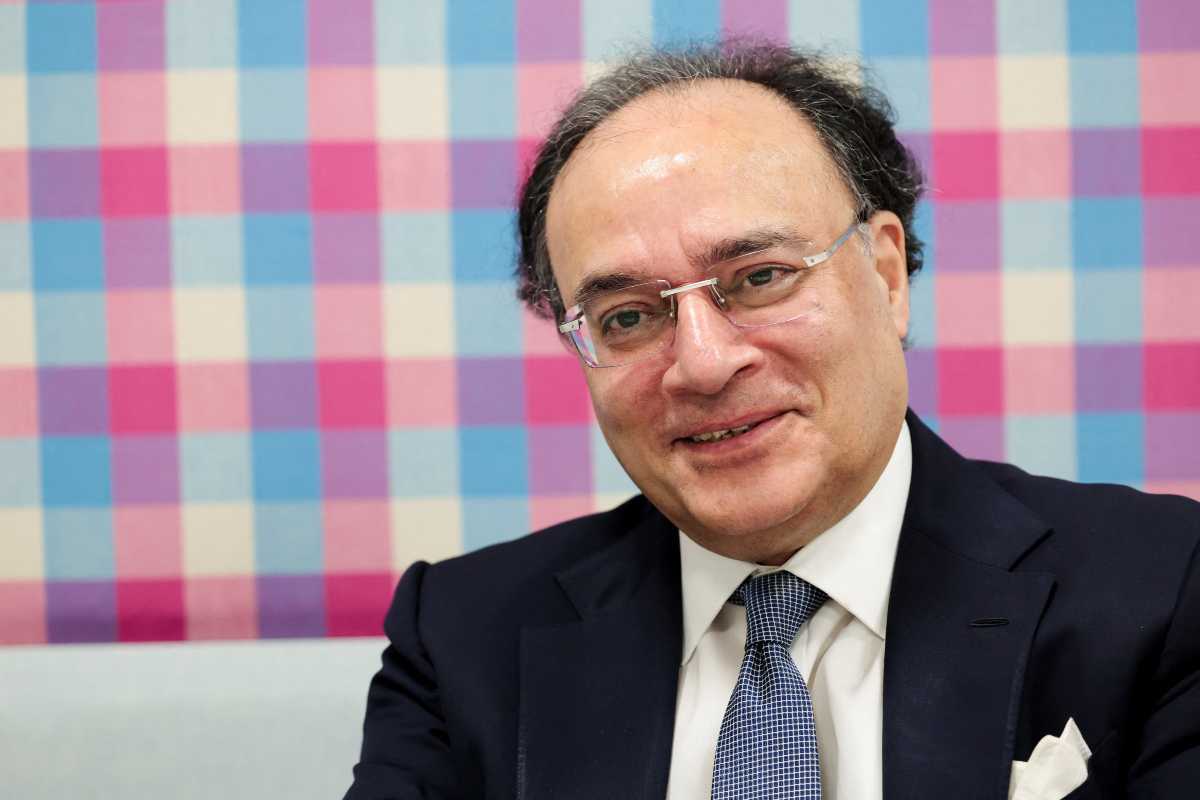
Finance Minister Muhammad Aurangzeb speaks during a Reuters interview in the IMF/World Bank 2026 Annual Meetings at the Queen Sirikit National Convention Center (QSNCC) in Bangkok, Thailand, October 12, 2026.
Reuters
Pakistan is shifting its economic focus from aid toward trade and investment as it seeks to expand exports, attract capital and diversify its commercial relationships, Finance Minister Muhammad Aurangzeb said Thursday.
Speaking to Channel News Asia on the sidelines of the World Bank Group and International Monetary Fund annual meetings in Bangkok, Aurangzeb said Pakistan valued the support of its longstanding partners during difficult economic periods but was now focused on strengthening commercial and investment ties.
He highlighted the Gulf states as particularly important economic partners, noting their role in supporting Pakistan as well as the large remittance flows generated by Pakistani workers in the region.
Pakistan received USD 41.6 billion in remittances in the previous fiscal year and expects the figure to rise to around USD 44 billion in the current fiscal year, Aurangzeb said.
What does Pakistan's shift from aid to trade mean?
The government wants its relationships with major partners to generate more trade, investment and export opportunities rather than center primarily on financial assistance. That includes attracting private capital, developing export-oriented production and using existing infrastructure to deepen commercial ties with China, the US, Gulf states and other markets.
Aurangzeb said Pakistan was seeking stronger economic relationships with all its bilateral partners rather than choosing between competing blocs.
On China and the US, he described Pakistan’s approach as “and-and,” saying Islamabad wanted to deepen economic ties with both countries.
China remained a longstanding partner, with the China-Pakistan Economic Corridor forming an important part of Beijing’s Belt and Road Initiative, he said.
The first phase of CPEC focused on infrastructure, including roads, ports and power generation. Aurangzeb said the second phase was aimed at generating greater economic returns from that infrastructure through business-to-business cooperation, joint ventures and export-oriented production.
Some projects with Chinese partners were already focused on manufacturing goods for export, he said.
Pakistan also wants to expand commercial ties with the US, its largest goods export market.
Aurangzeb said Islamabad intended to use its relationship with the US administration to strengthen economic cooperation.
He also described the European Union as Pakistan’s second-largest trading partner and stressed the need to broaden the country’s commercial relationships as uncertainty in the global trading system increases.
Which new markets is Pakistan targeting?
Pakistan is looking to expand engagement with Gulf Cooperation Council countries, Central Asian republics and members of the Association of Southeast Asian Nations as it seeks additional markets for trade and investment.
Aurangzeb said recent exchanges with Malaysia and Indonesia had helped advance Pakistan’s regional engagement.
His visit to Thailand also provided an opportunity to meet the country’s finance minister and discuss closer economic cooperation, he said.
The finance minister said diversifying both imports and exports across a wider range of markets could strengthen Pakistan’s ability to withstand external disruptions.
Closer regional integration was therefore an important part of the government’s economic strategy, particularly as geopolitical tensions increasingly disrupt established trade and investment relationships.
Why does Pakistan want to diversify its trade relationships?
A wider mix of import and export markets could reduce Pakistan’s exposure to shocks affecting individual countries or trade routes. Aurangzeb said stronger regional links and a broader set of commercial partners could improve economic resilience as geopolitical tensions and fragmentation create greater uncertainty for global trade.
He said geopolitical and economic disruptions were not only risks but could also create opportunities for new investment and trade relationships.
The government’s strategy is therefore focused on strengthening existing partnerships while developing additional links across the Gulf, Central Asia and Southeast Asia, with greater emphasis on exports, private investment and regional commerce.




Comments
See what people are discussing