

Pakistan calls for stronger multilateralism to tackle global threats
Envoy stresses reform, sustainable development, and conflict resolution as global tensions mount
Aamir Abbasi
Editor, Islamabad
Aamir; a journalist with 15 years of experience, working in Newspaper, TV and Digital Media. Worked in Field, covered Big Legal Constitutional and Political Events in Pakistan since 2009 with Pakistan’s Top Media Organizations. Graduate of Quaid I Azam University Islamabad.
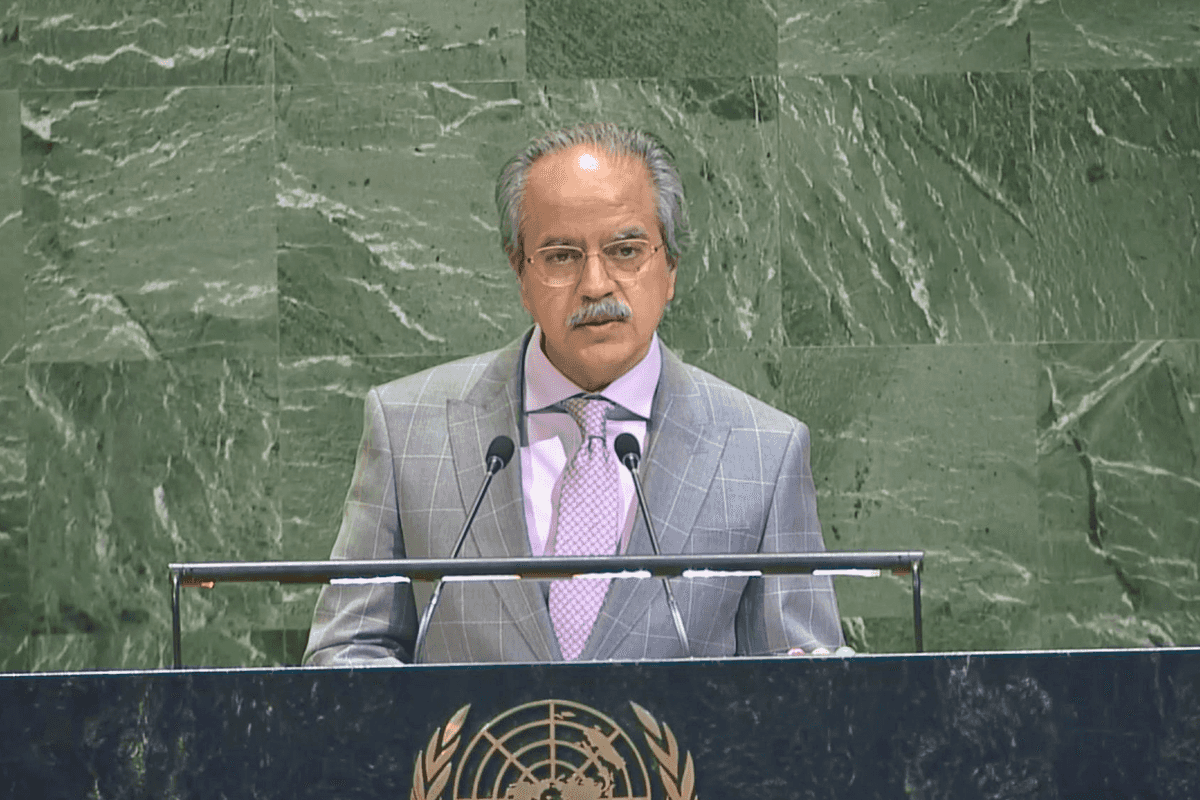
Pakistan’s Permanent Representative, Ambassador Asim Iftikhar Ahmad addresses the UNGA session on Friday.
UN
Pakistan has called on the international community to recommit to multilateralism, uphold international law and accelerate long-delayed reforms at the United Nations, warning that global crises - from conflicts and climate emergencies to inequality and geopolitical fragmentation - are intensifying.
Speaking on Friday at the UN General Assembly debate on the Secretary-General’s annual report, Pakistan’s Permanent Representative, Ambassador Asim Iftikhar Ahmad, described the world as facing “unprecedented strain” but emphasized that the United Nations remains indispensable as the cornerstone of collective global action.
Ambassador Ahmad welcomed the Secretary-General’s comprehensive report, noting that despite mounting challenges, the UN continues to save lives, support sustainable development, uphold human rights, and advance peace. He stressed that many current crises arise from violations of international law and the UN Charter, particularly the principles of sovereignty, territorial integrity, peaceful dispute resolution, and the right to self-determination.
Highlighting ongoing reform efforts, the Pakistani envoy described the Pact for the Future as a vital blueprint to restore trust in multilateralism and welcomed the UN80 Initiative aimed at improving organizational effectiveness. He cautioned, however, that reform should not be reduced to cost-cutting or weakening core UN mandates, emphasizing that peace and security, development, and human rights must be equally prioritized.
Turning to sustainable development, Ambassador Ahmad warned that the Sustainable Development Goals (SDGs) are off track. He cited widening financing gaps, rising debt distress in developing countries, and the urgent need for the SDG Stimulus, reforms to the international financial architecture, expanded concessional financing, fair debt restructuring, and measures to bridge the digital divide. He also stressed expanding access to modern technologies, including the responsible use of artificial intelligence, citing progress under the Compromiso de Seville and the World Summit on the Information Society (WSIS) review.
On climate change, the ambassador highlighted that vulnerable countries, including Pakistan, continue to face devastating floods, heatwaves, and water stress. He called for scaled-up climate finance, particularly for adaptation, and renewed commitments to the loss-and-damage fund. He also warned against the “weaponization of water,” stressing that access to water is a fundamental human right and that compliance with international treaties is essential for a credible, rules-based international order.
Addressing global peace and security, Ambassador Ahmad said wars in the Middle East, Europe, and Africa, along with the ongoing denial of self-determination in Palestine and Indian Illegally Occupied Jammu and Kashmir, are eroding confidence in the international system. He urged full implementation of UN Security Council resolutions and greater use of Charter-based mechanisms to resolve disputes peacefully.
He reaffirmed Pakistan’s strong support for diplomacy, mediation, and peacebuilding, calling for more decisive use of the UN’s good offices, preventive diplomacy, and peace operations to prevent escalation and resolve conflicts politically.
The envoy also raised concern over the accelerating global arms race, warning that rising military expenditures divert resources from development and increase the risk of catastrophic wars. He reiterated Pakistan’s call for a renewed global consensus on disarmament, emphasizing equal and undiminished security for all states, progress on nuclear disarmament, and controls on emerging weapons technologies.
On counter-terrorism, Ambassador Ahmad stressed that global efforts remain insufficient. He said Pakistan, having suffered heavily from terrorism, believes an effective response must address all four pillars of the UN Global Counter-Terrorism Strategy, including tackling root causes, and respond to rising far-right extremism, xenophobia, and Islamophobia.
He also strongly backed reform of the UN Security Council, calling for a more representative, democratic, transparent, and accountable body. Stressing that the Intergovernmental Negotiations process remains the only legitimate forum for advancing reform, he called for a “reform for all, privilege for none,” rejecting any changes that favor only a select few.
Concluding his statement, Ambassador Ahmad reaffirmed Pakistan’s unwavering commitment to multilateralism, the UN Charter, and constructive engagement in promoting sustainable development, peace, and human rights. He pledged that Pakistan would continue supporting the UN’s mission of leaving no one behind.


Comments
See what people are discussing