

Pakistan to begin privatizing electricity distribution companies in January
Government plans phased sale, with first bids expected by mid-2026

Haris Zamir
Business Editor
Experience of almost 33 years where started the journey of financial journalism from Business Recorder in 1992. From 2006 onwards attached with Television Media worked at Sun Tv, Dawn Tv, Geo Tv and Dunya Tv. During the period also worked as a stringer for Bloomberg for seven years and Dow Jones for five years. Also wrote articles for several highly acclaimed periodicals like the Newsline, Pakistan Gulf Economist and Money Matters (The News publications)
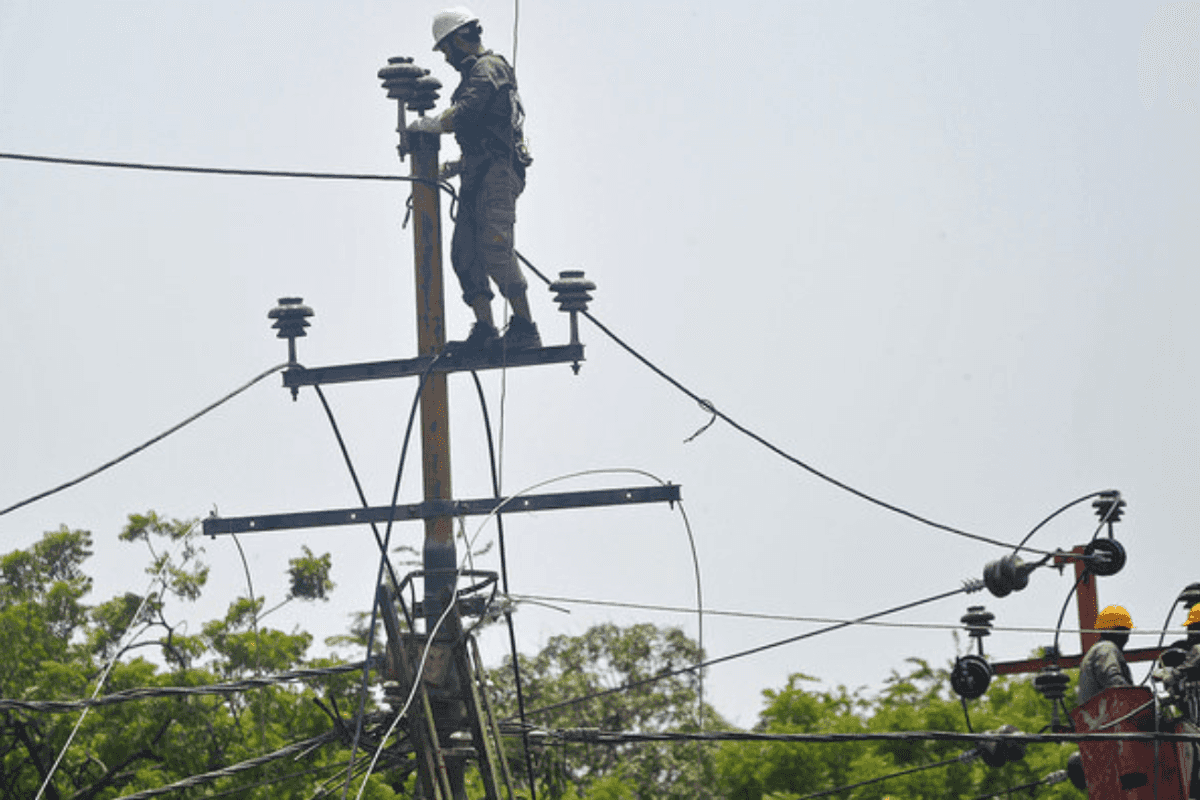
Pakistan plans to privatize three electricity distribution companies by the middle of next year, with the process set to begin in January, the secretary of the Privatization Commission told a Senate committee on Thursday.
Briefing the Senate Standing Committee on Privatization, the Privatization Commission secretary said the three distribution companies, or DISCOs, will not be auctioned simultaneously but through separate bidding processes.
Senator Bilal Ahmed Khan questioned whether provincial governments had been consulted about purchasing the DISCOs, asking how the private sector could take on entities that the federal government itself was unwilling to assume with existing financial burdens.
Privatization Adviser Muhammad Ali told the committee that provinces had also been offered electricity distribution companies in the past. He stressed that privatization aims to secure firm commitments from private operators to reduce losses.
“There is no benefit in transferring assets from one government to another,” Ali said, adding that private sector involvement would be tied to performance benchmarks.
The meeting, chaired by Senator Afnan Ullah, was also briefed by Power Division officials, who said the Guddu and Nandipur power plants are ready for privatization and that the government will not incur any further expenditure on them.
Officials said both plants would require some gas allocation. Guddu power plant was earlier allocated 150 million cubic feet per day (mmcfd) of gas but is currently operating on 100 mmcfd, while the Nandipur power plant is running on re-gasified liquefied natural gas (RLNG).
Senator Bilal Ahmed Khan asked what course of action the government would take if the plants could not be privatized. Power Division officials said the matter would be referred back to the federal cabinet if privatization efforts fail.
Power Division officials said all electricity distribution companies are included in the privatization plan. In the first phase, Islamabad Electric Supply Company (IESCO), Faisalabad Electric Supply Company (FESCO) and Gujranwala Electric Power Company (GEPCO) will be privatized.
The second phase will include Peshawar Electric Supply Company (PESCO) and Sukkur Electric Power Company (SEPCO), while Lahore Electric Supply Company (LESCO), Multan Electric Power Company (MEPCO) and Hyderabad Electric Supply Company (HESCO) are planned for privatization in the third phase.
Officials cited Turkey’s experience, noting that when electricity companies there were privatized they were operating at losses of around 80%, but are now profitable.
The Privatization Commission secretary said bids for DISCOs in the first phase would be held by mid-next year. He added that HESCO and SEPCO would be offered under a long-term concession model, under which management control is handed over to the private sector.
Senator Bilal Ahmed Khan said the model appeared to favor facilitation for the private sector and argued that, under similar conditions, provincial governments could also take over the companies.
Adviser Ali said bidding would also be conducted under the concession model and that private companies would be required to sign agreements with the government committing to significant reductions in losses. He said private operators would only earn profits if they succeed in cutting losses, adding that the long-term concession model is a more effective approach than outright privatization.
Under this model, he said, investors would be required to invest in improving company performance, leading to better services and reduced losses at distribution companies.





Comments
See what people are discussing