

Pakistan trader seeks concessions as Iran war soars business costs
Motiwala demands swift tax refunds, gas tariff tariff rationalization to support local industries

Business Desk
The Business Desk tracks economic trends, market movements, and business developments, offering analysis of both local and global financial news.
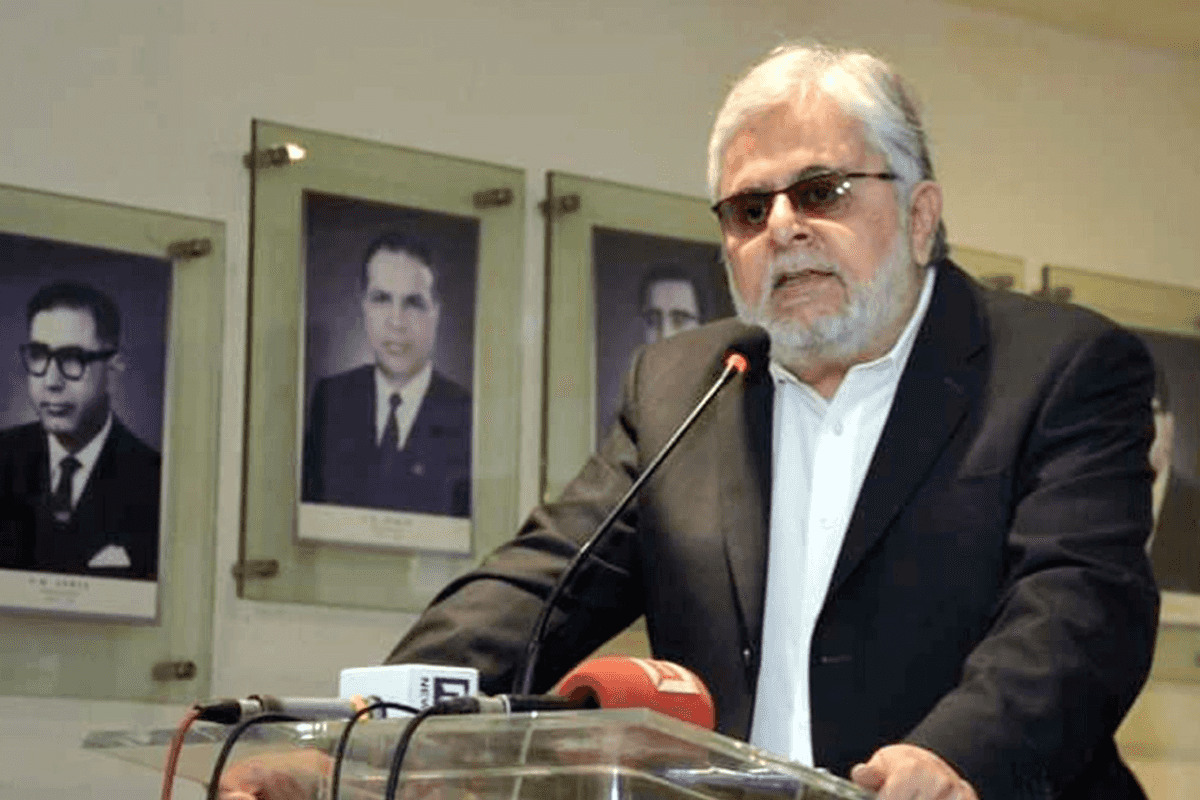
Businessmen Group Chairman Muhammad Zubair Motiwala
File
Muhammad Zubair Motiwala, the chairman Businessmen Group, has stressed the need for immediate fiscal, energy and export-related policy interventions in light of the US-Israel war on Iran, warning the worsening regional situation could severely destabilize Pakistan’s economy if timely measures are not taken.
In a letter addressed to Finance Minister Muhammad Aurangzeb, Motiwala noted that even before the war, Pakistan’s economy was under considerable pressure due to stagnant exports, weakening industrial activity and declining remittance inflows, all of which were aggravating external account vulnerabilities.
He sought concessions to support businesses, including the immediate restoration of zero-rating of sales tax at the input stage for export-oriented sectors.
These sectors “contribute nearly 80 to 85% of Pakistan’s total exports” and therefore liquidity is extremely important for sustaining export momentum.
The shift from zero-rating to a refund-based regime had created serious working capital constraints for exporters due to delayed refund cycles and increased financial costs.
According to Motiwala, the restoration of zero-rating would ensure uninterrupted liquidity, lower the cost of capital and significantly improve the global competitiveness of Pakistani exports.
Motiwala, who is also the former president of Karachi Chamber of Commerce and Industry, suggested the assessment of customs duties and taxes on Ex-Works (EXW) value instead of the existing Cost and Freight (CNF) basis.
He explained that the current CNF-based valuation mechanism inflates the dutiable value of imported goods because it includes freight and insurance costs, both of which have sharply increased due to geopolitical disruptions.
Motiwala stated that Pakistan’s industrial electricity tariffs remained uncompetitive, averaging around 14 to 16 US cents per kilowatt hour.
Although the federal government had introduced an Incremental Consumption Package (ICP), under which concessional tariffs and relief of approximately PKR 10.3 per unit were being provided to industries across Pakistan on incremental consumption, Karachi’s industrial sector had not received its due share under the package.
Motiwala claimed the situation has created a serious structural disadvantage for Karachi-based industries because industries in other regions were benefiting from concessional tariffs while industries in Karachi continued to bear higher effective electricity costs.
He strongly demanded the immediate disbursement of the pending PKR 28 billion to PKR 33 billion, stating that this would provide much-needed liquidity relief to exporters who were already facing severe cash flow constraints.
Gas supply
Motiwala said that industrial gas tariffs had increased substantially while supply inconsistencies continued to disrupt business operations. He stressed that gas was a critical input for export-oriented industries and its pricing directly affected Pakistan’s competitiveness in international markets.
He demanded gas supply on a cost-of-service basis, with tariffs reflecting the actual cost of procurement and supply and proposed gas tariffs rationalization.
Referring to the growing burden of logistics costs, he said that rising global shipping costs and insurance premiums, exacerbated by regional tensions, had significantly increased exporters’ expenses. He stressed the need to immediately restore freight subsidy and export facilitation schemes to offset these external cost pressures.
Motiwala also pointed out the substantial amount of exporters’ funds that remained stuck in pending tax refunds, creating severe liquidity constraints and increasing reliance on expensive borrowing.
He strongly urged the government to release all pending refunds on a priority basis and ensure a time-bound automated mechanism for future processing so that exporters do not continue to face unnecessary financial stress.


Comments
See what people are discussing