

Pakistan weighs gas sector deregulation, privatization as liabilities reach PKR 5.45 Tn
Government considers private investment and restructuring of gas utilities as circular debt and supplier payments strain the sector
Haris Zamir
Business Editor
Experience of almost 33 years where started the journey of financial journalism from Business Recorder in 1992. From 2006 onwards attached with Television Media worked at Sun Tv, Dawn Tv, Geo Tv and Dunya Tv. During the period also worked as a stringer for Bloomberg for seven years and Dow Jones for five years. Also wrote articles for several highly acclaimed periodicals like the Newsline, Pakistan Gulf Economist and Money Matters (The News publications)
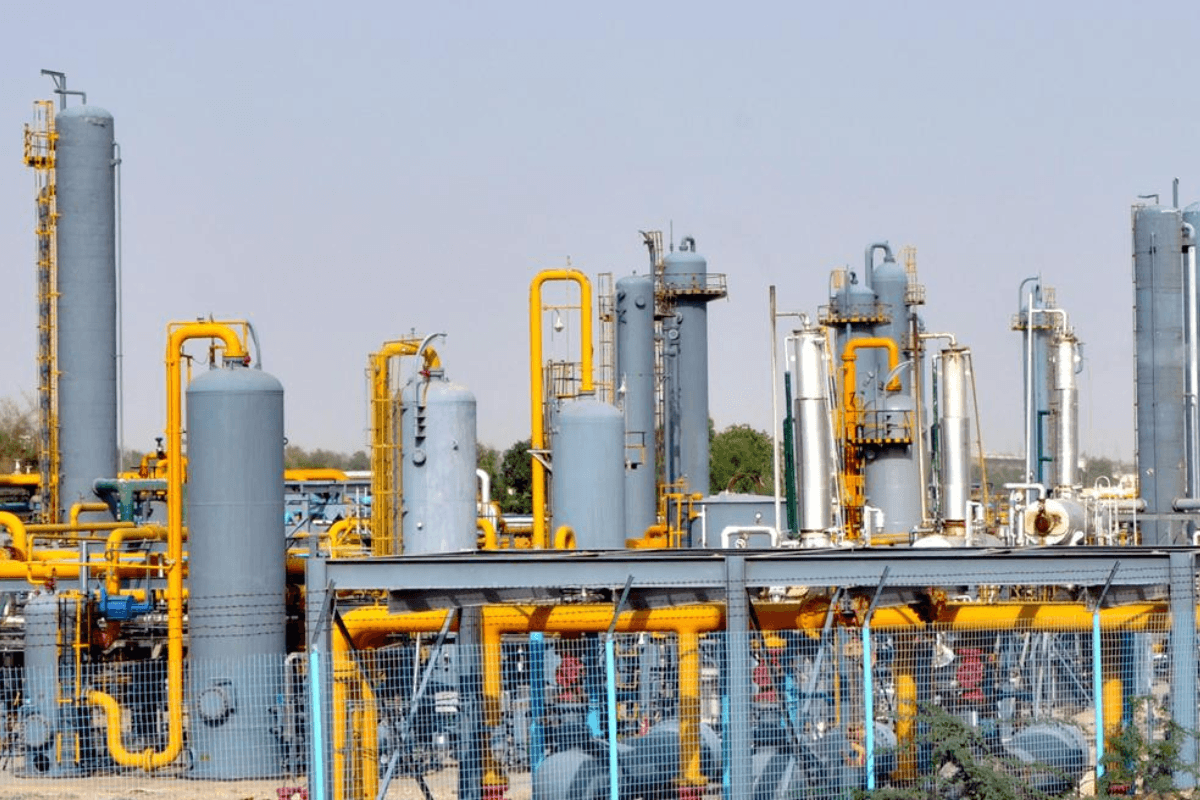
Sui Gas Field purification plant in Dera Bugti, Balochistan.
Pakistan Petroleum Limited
Pakistan's government is preparing proposals to deregulate the gas sector, privatize its two gas distribution companies and attract private investment as the sector's combined circular debt and outstanding supplier payments have reached PKR 5.454 trillion, according to Finance Ministry sources.
The proposals are being considered in line with Pakistan's reform commitments to the International Monetary Fund (IMF), with officials examining greater private-sector participation and changes to gas pricing that could increase costs for consumers, the sources said.
The Finance and Petroleum ministries and relevant departments have been directed to prepare a plan for submission to Prime Minister Shehbaz Sharif. A final decision will follow consideration of the proposals by the Prime Minister's Office.
The proposals were also discussed with the IMF during the previous economic review, according to the sources.
What changes are being considered for Pakistan's gas sector?
The government is considering deregulation, privatization of its two gas distribution companies and greater private investment to address financial pressures in the sector. The proposals remain under review, with no final decision announced. Changes to pricing, regulation and company ownership would depend on government approval.
Finance Minister Muhammad Aurangzeb chaired a meeting on October 19 to review a proposed roadmap for restructuring and deregulating the sector, focusing on financial sustainability, operational efficiency and private investment.
According to an official government statement, the discussions covered a phased transition toward greater competition, reforms to gas pricing and supply, and measures to address existing financial liabilities.
The meeting also examined cross-subsidies, gas losses and supply-demand imbalances, while emphasizing the need to protect consumers from undue financial pressure.
The proposed framework will be presented to the prime minister before further technical work and consultations.
Gas sector liabilities reach PKR 5.454 trillion
Federal Minister for Energy Ali Pervaiz Malik told the National Assembly on Monday that the gas sector's circular debt and outstanding payments to domestic gas and liquefied natural gas (LNG) suppliers totaled PKR 5.454 trillion as of June 30, 2026.
In written replies during Question Hour, Malik said circular debt stood at PKR 3.631 trillion, comprising PKR 1.848 trillion in principal and PKR 1.783 trillion in late payment surcharges.
The principal included PKR 1.448 trillion in tariff differentials, PKR 131 billion in receivables from power companies, PKR 210 billion in sales and income tax receivables, and PKR 59 billion related to litigation.
Outstanding payments to gas suppliers totaled another PKR 1.823 trillion.
Of this amount, PKR 1.479 trillion was owed to domestic gas suppliers, while PKR 344 billion related to LNG suppliers, including adjustments to regasified LNG prices and cargo diversions.
Malik said the government was finalizing a Circular Debt Management Plan in consultation with relevant stakeholders.
The plan will be submitted for approval and subsequently shared with the IMF, subject to the necessary approvals.
Pakistan's remaining oil and gas reserves
In a separate response to the National Assembly, Malik provided figures on Pakistan's remaining recoverable oil and gas reserves.
He said the country had 276 million barrels of recoverable oil reserves remaining from a total of 1.378 billion barrels, after cumulative production of 1.102 billion barrels.
Remaining recoverable natural gas reserves stood at approximately 20,664 billion cubic feet, following production of 48,140 billion cubic feet from total recoverable reserves of 68,803 billion cubic feet, according to the figures presented.





Comments
See what people are discussing