

Pakistan’s Interior Ministry notifies ban on hardline religious group following federal cabinet’s approval
Ministry issues notification declaring group proscribed organization under anti-terrorism laws

News Desk
The News Desk provides timely and factual coverage of national and international events, with an emphasis on accuracy and clarity.
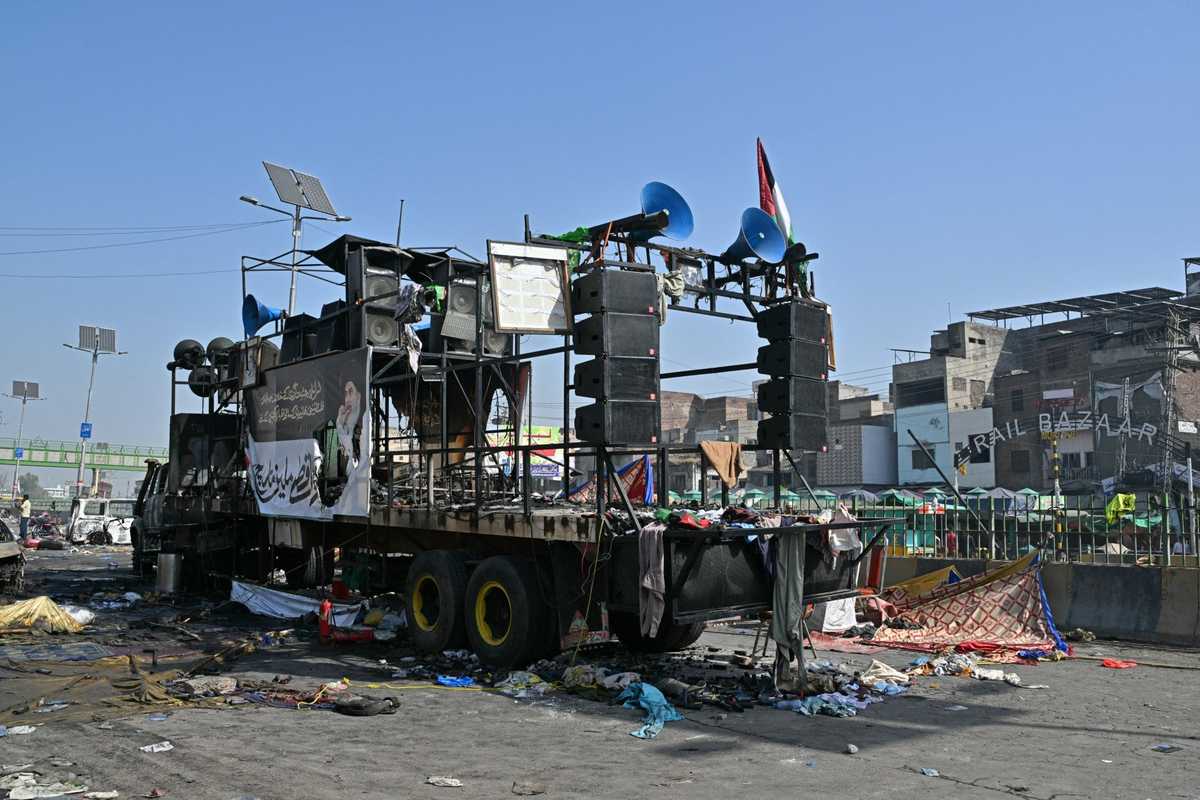
Pakistan’s Interior Ministry formally banned the hardline religious group Tehreek-e-Labbaik Pakistan (TLP) on Friday, following approval from the federal cabinet a day earlier.
The ministry issued an official notification declaring the group a proscribed organization under anti-terrorism laws. The move came in response to recommendations from the Punjab government, which accused TLP of inciting violence and disrupting public order through repeated street protests.
The federal cabinet approved the ban a day earlier after a high-level meeting chaired by Prime Minister Shehbaz Sharif. Security and intelligence officials briefed the meeting on the group’s recent violent demonstrations in Lahore and Muridke.
Acting on the Punjab government’s reference, the cabinet directed the Interior Ministry to complete legal and administrative steps to outlaw the group.
Officials told the meeting that since its founding in 2016, TLP has repeatedly used violence and religious extremism to advance its agenda. The group was previously banned in 2021, but the decision was reversed six months later after it pledged to renounce violence — a commitment officials say it has since violated.
Authorities said TLP’s repeated protests have led to the deaths of both law enforcement officers and civilians, prompting renewed calls for decisive action.
Earlier, Punjab Information Minister Azma Bukhari told reporters that TLP chief Saad Rizvi and his brother would soon be arrested. She said the provincial government would also restrict the use of loudspeakers to the call to prayer and sermons, warning that possession of illegal weapons would lead to strict penalties.
Legal framework and expert analysis
Political analyst Ahmad Bilal Mehboob told Nukta that TLP has been banned under the Anti-Terrorism Act, similar to its earlier six-month ban in 2021 that was later lifted.
He said if the action had been taken under the Elections Act, the case would have gone directly to the Supreme Court. However, since it falls under the Interior Ministry’s jurisdiction, any appeal would be filed there — though he noted that a reversal is unlikely given the government’s evidence and justification.
Under Pakistan’s constitution, citizens have the right to form political parties, but that right is subject to law and public order. Once the cabinet approves a ban, the Ministry of Law drafts a reference to the Supreme Court, which can confirm the decision.
If upheld, the Election Commission of Pakistan (ECP) will dissolve the party and issue a formal notification. The Anti-Terrorism Act of 1997 also allows the government to ban organizations involved in terrorism, violence, or sectarian incitement. Once banned, a group’s bank accounts, media platforms, and weapon licenses can be frozen.
Background on TLP
TLP was founded in 2015 by the late cleric Khadim Hussain Rizvi as part of the Barelvi Sunni movement. It gained national attention through mass demonstrations defending Pakistan’s blasphemy laws, which impose the death penalty for insulting the Prophet Muhammad (PBUH).
Now led by Rizvi’s son, Saad Rizvi, TLP has combined religious populism with anti-Western and anti-minority rhetoric. The party frequently organizes disruptive protests that paralyze major cities and challenge state authority.
The group was previously banned in 2021 after violent demonstrations demanding the expulsion of the French ambassador. That ban was lifted later that year following negotiations with the government.
Since then, TLP has been linked to multiple incidents of mob violence, including the 2023 arson attacks in Punjab’s Jaranwala town, where 21 churches were burned. The group’s actions have drawn growing concern from rights organizations and security officials over its radical influence and impact on public safety.



Comments
See what people are discussing