

Pakistan’s National Assembly debates landmark 27th Constitutional Amendment
PPP’s Nafisa Shah admits several clauses in the proposed amendment 'need a lot of discussion and may be a little controversial'

News Desk
The News Desk provides timely and factual coverage of national and international events, with an emphasis on accuracy and clarity.
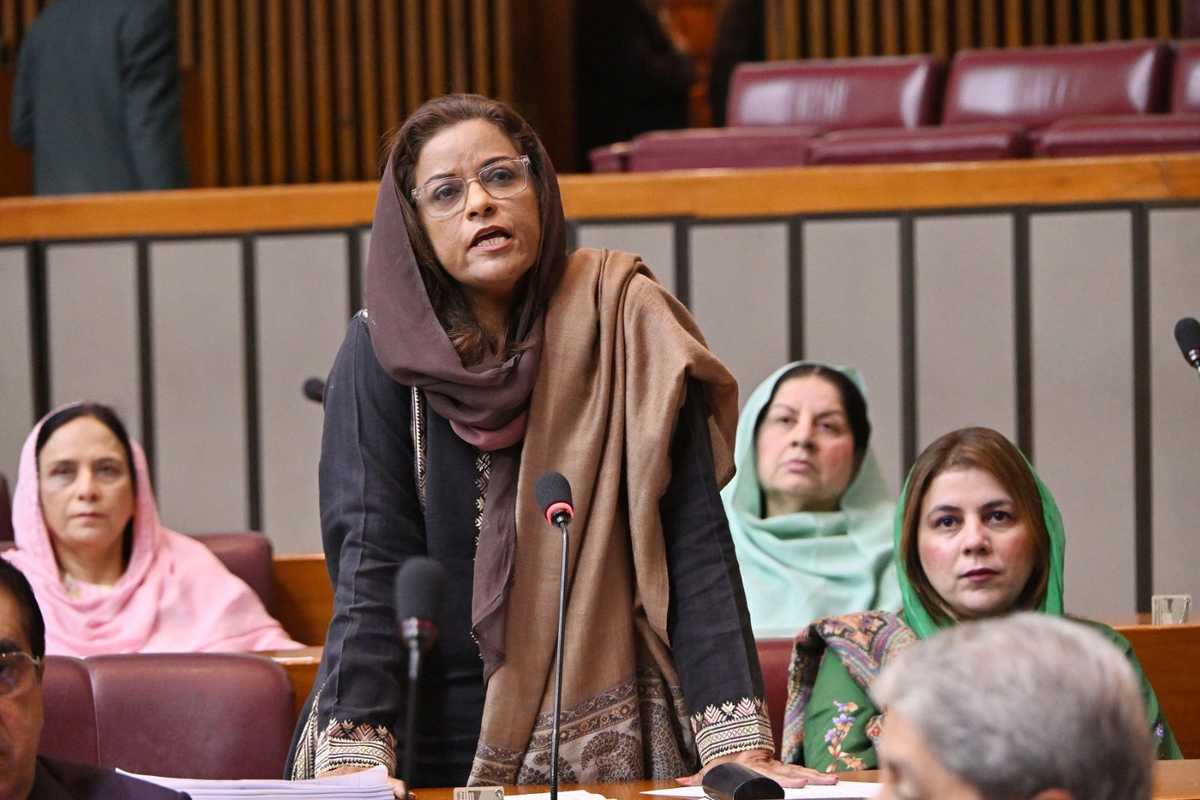
PPP’s Nafisa Shah addressing the session on November 12, 2025.
Courtesy: Facebook/National Assembly of Pakistan
Pakistan’s National Assembly resumed its session on Wednesday, with the lower house expected to pass the 27th Constitutional Amendment Bill, introduced by Law Minister Azam Nazeer Tarar a day earlier.
The PML-N-led ruling coalition, which holds a two-thirds majority, is positioned to secure the bill’s approval.
The 59-clause amendment, already passed by the Senate on Monday, seeks to overhaul Pakistan’s military and judicial structures. The legislation was moved by Tarar and received 64 votes in favor in the 96-member upper house. No votes were cast against it, as opposition lawmakers boycotted the session and tore up their copies in protest.
Besides treasury members, senators from the Awami National Party (ANP), PTI-backed Saifullah Abro, and JUI-F’s Ahmed Khan supported the bill. Abro, who abstained from joining the protest, later announced his resignation from the Senate.
The bill requires a two-thirds majority in the 336-member National Assembly for passage. The PML-N-led alliance currently commands sufficient numbers, with the PML-N holding 125 seats, PPP 74, MQM-P 22, PML-Q four, Istehkam-e-Pakistan Party four, and one seat each for the PML-Z, Balochistan Awami Party (BAP), and National Peoples Party.
The opposition benches together hold 103 members.
The session
Tuesday’s session began half an hour late with prayers for PML-N Senator Irfan Siddiqui, who passed away after a brief illness.
During Wednesday’s debate, PPP lawmaker Nafisa Shah defended her party’s position on the amendment, responding to opposition criticism.
- YouTube www.youtube.com
She said the PPP’s approach to both the 26th and 27th Constitutional Amendments must be understood in the context of the provisions not included in the bills.
“I want to make a list of those. Some of them are a work in progress, but some of them are those that the PPP had already crushed,” Shah said. “And for that, you will have to acknowledge and laud the PPP’s role.”
She admitted that many clauses in the proposed amendment “need a lot of discussion” and “may be a little bit controversial.” Citing PPP Chairman Bilawal Bhutto-Zardari, she added, “You cannot let go off whatever space you are getting — be it a mile or an inch — if you have to move toward civilian supremacy.”
“Boycott is not an option,” Shah said, stressing that the PPP had always “engaged positively with the Constitution and Parliament.”
Earlier in the session, National Assembly Speaker Ayaz Sadiq gave the floor to Pakhtunkhwa Milli Awami Party (PkMAP) chief Mehmood Khan Achakzai. During his speech, the live feed from the Assembly’s YouTube channel was disrupted.
When the stream returned, Sadiq was heard saying Prime Minister Shehbaz Sharif had repeatedly invited the opposition for talks.
- YouTube www.youtube.com
“As the speaker of the National Assembly, I am ready to facilitate dialogue between the government and the opposition,” he said. “Accept my offer, hold talks. You will get results through talks.”
PTI Chairman Barrister Gohar Ali Khan replied that his party had never given up on dialogue.
“When our mandate was stolen, Imran Khan had nominated Shibli Faraz, Omar Ayub, and Ali Amin Gandapur to hold talks,” Gohar said. “Achakzai sahib had the complete mandate to engage and suggest from his platform. Efforts were made, but nothing transpired.”
He reiterated PTI’s request to allow Khyber Pakhtunkhwa Chief Minister Sohail Afridi to meet PTI founder Imran Khan in jail.
Sadiq responded that while the prime minister had shown flexibility and formed a high-powered committee for talks, the opposition had boycotted the meetings.
On Tuesday, Law Minister Tarar told lawmakers that the amendment had been passed in the Senate with 64 votes. He said opposition parties should have joined the joint parliamentary committee that reviewed the draft.
He added that many countries have constitutional courts to handle such matters, where judges are appointed through judicial commissions — a framework also included in Pakistan’s Charter of Democracy.





Comments
See what people are discussing