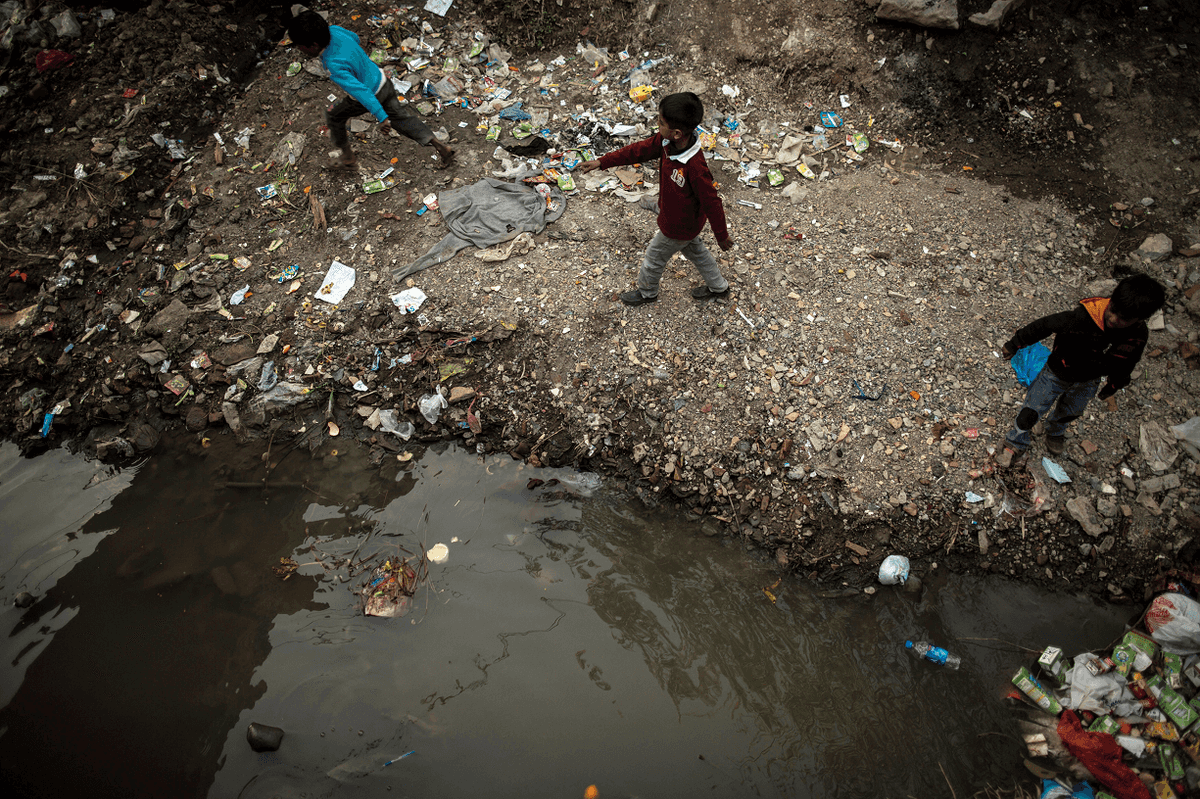
Pakistan’s planning minister said poverty declined between fiscal years 2013 and 2017 but has increased over the past seven years, blaming policy mismanagement, the COVID-19 pandemic and rising import costs for reversing earlier gains.
Ahsan Iqbal, speaking at a ceremony marking the launch of a poverty report, said the poverty rate stood at 21.9% in fiscal year 2018-19 but rose to 28.9% in fiscal year 2024-25.
“From fiscal year 2013 to 2017, poverty declined,” Iqbal said. “Then the wheel of economic growth was turned in the wrong direction.”
He said the increase in poverty over the past seven years reflected economic setbacks and governance failures. Without naming individuals, he criticized what he called an “inexperienced government” for damaging the country’s development trajectory.
Iqbal also cited the impact of the coronavirus pandemic, saying COVID-19 contributed to rising poverty levels.
He blamed the previous government led by Pakistan Tehreek-e-Insaf for increasing the country’s import bill to $80 billion, which he said put additional strain on the economy.
Accurate data is essential for effective policymaking, the minister said.
“Only when we have correct data can we ensure the proper use of resources,” Iqbal said. “If poverty statistics are accurate, only then can the right actions be taken to eliminate it.”
He stressed the need for district-level poverty data, saying that provinces would only be able to respond effectively if detailed statistics on poverty and deprivation were available for each district.
“Unless we obtain accurate poverty figures for every district, provinces will not be able to take targeted action,” he said.
Iqbal said the new report aims to provide reliable and disaggregated data to guide federal and provincial governments in designing focused poverty alleviation strategies.





Comments
See what people are discussing