

PNSC plans to add up to eight vessels in five years
State-owned shipping company aims to reduce average fleet age to seven years by 2031, posts record FY26 revenue of PKR 59.5 billion

Business Desk
The Business Desk tracks economic trends, market movements, and business developments, offering analysis of both local and global financial news.
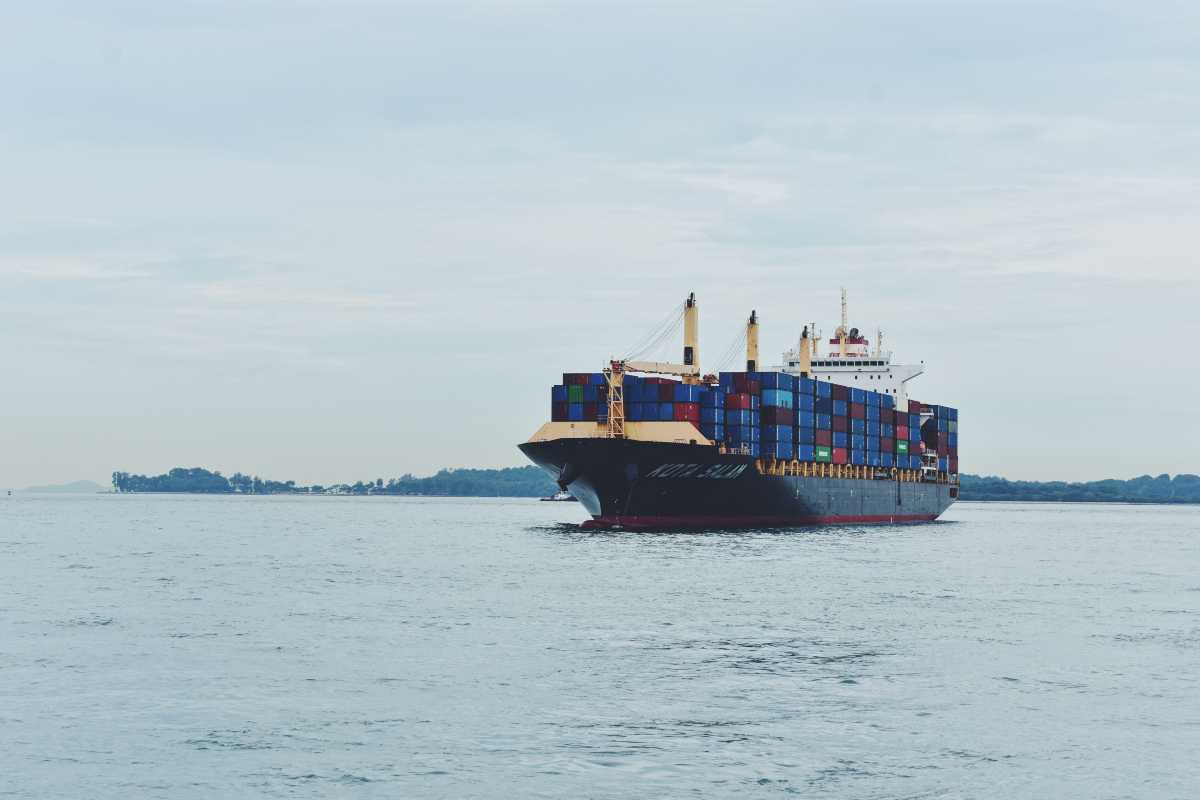
A container ship carrying cargo. Pakistan National Shipping Corporation plans to acquire up to eight vessels over the next five years to expand capacity and modernize its fleet.
Pexels
Pakistan National Shipping Corporation (PNSC) plans to acquire up to eight second-hand vessels under a five-year fleet expansion plan, aiming to increase shipping capacity and reduce the average age of its fleet to seven years by 2031, according to its corporate briefing on Thursday.
What does PNSC's fleet expansion plan include?
PNSC advertised the procurement of up to eight second-hand vessels on November 1, 2026. The plan includes up to two feeder container vessels, two fully cellular container vessels, two Aframax/LR-2 tankers, one liquefied natural gas (LNG) carrier and one bunker tanker or barge for supplying fuel to ships.
The feeder container vessels would have capacities of 1,200 to 2,400 twenty-foot equivalent units (TEUs), while the fully cellular container vessels would have a capacity of 5,000 TEUs each, subject to a 20% variation.
The state-owned shipping company has also placed an order for a new container vessel with Karachi Shipyard & Engineering Works and is exploring opportunities to transport edible oil across South and Southeast Asia.
PNSC currently operates 13 vessels with a combined capacity of 996,683 deadweight tons (DWT), a measure of the total weight a ship can carry.
The fleet comprises eight tankers with a capacity of 741,506 DWT, accounting for 74% of total capacity, and five bulk carriers with a capacity of 255,177 DWT, representing the remaining 26%.
During fiscal year 2026 (FY26), PNSC inducted three tankers, MT Karachi, MT Lahore and MT Quetta, at a combined cost of USD 193.2 million.
The acquisitions were financed through a combination of the company's own funds and a 10-year financing facility of PKR 55.5 billion. The facility was priced at the three-month Karachi Interbank Offered Rate (KIBOR) plus 0.3 percentage points, with PKR 43.8 billion disbursed during the fiscal year.
The additions reduced the average age of PNSC's fleet to 15.8 years at the end of June 2026 from 18.2 years a year earlier.
How did PNSC perform financially in FY26?
PNSC reported a 5.4% year-on-year increase in consolidated profit after tax to PKR 21.5 billion in FY26, supported by higher freight rates, improved gross profit margins and lower taxation and levies.
The company reported earnings per share of PKR 108.77 for the year ended June 30, 2026, compared with PKR 103.22 in the preceding fiscal year.
Revenue surged 58.2% year-on-year to a record PKR 59.5 billion from PKR 37.6 billion in FY25, supported by an approximately 20% increase in cargo volumes to 13.2 million tons from 11 million tons.
PNSC's share of Pakistan's seaborne trade increased to 14.68% in FY26 from 11.04% a year earlier.
Longer voyages to Yanbu, Saudi Arabia, and stronger freight and charter-out rates across tanker and bulk carrier operations also supported revenue growth.
Owned tankers contributed the largest share of FY26 revenue at 63.8%, followed by chartered foreign vessels at 23.9%, bulk carriers at 8.9%, slot charter operations at 2.8% and real estate at 0.6%.
The company announced a total cash dividend of PKR 20 per share for FY26, comprising interim and final dividends of PKR 10 each, compared with PKR 33 per share in FY25.
What drove changes in PNSC's profit margins?
PNSC's gross profit margin widened to 36.1% in FY26 from 29.8% a year earlier, as higher freight rates outpaced rising fleet operating expenses.
Fleet expenditure increased 44% year-on-year, reflecting higher charter-hire costs for foreign-flagged vessels, PKR 2.8 billion in war-risk insurance premiums, higher marine fuel costs and port charges, and depreciation on newly inducted vessels.
Other income declined 48% to PKR 6.9 billion, partly reflecting the absence of PKR 4.4 billion in one-off gains from vessel disposals recorded in FY25.
Finance costs increased 438% year-on-year to PKR 2.31 billion from PKR 430 million, reflecting borrowing costs associated with the acquisition of the three tankers.
Profit before levies and taxation remained broadly unchanged at PKR 23.2 billion. However, a decline in the combined effective rate of taxation and levies to 7.3% from 12.2% supported growth in annual profit after tax.
Despite the increase in earnings, the company's net profit margin narrowed to 36.18% in FY26 from 54.33% a year earlier.
What risks could affect PNSC's operations?
Management identified geopolitical disruptions along key shipping routes, particularly around the Strait of Hormuz, the Red Sea and Bab el-Mandeb, as major risks to its operations.
Other challenges include volatility in international freight rates, fluctuations in marine fuel prices and KIBOR, evolving International Maritime Organization (IMO) emissions and safety regulations, and difficulties in attracting and retaining seafarers.





Comments
See what people are discussing