

Progress and setbacks continue for China Pakistan Economic Corridor
Kamran Khan says CPEC, a key part of China’s Belt and Road Initiative, faces delays and budget challenges

News Desk
The News Desk provides timely and factual coverage of national and international events, with an emphasis on accuracy and clarity.
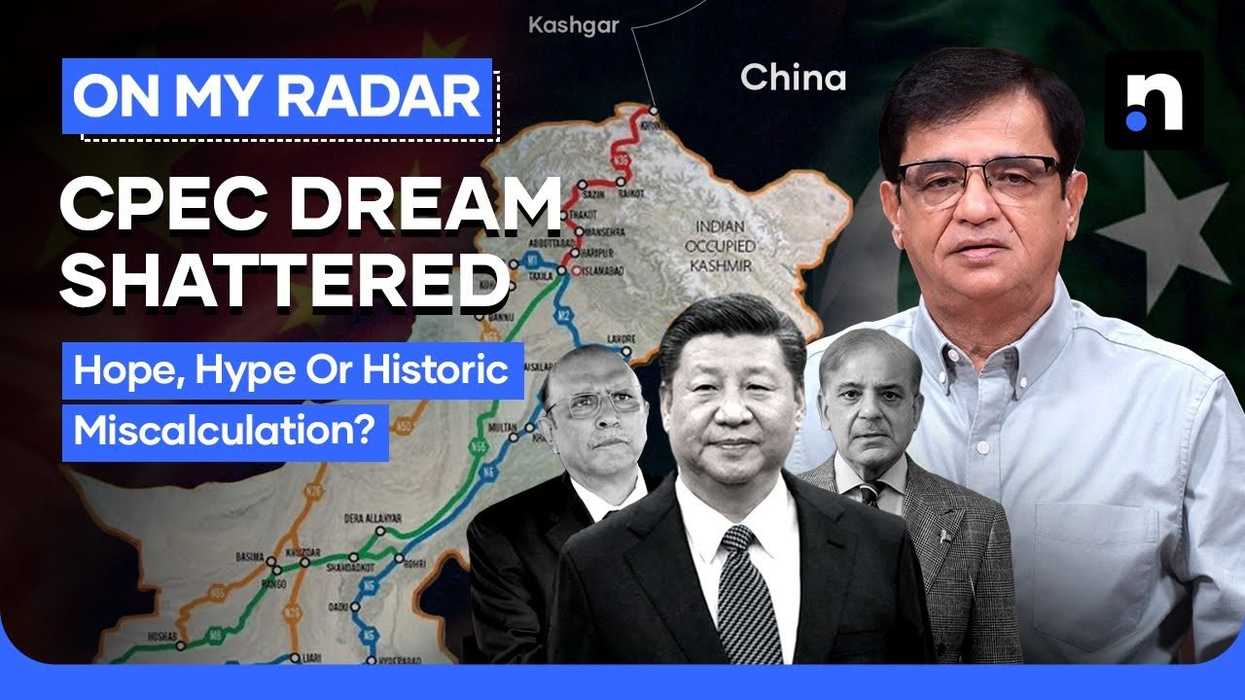
Pakistan’s China-Pakistan Economic Corridor (CPEC), the largest infrastructure and energy initiative in the country’s history, continues to face a mix of achievements and challenges more than a decade after its launch.
Originally hailed as a transformative “game-changer” for Pakistan’s economy, the corridor has been slowed by security concerns, economic pressures and bureaucratic hurdles, raising questions about the pace of its implementation.
In the latest episode of On My Radar, Kamran Khan said that while CPEC remains a key part of China’s Belt and Road Initiative, several projects have struggled to meet deadlines and budget targets.
He highlighted that political instability, rising circular debt, and past attacks on Chinese engineers, including the 2021 Dasu Dam incident, have posed significant challenges to progress. Yet, Khan stressed that CPEC still offers enormous potential for industrial growth, energy development, and regional connectivity.
CPEC was formally launched under Pakistan’s 2013 government, with 51 MoUs signed with China in 2015. Its initial value of $46 billion has now grown to over $64 billion.
The first phase focused on energy and infrastructure, adding over 5,320 megawatts of electricity to the national grid and reducing load shedding. But financial pressures, including rising circular debt, have made some projects economically challenging.
China has invested around $21 billion in energy projects under CPEC, largely through commercial loans, requiring Pakistan to pay roughly $1.7 billion annually in debt servicing. Delays in payments have at times unsettled investors, though no project has been fully abandoned.
Meanwhile, CPEC has delivered notable infrastructure gains, including over 1,500 kilometers of motorways and highways, the Lahore Orange Line Metro Train, and a fully operational Gwadar Port and Free Zone.
Phase two of CPEC is focused on Special Economic Zones such as Rashakai, Dhabeji and Allama Iqbal Industrial City. These zones are expected to drive industrialization, technology transfer, export growth, and job creation.
The corridor also aims to modernize agriculture, promote green initiatives, develop AI, and expand electric vehicle technology. Analysts emphasize that the success of this phase will depend on timely financial management, governance reforms, and enhanced security measures.
Kamran Khan noted that China remains committed to CPEC but expects Pakistan to restore investor confidence to unlock additional funds. If these challenges are addressed, Phase two could significantly boost Pakistan’s industrial output, expand exports, and create employment opportunities, helping to realize much of the corridor’s original vision.





Comments
See what people are discussing