

Punjab’s development surge highlights governance gap with other provinces
Kamran Khan notes that Punjab’s growth, paired with social and cultural initiatives, sharply contrasts with other provinces

News Desk
The News Desk provides timely and factual coverage of national and international events, with an emphasis on accuracy and clarity.
Punjab is emerging as the fastest-developing province in Pakistan, leaving Balochistan, Khyber Pakhtunkhwa, and even Sindh - particularly Karachi - far behind in terms of infrastructure, governance, and public services.
Analysts and citizens alike note that, from roads to law and order, Punjab is demonstrating higher administrative performance compared with other provinces. Over the past two years, under Chief Minister Maryam Nawaz, Punjab has accelerated its development agenda, winning public approval for policies aimed at education, health, and digital governance.
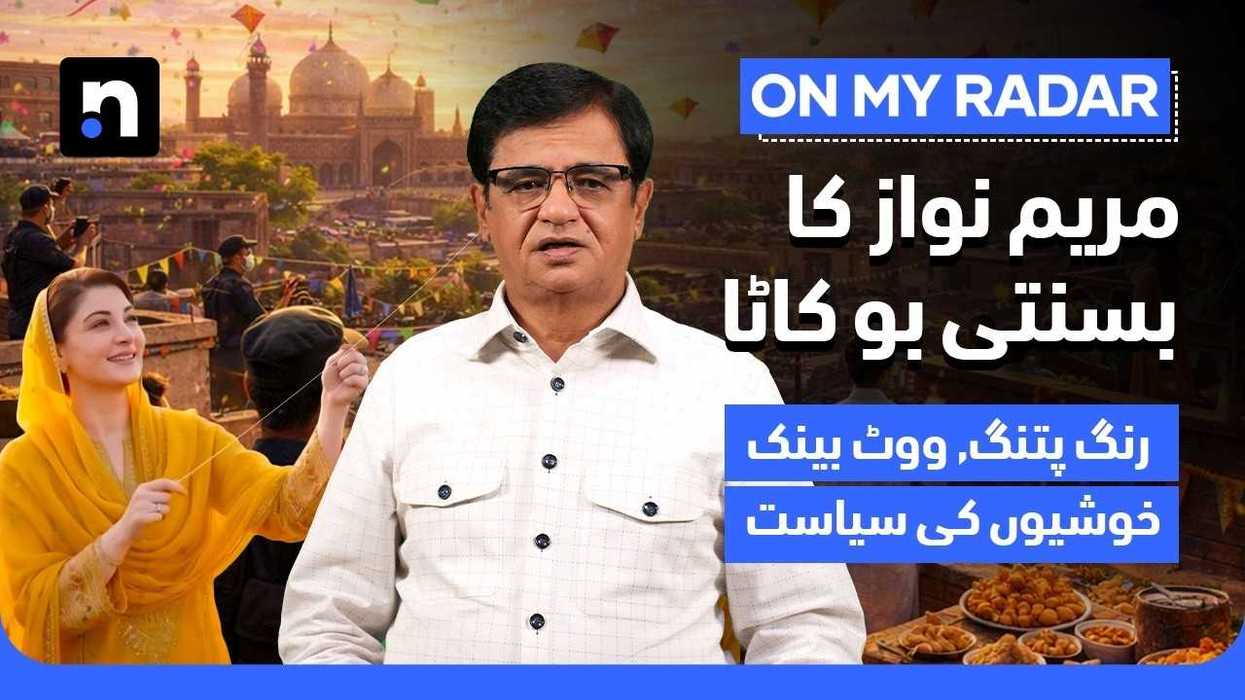
In the latest episode of On My Radar, Kamran Khan highlighted this trend, noting that the province’s growth trajectory, combined with strategic social and cultural initiatives, has created a visible contrast with other parts of the country.
According to a survey by the Institute for Public Opinion Research, 62% of respondents praised Chief Minister Maryam Nawaz Sharif’s performance, 60% said she is outperforming other provincial leaders, 73% approved her work in education, and 68% gave positive ratings for her health sector initiatives—a clear indicator of governance success.
During 2025-26, Punjab presented a zero-tax budget, allocating the highest-ever funds to education (PKR 811.8 billion) and health (PKR 630.5 billion), together accounting for 27% of the total budget. While other provinces struggled to show results in these sectors, Punjab implemented more than 77,000 scholarships, extensive laptop distribution programs, and modernized schools.
In the health sector, Sindh has outperformed other provinces with its public-private partnership model, setting a high benchmark. Yet, Punjab is making steady progress through initiatives such as Maryam Nawaz Health Clinics, deployment of community health inspectors, Clinics on Wheels, and the construction and upgrading of hospitals and medical colleges in Murree, Narowal, and Mianwali. These measures demonstrate the province’s efforts to improve service delivery, even as Sindh’s model remains a point of comparison.
Infrastructure projects have been another cornerstone of Punjab’s development. Over the past two years, 18,700 kilometers of new roads have been constructed, along with underpasses, signal-free corridors, and the expansion of WASA services. Social welfare programs, including free residential plots, affordable housing, Suthra Punjab initiatives, Easy Business Card finance schemes, and other public welfare packages, have reinforced the province’s developmental momentum.
Punjab’s governance reforms extend to law enforcement as well. While Karachi continues to struggle with ineffective traffic regulation measures, Punjab has introduced police reforms such as body cameras, online FIR tracking, mobile police stations, the first virtual women’s police station, and training programs to improve police-citizen interactions. These efforts demonstrate the provincial government’s commitment to institutional reform alongside infrastructure development.
A particularly symbolic development has been the revival of the Basant festival in Lahore, a cultural event that citizens had awaited for 19 years. Under strict security protocols, regulations, and modern monitoring systems, the festival returned as a safe and grand celebration.
The slogan “Boo Kata” symbolized not just play, but collective relief and joy after years of political restrictions. Basant, once a hallmark of Punjab’s culture featuring music, kites, traditional food, and public participation, had last been celebrated in 2007, leaving a generation that had only experienced it through photos and videos.
The 2026 revival of Basant was carefully regulated. Attendance was limited to Lahore, kite sizes and strings were monitored, QR codes were applied to kites for traceability, and over 4,500 manufacturers registered their products. Public holidays were declared, safety barriers were installed for motorcyclists, and free public transport - including rickshaws, taxis, Metro Bus, and Orange Line trains - was provided for three days.
According to official figures, approximately 1.4 million passengers traveled free of charge, while around 900,000 vehicles entered the city. The festival drew long queues in markets and saw participation from foreign diplomats mingling with ordinary citizens, showcasing Pakistan’s cultural soft power. The event generated roughly PKR 3 billion in kite and string sales alone, with some estimates putting total economic activity at over PKR 20 billion across Lahore.
The festival’s political and social impact was equally significant. Punjab remains a province where Imran Khan and PTI maintain strong support, particularly among youth and women, while the PML-N claims long-standing governance and development credentials. Since the contentious 2024 elections, Punjab’s political atmosphere has been tense and uncertain.
Basant, however, provided a communal, apolitical space that brought citizens together regardless of party affiliation. Rooftops and streets across Lahore were filled with families, youth, and individuals from diverse political backgrounds, demonstrating that public celebration can bridge societal divides.
The symbolic power of Basant was further reinforced when, despite a terrorist incident in Islamabad on Friday, celebrations were not canceled. While official activities were limited, public participation continued, sending a clear message that terrorism cannot hold daily life hostage. Observers described Maryam Nawaz’s decision as politically bold, while supporters framed it as an affirmation of public resilience.
While Basant’s immediate effect on party politics remains debatable, the event has undeniably enhanced the political visibility of Maryam Nawaz and the PML-N in Punjab. The three-day festival, its meticulous management, and participation from across the country marked a notable success in the province’s social and political landscape.
At the same time, Punjab’s relative prosperity contrasts sharply with challenges in other provinces: insecurity in Balochistan, security concerns in Khyber Pakhtunkhwa, and urban challenges in Karachi underscore the unevenness of national development. The success of Basant raises a critical question: can development, cultural revival and public engagement remain limited to one province or could Punjab’s model serve as a template for broader national progress? The answer, for now, remains suspended—much like the thousands of kites that soared across Lahore’s skies during the festival.

Comments
See what people are discussing