

Punjab groundwater reserves declining 2% annually, SBP warns
Tubewells and lift pumps more than double to 1.9 million nationwide as irrigation demand strains water reserves

Business Desk
The Business Desk tracks economic trends, market movements, and business developments, offering analysis of both local and global financial news.
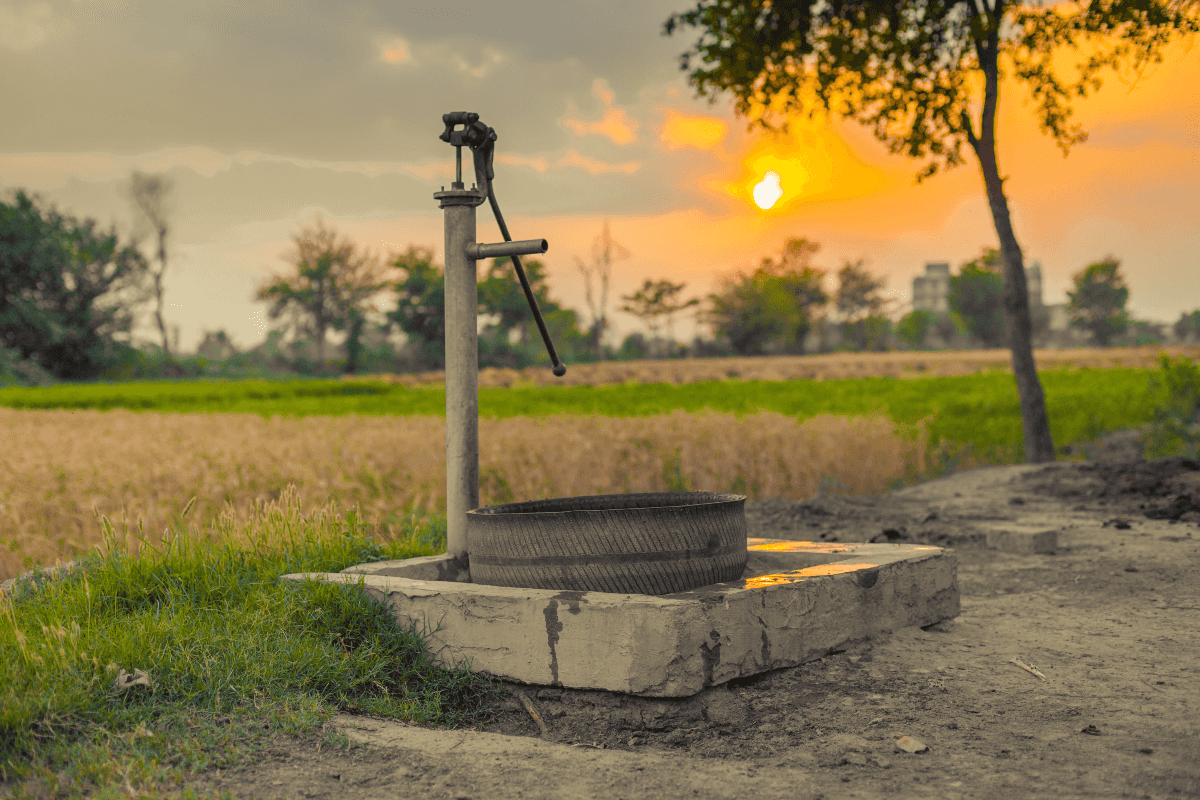
A hand-operated water pump stands beside agricultural fields in Pakistan. The State Bank of Pakistan estimates that Punjab's groundwater reserves are declining by around 2% annually.
Pexels
Punjab's groundwater reserves are estimated to have declined by around 2% annually as extraction exceeds replenishment, while the number of tubewells and lift pumps across Pakistan has more than doubled since 2004, the State Bank of Pakistan (SBP) said in its annual report released Monday.
Why are Punjab's groundwater reserves declining?
Groundwater extraction is exceeding replenishment from rainfall and surface water, putting increasing pressure on underground reserves. The expansion of tubewells and lift pumps has improved irrigation access but intensified concerns about sustainability. Punjab faces particularly severe pressure, with groundwater reserves estimated to have declined by around 2% annually.
In its Annual Report on the State of Pakistan's Economy for FY26, the SBP said the number of installed tubewells and lift pumps rose from 900,000 in 2004 to approximately 1.9 million in 2026.
The increase was driven largely by the adoption of solar-powered pumps and a decline in diesel-powered units.
Canal-water availability improved during FY26 but remained below the historical average. Combined water availability for the Kharif and Rabi seasons stood at 92 million acre-feet, 11.1% below average system use.
Kharif water supply was recorded at 60.6 million acre-feet, almost unchanged from the previous year, while Rabi availability increased slightly.
Heavy monsoon rainfall reduced canal-water demand in parts of Punjab, while improved Rabi water releases supported wheat and other crops.
How did extreme weather affect Pakistan's agriculture?
Erratic rainfall and above-normal temperatures posed significant challenges throughout much of FY26, while emerging El Niño conditions could further threaten crop performance in FY27.
The April-June 2025 period began with below-average rainfall, increasing irrigation requirements early in the Kharif growing season.
Intense monsoon rainfall between July and September 2025 subsequently triggered flash floods across several agricultural districts.
Conditions remained unfavorable for Rabi crops, with below-average rainfall and above-normal temperatures between October 2025 and March 2026.
Temperatures were particularly high during wheat sowing, while strong winds and rainfall around the harvest period added to difficulties for farmers.
The SBP warned that emerging El Niño conditions posed an additional risk to crop performance in FY27, underscoring the need for improved climate preparedness and more efficient use of land and water resources.
What other challenges threaten agricultural productivity?
The report highlighted persistent shortages of certified seeds for most major crops, except paddy.
Although certified seed availability improved for wheat and cotton, supplies remained below requirements, while maize seed availability declined.
These shortages left farmers relying on farm-saved and other non-certified seeds, potentially affecting crop yields.
The recently submitted National Seed Policy aims to address the shortages through increased domestic production, stronger testing and certification systems, digital traceability, improved federal-provincial coordination and greater private-sector participation.
Fertilizer consumption increased during both Kharif and Rabi seasons, supported by stable prices for most of the year, strong domestic production and substantial carryover stocks.
Urea sales increased, while diammonium phosphate (DAP) sales rose during Kharif but declined in Rabi as higher prices discouraged purchases by farmers.
Higher international prices contributed to increased domestic DAP costs, with Pakistan relying on imports to meet about half of its demand.
The central bank warned that the high cost of phosphate fertilizer, coupled with continued urea consumption, had widened the imbalance in nutrient application.
The nitrogen-to-phosphate ratio increased to around 5:1 in FY26, more than twice the recommended ratio of 2:1.
The imbalance could undermine soil fertility and agricultural productivity, highlighting the need for more balanced fertilizer application, the report said.





Comments
See what people are discussing