

Qatari mediators hold marathon Tehran talks to avert post-midterm US strike on Iran: Axios
Qatari envoys conclude 12+ hours of talks in Tehran, drafting an emergency framework to revive U.S.-Iran diplomacy and avert a potential U.S. military offensive

News Desk
The News Desk provides timely and factual coverage of national and international events, with an emphasis on accuracy and clarity.
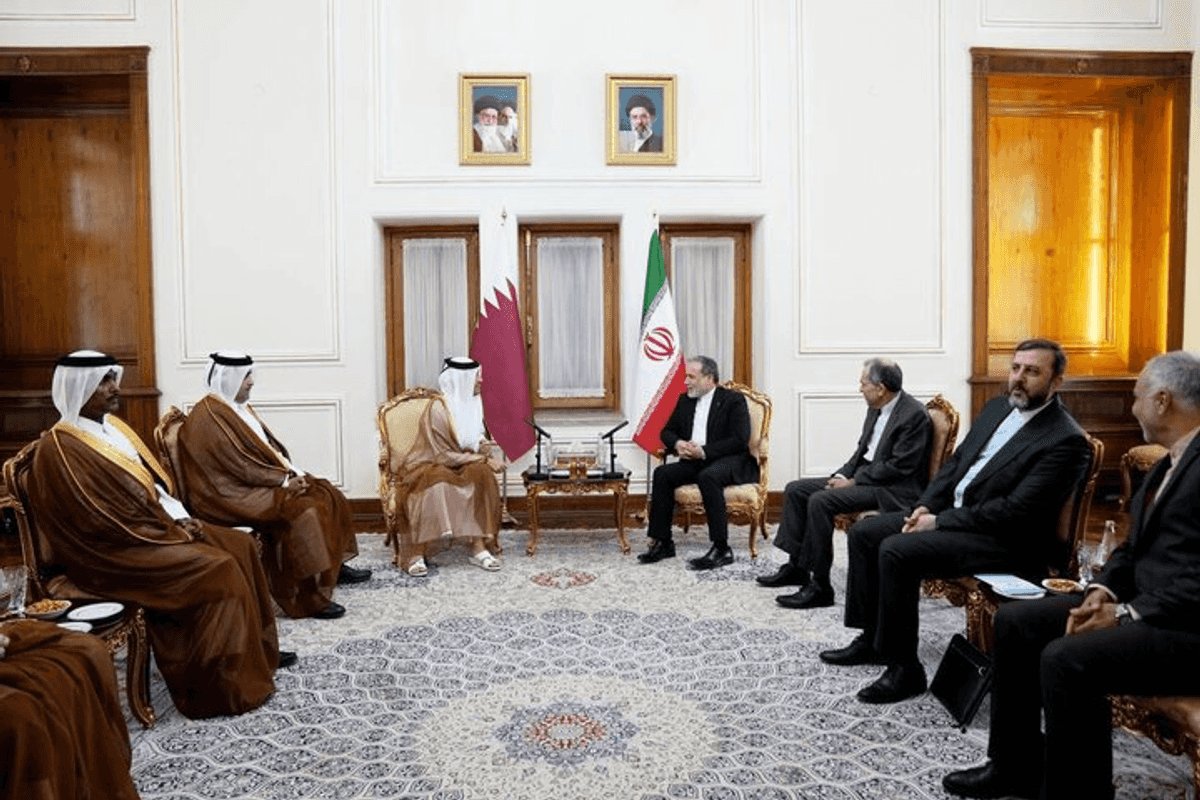
Qatari mediators held marathon negotiations in Tehran for more than 12 hours on Friday, racing to broker an eleventh-hour diplomatic framework between Washington and Tehran to revive direct bilateral talks and avert an imminent U.S. military strike following the upcoming U.S. midterm elections, Axios reports.
What progress was achieved during 12-hour session in Tehran?
The daylong diplomatic engagement in the Iranian capital yielded "positive progress," with Qatari envoys maintaining constant, real-time communication with the White House throughout the sessions, according to Axios.
The mediation track is set to move to Doha on Saturday, where negotiators will try to hammer out a rapid, reciprocal sequence of confidence-building measures to bring both governments back to the negotiating table.
The urgent diplomatic push seeks to defuse an escalating regional crisis, with U.S. defense planners reportedly only days away from deciding whether to launch a large-scale military campaign capable of inflicting extensive damage on Iranian infrastructure.
Regional security officials warn that such an offensive risks triggering widespread retaliatory strikes across the Middle East, directly endangering Israel and Gulf states while exacerbating disruptions across global energy corridors.
What are competing preconditions dividing Washington and Tehran?
The mediation track remains constrained by conflicting core demands from both capitals. The Trump administration has maintained that Iran must commit to concrete nuclear concessions as an absolute prerequisite before formal negotiations can resume.
Conversely, Tehran has demanded that Washington first lift its naval blockade on Iranian ports along the Strait of Hormuz, release frozen sovereign assets, and permit the unhindered resumption of Iranian crude oil exports before addressing the nuclear file.
To bridge the divide, Qatari mediators have proposed a phased compromise: urging Tehran to grant United Nations inspectors from the International Atomic Energy Agency (IAEA) access to nuclear facilities damaged during earlier airstrikes as an initial confidence-building gesture, in exchange for targeted U.S. sanctions relief.
How is Trump administration divided over diplomatic track?
The diplomatic flurry comes amid pronounced policy divisions within President Donald Trump’s national security circle. Defense Secretary Pete Hegseth and Secretary of State Marco Rubio have expressed deep skepticism regarding negotiations with Tehran, advocating that the administration focus on further degrading the Iranian government through sustained military strikes.
In contrast, Vice President JD Vance, alongside special envoys Steve Witkoff and Jared Kushner, have pushed to reopen direct diplomatic channels. 'Concurrently, Treasury Secretary Scott Bessent, who oversees the sweeping economic pressure campaign designated as "Operation Economic Outcast," has advised Trump to allow financial strangulation time to take effect rather than re-engaging in active kinetic warfare.
Asked about the standoff on Friday, President Trump delivered an ambiguous assessment: "There are talks. They want to talk. They keep talking... We have time, frankly. It's a war, but it is not a typical war."
How are regional powers and Israel positioning ahead of the midterms?
Regional governments—including Saudi Arabia, Turkey, Egypt, Pakistan, and Iraq—have actively pressed Tehran to re-enter negotiations before the U.S. midterm elections to prevent an unchecked cycle of violence. The leadership of both Saudi Arabia and Turkey has also engaged in backchannel lobbying with Trump in recent days, urging Washington to preserve room for a diplomatic resolution.
Simultaneously, Israeli Prime Minister Benjamin Netanyahu has been actively lobbying the White House to authorize a joint military offensive against Iranian sites immediately following the election.
The stakes across the Persian Gulf remain elevated. Tehran has previously warned that any American or allied attack targeting its domestic energy sector will trigger reciprocal strikes against critical oil and natural gas infrastructure across neighboring Gulf nations—including Saudi Arabia, the United Arab Emirates, and Qatar—threatening global fuel supplies and strategic shipping lanes.





Comments
See what people are discussing