


News Desk
The News Desk provides timely and factual coverage of national and international events, with an emphasis on accuracy and clarity.
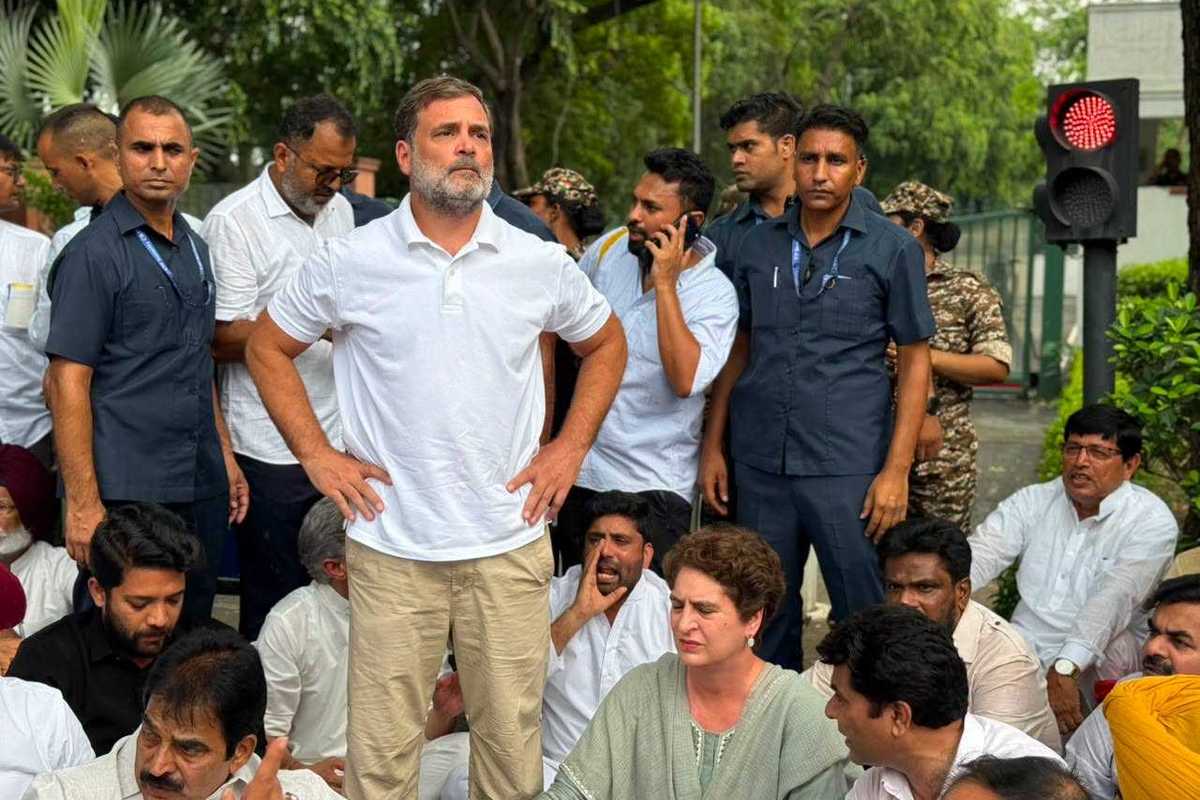
Congress leaders Rahul, Priyanka Gandhi protest outside PM's residence over student crackdown.
Rahul Gandhi/ Facebook
India's main opposition leader Rahul Gandhi demanded on Tuesday that Prime Minister Narendra Modi resign over a police crackdown on student protests in New Delhi. Gandhi said Modi must step down "for destroying the future of India's youth" as he led Congress MPs in a march towards the prime minister's residence.
Why did Rahul Gandhi demand Modi's resignation?
Gandhi accused the government of refusing accountability after police clashed with student protesters demanding the removal of Education Minister Dharmendra Pradhan. He said authorities avoided a parliamentary debate on the crackdown. Delhi Police reported 60 protesters and 118 police personnel injured during Monday's rally, the capital's largest street demonstration in about five years.
What is the CJP and what is it demanding?
The protests followed an online appeal by the Cockroach Janta Party, a movement known as the CJP. Founded in May, it has gained millions of social media followers and become one of the biggest challenges to Modi since he won a third term in 2024. CJP spokesman Ashutosh Ranka said the group would not stop until Pradhan was sacked.
Thousands of protesters gathered at Delhi's Jantar Mantar site, with many calling for broader changes to the education system. Numbers there were smaller on Tuesday than during Monday's march on parliament. Hundreds of protesters remained camped at the site as the standoff continued.
What happened during the Delhi protests?
Police fired tear gas and charged protesters with batons on Monday, and demonstrators responded by throwing stones. The clashes marked the most severe unrest in the capital in roughly five years. Organizers said the "high-handedness" of the authorities left hundreds of protesters injured.
How have protesters responded to the crackdown?
Ranka, who met senior minister JP Nadda on Monday, said the government had not yet responded to the CJP's demands. He called it "a shameful day in the history of Indian democracy" that students with a genuine grievance were beaten by police. CJP founder Abhijeet Dipke urged protesters not to lose hope, telling a crowd from atop a lorry that authorities wanted to "break our spirit."
Law student Chandra Pratap Sishwi, 25, said the crackdown had hardened protester resolve rather than weakened it. "We have become even more fearless now," he said. He added that watching police beat demonstrators had angered him deeply.
How has the Indian government responded?
Parliament was adjourned on Tuesday after opposition lawmakers demanded a discussion on the alleged "brutality unleashed on students." Parliamentary Affairs Minister Kiren Rijiju defended the government's response, saying it had acted swiftly by arresting several people over the exam paper leaks. He said Modi had called for a "foolproof system" to prevent future irregularities during a closed-door meeting with allies. Modi has not commented directly on the protests.
Why are students protesting India's exam system?
The unrest follows a series of scandals that have shaken confidence in India's testing system. About 2.2 million aspiring medical students sat a re-examination under tight security last month after the original test was scrapped following a leaked question paper. A separate scandal involved the online marking of tests taken by nearly two million high school students.
The protests also reflect wider economic frustration. Despite rapid growth, millions in the world's most populous nation still struggle to find stable, well-paying jobs, a gap that has fueled discontent among young people nationwide.



Comments
See what people are discussing