

Riyadh airport hit by fresh Houthi projectile strike; Saudi authorities extend flight suspension
A projectile struck King Khalid International Airport in Riyadh on Sunday, killing one Pakistani resident, injuring 11, and sparking a fire in Terminal 4 just one day after a devastating attack at the hub, forcing aviation authorities to extend flight suspensions through Monday

News Desk
The News Desk provides timely and factual coverage of national and international events, with an emphasis on accuracy and clarity.
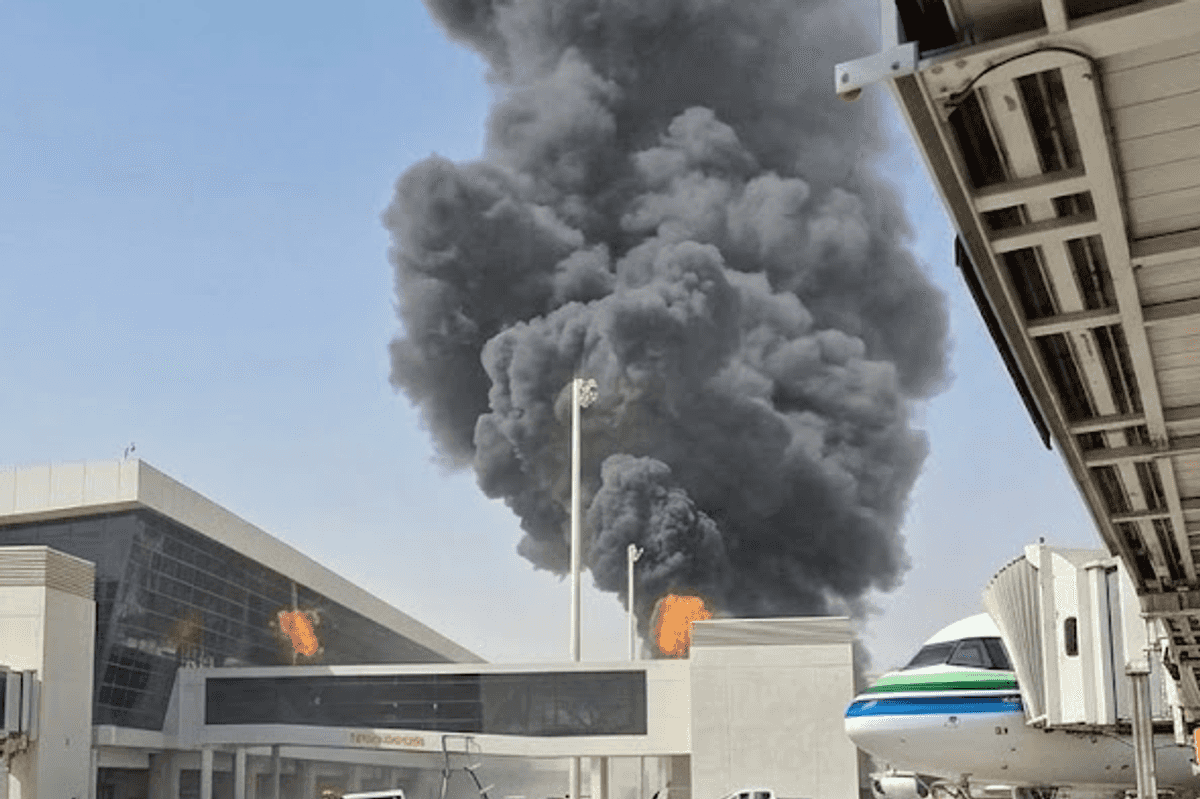
King Khalid International Airport in the Saudi capital was hit by a fresh Houthi projectile strike on Sunday, October 11, causing passenger hall fires, killing one person, and injuring 11 others just a day after a missile attack at the facility left 13 people dead.
What damage and casualties resulted from the latest strikes across Saudi airports?
According to statements from Saudi Arabia's General Authority of Civil Aviation, Sunday's attack directly struck Terminal 4 of King Khalid International Airport, starting a fire inside one of its passenger concourses. Emergency services contained the blaze while air defense systems intercepted a second incoming missile nearby.
The attack killed a Pakistani resident and wounded 11 people. Additionally, Indian diplomatic officials confirmed that an Indian citizen injured during Saturday's strike succumbed to his wounds on Sunday, raising the death toll from Saturday's attack to 13 and total weekend fatalities to 14.
Houthi forces also launched strikes targeting King Fahd International Airport in Dammam and King Khalid Air Base in Khamis Mushait, where coalition air defense units intercepted incoming drones and ballistic missiles. In response to the persistent threat, aviation authorities extended the operational suspension of Riyadh's main airport by 24 hours until 21:00 GMT on Monday, October 12, forcing airlines to cancel or divert hundreds of international and domestic flights.
How are regional powers and international diplomats responding to the escalation?
The surge in cross-border strikes prompted direct diplomatic engagement between Tehran and Riyadh. Iranian Foreign Minister Abbas Araghchi held a phone conference with his Saudi counterpart, warning that relying strictly on a military approach would further complicate regional stability and offering Tehran's assistance to facilitate political dialogue between Saudi Arabia and Yemen. However, the Saudi-led coalition reiterated that targeting civilian transit infrastructure constitutes a full-fledged war crime, launching retaliatory airstrikes against Houthi military positions in Sanaa governorate.
International condemnation continued to grow on Monday. US President Donald Trump reiterated that Washington is evaluating joint military strike options alongside Saudi forces, while the Australian government condemned the attacks and advised its citizens in the Kingdom to shelter in place. On the ground in Yemen, pro-government forces supported by coalition air power continue pushing forward near the Bab al-Mandeb strait under Operation Dawn of Yemen.
According to Al Jazeera, international civil aviation monitoring bodies continue to issue heightened airspace warnings across the Arabian Peninsula.




Comments
See what people are discussing