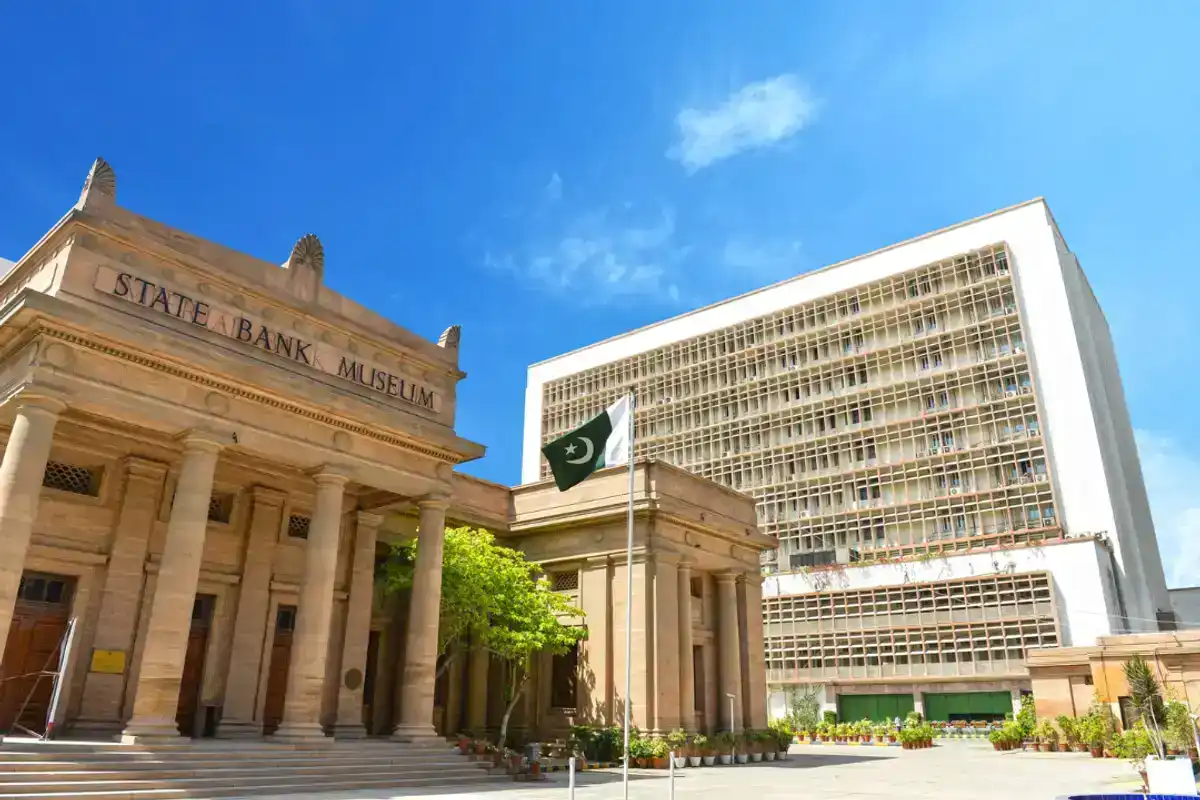
Pakistan’s economic outlook for fiscal year 2026-27 has improved, with inflation expected to be lower than previously projected, economic activity set for a gradual recovery and external pressures likely to remain moderate, the State Bank of Pakistan said.
However, the central bank cautioned that the baseline outlook remains exposed to significant risks, particularly the duration and intensity of the Middle East conflict, climate shocks, global tariff uncertainty and delays in structural reforms.
The State Bank said foreign exchange reserves are expected to increase further as prudent monetary and fiscal policies continue to strengthen the economy’s resilience to external shocks.
Middle East conflict remains key external risk
Geopolitical developments represent the most important near-term external risk to Pakistan’s economy, according to the central bank.
A temporary de-escalation of the Middle East conflict in June triggered a sharp decline in global oil prices and eased supply-chain disruptions. However, the subsequent resurgence of the conflict has renewed uncertainty over commodity prices, international trade and freight costs.
The State Bank said the duration and intensity of the conflict would determine its eventual impact on global and domestic economic activity.
Its baseline projections assume that conflict-related disruptions will gradually normalize during the second half of FY27, although this assumption remains subject to developments in the region.
Climate shocks threaten food prices
Climate-related risks, including the potential impact of El Niño, could also affect Pakistan’s economic outlook.
Meteorological assessments point to a higher probability of El Niño-related weather disruptions during the forecast period. While the timing and severity remain uncertain, abnormal temperatures and rainfall could hurt agricultural production and increase food inflation.
Lower domestic crop production could also force Pakistan to increase agricultural imports while reducing food exports, putting additional pressure on the external account.
Global tariffs create export uncertainty
The evolving global tariff regime remains another major risk to Pakistan’s economic outlook, the State Bank said.
Changes in global trade patterns could alter supply chains, trade flows and export competitiveness, creating both opportunities and challenges for Pakistan.
Trade diversion could allow some Pakistani exporters to gain market share in international markets. However, the country already faces intense competition from regional exporters, particularly in textiles and food products.
Weaker global demand and stronger competition from regional producers could therefore limit potential gains.
The impact will depend on the pace of global trade normalization, the tariff treatment applied to Pakistani exports and the ability of domestic companies to adapt to changing market conditions and improve competitiveness.
Structural reforms critical for sustainable growth
The central bank said improved macroeconomic stability over the past two years provides an opportunity to accelerate structural reforms needed to sustain higher economic growth and reduce vulnerabilities.
It said recurring supply shocks in recent years have made such reforms increasingly important.
Continued fiscal reforms are needed to broaden the tax base, improve revenue mobilization and support the government’s objective of maintaining primary fiscal surpluses over the medium term.
Pakistan’s relatively low tax-to-GDP ratio compared with many peer economies makes expanding the tax base particularly important, the State Bank said. Reducing distortions while creating stronger incentives for productive and export-oriented sectors would also help improve fiscal sustainability.
Exports remain a structural vulnerability
Pakistan’s exports remain low relative to the size of its economy, leaving the external sector vulnerable to changes in global commodity prices and tariff policies in key export markets, the central bank said.
The government is taking measures to support export-oriented industries, including performance-based rebates and other incentives.
But a sustainable increase in exports would require structural reforms to improve the business environment and reduce reliance on imported energy, thereby increasing productivity and competitiveness, the State Bank said.
Such reforms would help Pakistan move toward a more sustainable export-led growth model.
Inflation outlook faces multiple scenarios
The State Bank said its assessment of medium-term inflation risks incorporates a range of possible outcomes around the baseline forecast.
The Monetary Policy Committee evaluated scenarios involving favorable and unfavorable movements in global energy and food prices, including those arising from the Middle East conflict and the potential impact of El Niño on agricultural prices and the external account.
The analysis also considered the potential impact of unexpected adjustments in administered energy prices and possible fiscal slippages.
Prudent policies needed
The State Bank said managing these risks would require continued prudent macroeconomic policies.
The current policy mix, characterized by fiscal prudence, positive forward-looking real interest rates and improved foreign exchange reserves, has strengthened Pakistan’s resilience to near-term macroeconomic vulnerabilities.
At the same time, the central bank said macroeconomic stability would need to be supported by faster structural reforms focused on raising productivity, expanding and diversifying exports and export markets, and broadening the tax base.
Continued progress in these areas will be essential to further strengthen Pakistan’s economic resilience and create conditions for higher and sustainable economic growth, it said.






Comments
See what people are discussing