

SBP says structural reforms needed to boost job creation in Pakistan
The central bank warns that weak growth, premature deindustrialization, high youth unemployment and low female workforce participation are limiting employment prospects.

Haris Zamir
Business Editor
Experience of almost 33 years where started the journey of financial journalism from Business Recorder in 1992. From 2006 onwards attached with Television Media worked at Sun Tv, Dawn Tv, Geo Tv and Dunya Tv. During the period also worked as a stringer for Bloomberg for seven years and Dow Jones for five years. Also wrote articles for several highly acclaimed periodicals like the Newsline, Pakistan Gulf Economist and Money Matters (The News publications)
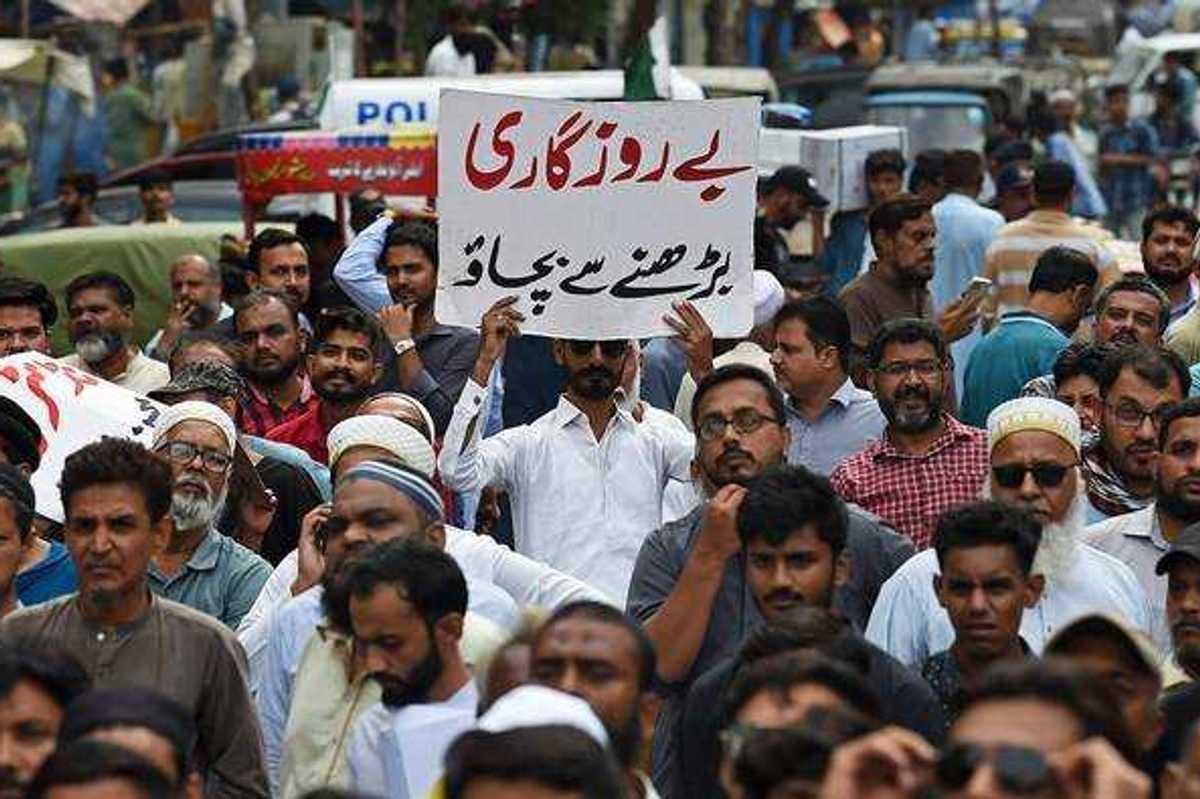
Protest agsint unemployment in Pakistan - The Friday Times
Pakistan needs deep-rooted structural reforms to achieve sustainable economic growth and generate enough jobs for its expanding working-age population, the State Bank of Pakistan (SBP) said on Monday, warning that weak growth and labour market constraints are undermining employment prospects.
In its Annual Report on the State of Pakistan’s Economy for fiscal year 2025-26, the central bank identified weak and volatile economic growth and slow structural transformation as major obstacles to job creation.
A special chapter titled “Structural Challenges to Job Creation in Pakistan” highlights signs of premature deindustrialization, low female labour force participation, high youth unemployment and widespread informal employment as key challenges facing the economy.
The report also said emerging global trends, including Industry 4.0, the green transition and geoeconomic fragmentation, are creating additional pressures on Pakistan’s ability to generate employment.
SBP calls for reforms to encourage investment
The SBP said encouraging private-sector investment would be essential to addressing structural weaknesses and expanding employment opportunities.
It recommended addressing infrastructure gaps, supporting technology adoption and skills development, rationalising taxes and simplifying tax administration.
The central bank also called for reducing economic policy uncertainty through rules-based frameworks for fiscal and regulatory decisions, alongside maintaining long-term macroeconomic stability.
It said more frequent climate shocks and extreme weather events also require early preparedness measures to protect agricultural output.
Integrating next-generation solar energy strategies into agriculture could help balance renewable energy generation with food security and environmental sustainability, the report added.
According to the SBP, these measures could unlock public, private and foreign investment, strengthen long-term economic stability, support job creation and reduce Pakistan’s vulnerability to global supply chain disruptions.
Macroeconomic indicators improve in FY26
The report said Pakistan’s macroeconomic indicators improved in FY26, supported by prudent monetary policy, fiscal consolidation and economic reforms under the International Monetary Fund (IMF) programme.
Government efforts to consolidate public finances, along with a substantial decline in interest payments, contributed to improved fiscal outcomes during the year.
Average national consumer price inflation remained close to the upper end of the SBP’s medium-term target range of 5% to 7%, despite an energy price shock linked to the conflict in the Middle East.
However, year-on-year inflation rose to double digits from April 2026 onwards, the report said.
The central bank said prudent monetary and fiscal policies helped contain inflationary pressures, while foreign exchange buffers improved due to its purchases, lower forward liabilities, official inflows, Eurobond and Panda bond issuances, and steady investments through Roshan Digital Accounts.
The SBP said sustaining macroeconomic stability would require continued reforms to strengthen investment, improve productivity and create an environment conducive to long-term economic growth.





Comments
See what people are discussing