

Spain's Ceuta overwhelmed as thousands remain after migrant border rush
Thousands of migrants remain in Spain's Ceuta enclave after a mass border rush, as reception centres collapse and Spain-Morocco tensions escalate

News Desk
The News Desk provides timely and factual coverage of national and international events, with an emphasis on accuracy and clarity.
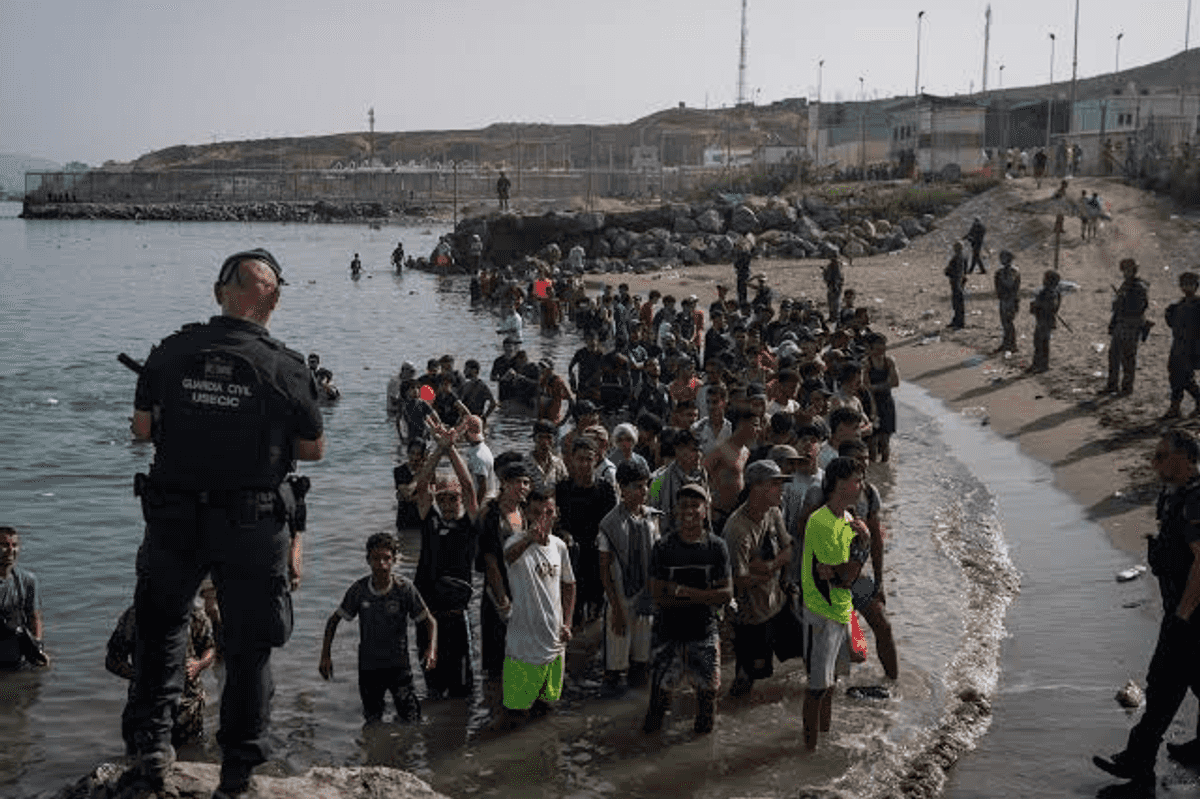
Many migrants said they left because shop closures had left them without food.
Reuters
Hundreds of migrants camped on a beach in Spain's North African enclave of Ceuta on Monday, as authorities struggled to manage thousands still stranded after last week's mass migrant border rush from Morocco.
How many migrants remain in Ceuta after the border rush?
Local officials estimate that between 3,000 and 5,000 migrants remain in Ceuta, according to the enclave's leader, Juan Jesus Vivas. He said the city's two reception centres, one for adults and one for minors, have collapsed under the strain.
Local official Alberto Gaitan said Ceuta is processing 862 migrant minors, who hold special legal protections against deportation.
Spain estimates that about 69,500 migrants have returned to Morocco over the past four days. That figure exceeds initial estimates of around 50,000 arrivals in Ceuta on Thursday. The official death toll stands at 72 on the Spanish side and 11 on the Moroccan side.
Why did migrants leave Ceuta?
Many migrants said they left because shop closures had left them without food. They also cited hostility from local residents and an inability to travel onward to the Spanish mainland. Ceuta and Spain's other North African enclave, Melilla, sit on Morocco's Mediterranean coast and periodically face attempted migrant crossings.
Reuters video footage showed scores of migrants, most from sub-Saharan Africa, lying on the sand of El Trampolin beach. Many wrapped themselves in towels to shield from the wind. Army and police vehicles patrolled the road behind them.
What caused the diplomatic fallout between Spain and Morocco?
The crisis has fuelled anti-immigration rhetoric across Europe and sparked diplomatic tensions within the European Union over border policy. Spain has accused some EU partners of an unhelpful and polarising response. Foreign Minister Jose Manuel Albares said Spain had previously supported other EU countries during migration crises and now expected reciprocal backing.
The EU has called an emergency video conference of interior ministers to discuss the crisis on Tuesday. Albares sharply criticised Italy's government, accusing it of helping amplify misinformation. He said Morocco had immediately offered police support without conditions, which allowed for the rapid return of most people who crossed.
Ceuta's Vivas was critical of Rabat instead, saying there was a widespread perception in the enclave that Morocco had allowed, if not orchestrated, the crisis. "Morocco has shown us that it isn't reliable. There's no alternative but to put in place whatever means are necessary to ensure it cannot do this again," Vivas told newspaper El Pais.
Morocco's Interior Ministry on Sunday blamed the surge on misinformation on social media, human trafficking networks, and a misinterpretation of a Spanish court ruling that banned immediate returns of migrants intercepted at sea. That explanation aligned with Madrid's official view.
Are Spain's intelligence services under scrutiny?
Reports by El Pais and Cadena SER radio, citing officials familiar with the matter, said Spanish intelligence services concluded that Morocco did not plan the mass crossing but allowed it to happen. Moroccan border controls were gradually relaxed during July. Controls were allegedly removed as crowds surged toward the Tarajal crossing during Morocco's Throne Day holiday, the reports said.
Morocco's Interior Ministry did not immediately respond to a request for comment. In its Sunday statement, it said Morocco is committed to strengthening international cooperation and coordination in combating irregular migration and human trafficking.
Spain's Interior Minister Fernando Grande-Marlaska told reporters on Saturday that the CNI intelligence agency, controlled by the Defence Ministry, did not warn him of an imminent surge. El Pais reported on Monday that this had caused tensions between the two ministries. An Interior Ministry spokesperson downplayed the reported tensions.
Defence Minister Margarita Robles declined to say whether the CNI had prior intelligence of the mass crossing. She said the agency's work was secret and praised the exceptional work of Spanish security personnel.





Comments
See what people are discussing