

Has Trump turned the White House into a business empire?
Kamran Khan says the controversy surrounding Trump's finances is emerging as one of the defining political issues of his second presidency

News Desk
The News Desk provides timely and factual coverage of national and international events, with an emphasis on accuracy and clarity.
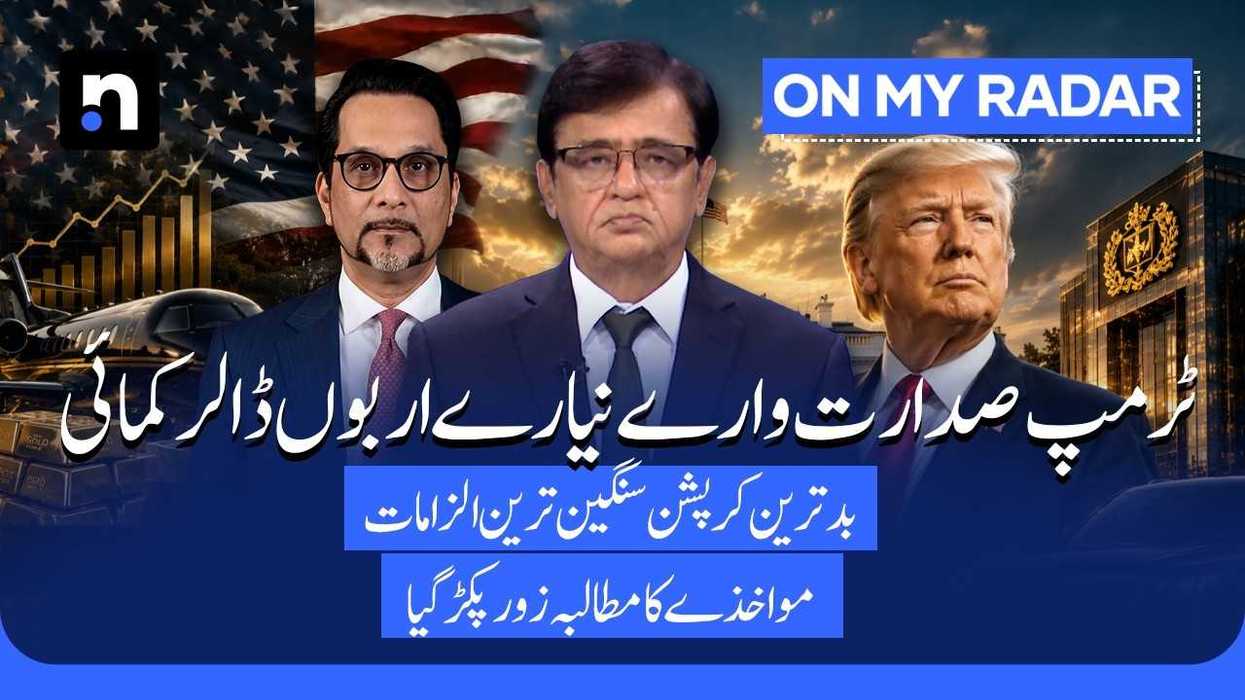
Donald Trump's second term as U.S. president is increasingly being defined not only by his political agenda but also by mounting questions over the intersection of public office and private wealth.
A series of financial disclosures, media investigations and ethics reports has fueled debate over whether the White House has become a platform for unprecedented personal financial gain, prompting renewed scrutiny of conflicts of interest and the boundaries between governing and business.
In the latest episode of On My Radar, Kamran Khan said the controversy surrounding Trump's finances has evolved into one of the defining political issues of his second presidency. He noted that while Trump has denied any wrongdoing and has not been convicted in court, a growing number of former officials, legal experts, ethics watchdogs and major U.S. media organizations are questioning whether the White House has effectively become one of the most profitable business addresses in American history.
Reports published over the past 18 months have reinforced those concerns. Financial disclosures, investigations by major U.S. media outlets and reports by ethics watchdog organizations paint a picture of extraordinary growth in the wealth of President Trump and his family, while questions over conflicts of interest and the potential misuse of presidential authority have become more pronounced.
According to The Washington Post, Trump's latest financial disclosure reported more than $2.2 billion in income during 2025, compared with just over $600 million a year earlier—an increase of more than $1.6 billion. The newspaper reported that much of the additional income came from cryptocurrency-related ventures, during the same period that the Trump administration maintained a relatively favorable regulatory environment for the crypto industry. Forbes and other financial analyses estimate Trump's net worth at around $6.5 billion, with some estimates placing it even higher.
The financial expansion extends beyond the president. The business interests of his sons, Eric Trump and Donald Trump Jr., have also grown rapidly. According to The Christian Science Monitor, Donald Trump Jr.'s personal wealth rose from roughly $50 million to nearly $300 million within just a few months.
The Trump family's cryptocurrency ventures have drawn the greatest scrutiny. U.S. media reports say the family has earned billions of dollars from digital assets and crypto projects whose commercial success could be directly influenced by government policy. Critics argue that when a sitting president has significant financial interests in the same sector being regulated, questions about the independence and neutrality of policy decisions become unavoidable.
An investigation by the Associated Press reported that during Trump's second term, his family pursued numerous new property, licensing and investment deals across the Middle East, Asia and other regions. The report also highlighted national security concerns over a $500 million investment by entities linked to Gulf Cooperation Council (GCC) countries in a cryptocurrency company while Trump remained in office.
Another controversy erupted after Qatar reportedly offered a luxury aircraft worth nearly $500 million to the United States for presidential use. Critics—including some Republican lawmakers—questioned whether a sitting president could accept such an expensive gift from a foreign government and whether doing so would be consistent with the spirit of the U.S. Constitution. Trump denied any wrongdoing, but the episode sparked renewed debate in Congress and among ethics experts.
Fresh questions also emerged in April 2025 over Trump's tariff policy. Critics alleged that the president signaled investors to buy through a social media post shortly before his administration announced a softer tariff stance, triggering a market rally. They argued that the sequence of events allowed certain investors to reap hundreds of millions of dollars in gains and called for investigations into possible insider trading.
Trump has rejected all of these allegations, while his supporters describe them as politically motivated attacks. It is also a fact that no court has found him guilty of wrongdoing in relation to these matters. Even so, political legacies are shaped not only by judicial verdicts but also by public perception and historical judgment.
The central question now hanging over American politics is whether Trump has transformed the U.S. presidency into a commercial brand as much as a political office. Whether or not any legal consequences follow, the debate over the relationship between presidential power and private profit is likely to remain one of the defining issues of his second term.




Comments
See what people are discussing