

Two Viewers, One Film — Endless Opinions
Our brutally honest take on Neelofar: the hype, the heartbreak, and the hard-to-ignore flaws.

Maha Owais
Producer
Maha is a content strategist and producer with a knack for digital storytelling.

Sibte Hassan
Correspondent, Karachi Pakistan
Syed Sibte Hassan Rizvi is a seasoned multimedia journalist with over 12 years of experience. He has worked as a news correspondent, covering various beats for Pakistan's leading news channels.
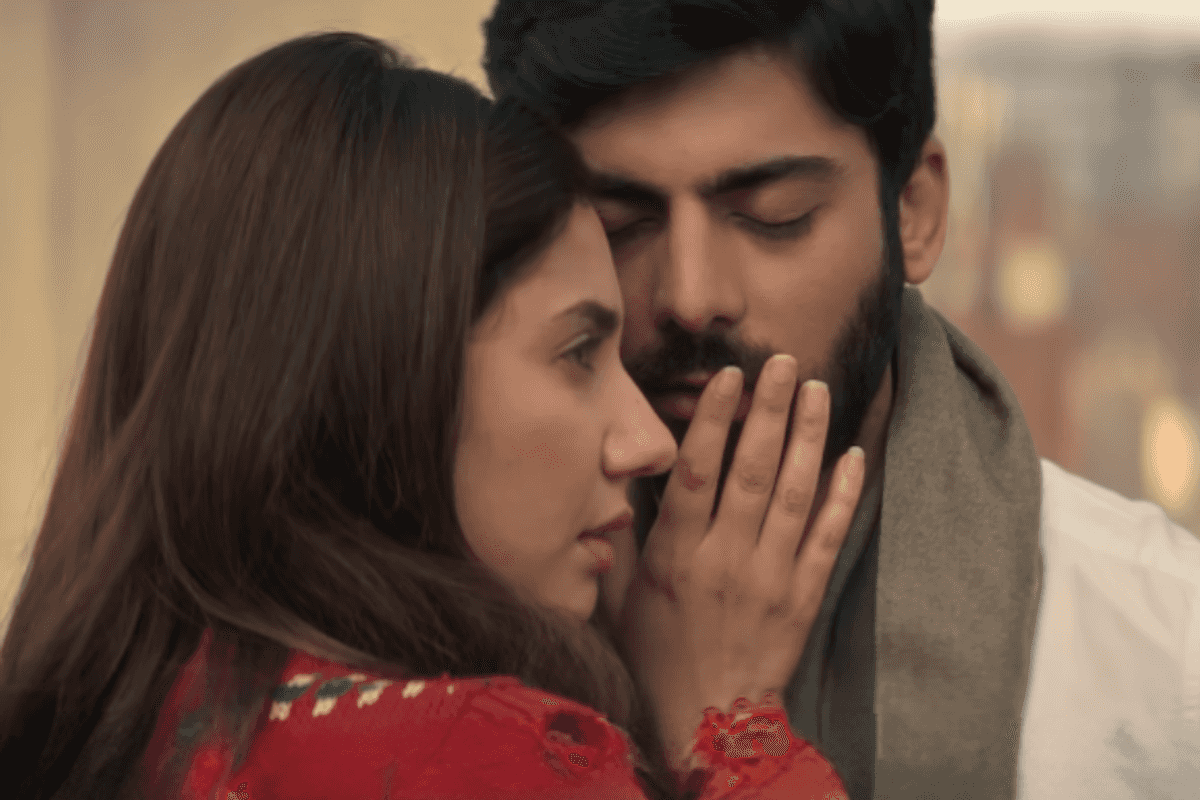
Mahira Khan & Fawad Khan
Canva
Neelofar, the much-anticipated Fawad Khan and Mahira Khan starrer, has had social media buzzing for weeks. So naturally we walked into the cinema with sky-high expectations and an open mind. A star-studded cast, Fawad producing his own film, and the promise of old-school romance… it all sounded like a cinematic win.
What we got instead was a film that left us divided, disappointed, and in long stretches — confused.
A Slow Start That Never Truly Lifts Off
Neelofar opens with a slow, deliberate pace as writer–director Ammar Rasool attempts to build chemistry between the leads — the same beloved pair who gave us Humsafar and later reunited in Maula Jatt. But the first half feels more like an extended setup with minimal emotional payoff.
The story tries to show writer Mansoor (Fawad Khan) falling in love with Neelofar (Mahira Khan), a blind girl — yet even his own dialogue questions the authenticity of his feelings: “I’m doing this out of guilt, not love.” And honestly, that’s exactly how it plays.
For me (Maha), the first half was a complete drag. Zero chemistry. Zero buildup. A love story born from one accidental bump and followed by chai invitations at an eye clinic is simply not enough to convince anyone. Mahira, though gorgeous on screen, often played the role with childlike mannerisms rather than the nuance a visually impaired character demands.
Sibte, however, had a softer view saying the film would appeal to lovers of old-school romance and poetry. A slow burn for a niche audience. He felt that people who love Lahore would connect with the film and appreciate what it’s trying to portray. He also believed the effort should be acknowledged, and that audiences should watch it on the big screen to form their own opinions rather than relying solely on online reviews.
The Story That Could Have Been — But Wasn’t
Where we both agreed: the script desperately needed work.
With world-class actors like Fawad and Mahira, loved globally, admired widely, one expects a script powerful enough to match their stardom. Instead, we got a storyline that couldn’t justify its own emotional beats.
Sibte felt the team tried to elevate the film visually, experimenting with frames and aiming for an aesthetic look, but because they attempted too much at once, nothing blended together smoothly.
He added that the cinematography swung between extremes: either intensely close shots of the leads or wide frames that felt oddly disconnected. The film clearly adored Lahore and often resembled a tourism documentary (which isn’t necessarily a bad thing). But even beautiful visuals couldn’t hide the jerky scene transitions, uneven editing, and a plot that felt stitched together without rhythm.
And I (Maha) agreed, the story already had issues, but its execution and direction weakened it further.
For me, another disappointment was the waste of a stellar supporting cast. Simi Raheel, Samiya Mumtaz, Atiqa Odho, Behroze Sabzwari, Rashid Farooqui, Faisal Qureshi, Gohar Rasheed all reduced to blink-and-miss roles. Their decades of craft deserved more. It felt unfair to them, and Sibte agreed, adding that even with all the screen time given to Mahira and Fawad, the leads still couldn’t fully convince us.
To be very honest, the music, though soulful, felt like a lifeline; without it, the film would have been difficult to sit through. Sibte had a lot to say here: he felt the filmmakers aimed for a Bollywood-style musical impact, similar to the emotional intensity we’ve seen in Rockstar, and credited the Pakistani singers for delivering something reminiscent of Arijit Singh and Mithoon. He loved the soundtrack, and we both agreed it was the strongest part of the movie.
Where Neelofar Truly Falters: Originality
Another glaring issue was the film’s lack of originality. Both Sibte and I had thoughts here. He pointed it out first, and I agreed, the film simply wasn’t original. Neelofar felt heavily Bollywood-inspired, from melodramatic expressions to hyper-romanticised dialogue, sudden poetic monologues, and the saintly portrayal of a blind heroine straight out of early-2000s Hindi cinema. The emotional beats were predictable, the tropes overused, and the screenplay leaned on clichés rather than authentic Pakistani storytelling.
And the train scene? That was the breaking point. They could have chosen any other visual metaphor, any other moment but they went with that, practically inviting comparisons to DDLJ.
Even the romantic arc boy meets girl, instant love, tragic backstory sprinkled in, felt recycled instead of refreshing. The pacing, character transitions, and musical cues only reinforced this déjà vu. Add to that the tonal inconsistency, choppy editing, and forced symbolism (like Fawad suddenly morphing into a “Ghalib-esque” poet), and the film struggled to establish a voice of its own.
Instead of giving us something rooted, bold, or culturally nuanced, Neelofar played it safe and ultimately, far too familiar.
The Final Verdict
By the end of our screening, Sibte and I agreed on a few things:
- Neelofar had heart, but not enough story.
- The leads looked stunning but their chemistry wasn’t strong enough to carry a weak script.
- Supporting actors were criminally underused.
- The film relied too much on visuals, too little on narrative.
- And above all, Pakistani cinema, especially at this level of stardom, deserves better.
Neelofar might charm diehard romantics or poetry lovers. But for the average viewer expecting a compelling story, emotional depth, or even basic coherence — it's a tough watch.
Beautiful? Yes.
Memorable? Sadly, no.



Comments
See what people are discussing