

UAE nominates Lana Nusseibeh for UN Secretary-General to break Security Council deadlock
United Arab Emirates formally nominated Minister of State and former UN ambassador Lana Nusseibeh for UN Secretary-General after an informal Security Council straw poll saw every existing candidate hit by vetoes from permanent members

News Desk
The News Desk provides timely and factual coverage of national and international events, with an emphasis on accuracy and clarity.
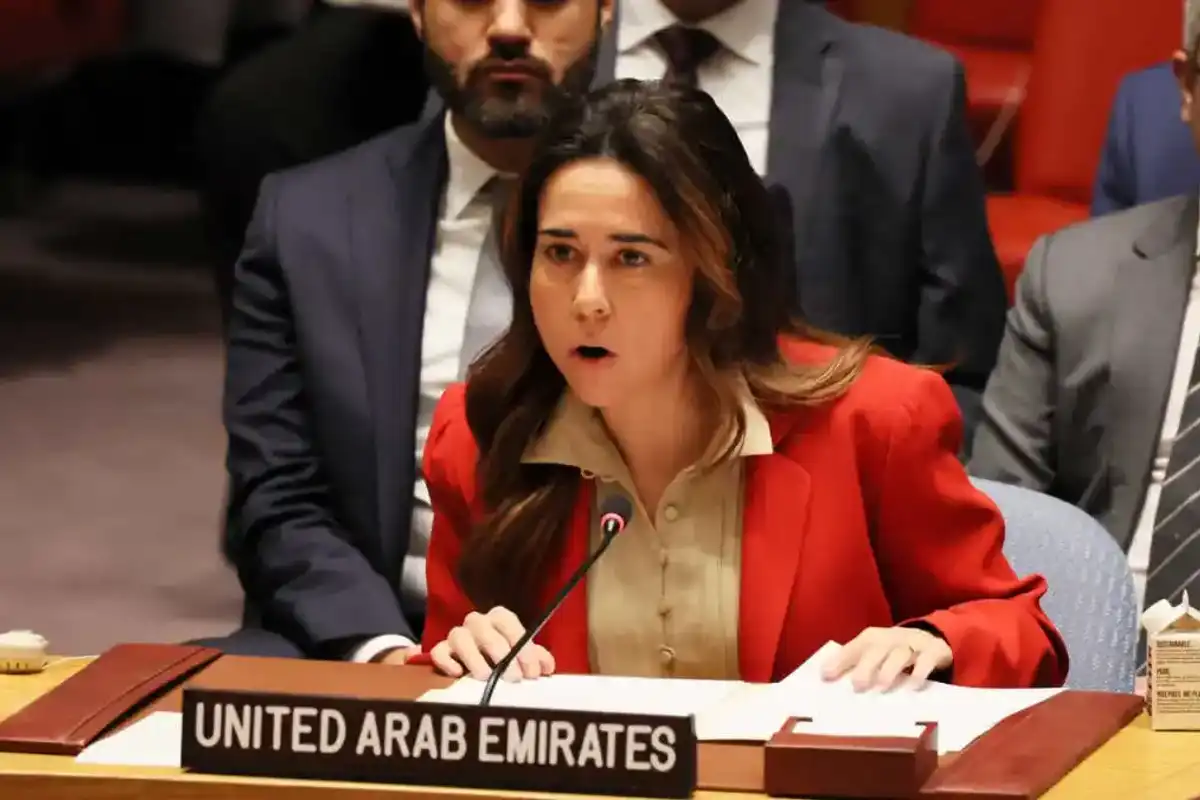
Lana Nusseibeh speaks during a meeting at UN headquarters in New York City, on 23 February 2023.
AFP
The United Arab Emirates formally entered the race to lead the United Nations on Wednesday, October 21, nominating Minister of State Lana Nusseibeh as a candidate for Secretary-General after deep divisions among the UN Security Council’s permanent members deadlocked the selection process.
Why did UAE enter race and who is Lana Nusseibeh?
Nusseibeh, a seasoned diplomat who served as the UAE’s permanent representative to the United Nations from 2013 to 2024, launched her candidacy with an appeal for decisive multilateral action amid fractured global relations.
"I am standing to be Secretary-General because I believe this is a moment to act with greater urgency: to act earlier, bring people together across differences, and drive the work forward until it produces concrete results," Nusseibeh said in an official statement.
The nomination follows an informal straw poll the 15-member Security Council held Friday, in which all seven active contenders received at least two negative "discourage" votes from the five veto-wielding permanent members—the United States, Britain, China, France, and Russia. Following the vote, former Senegalese president Macky Sall withdrew his candidacy.
The resulting stalemate left six candidates in the field, with none able to demonstrate a clear path to avoiding a permanent-member veto as current Secretary-General António Guterres prepares to conclude his second five-year term on December 31, 2026.
How does nomination intersect with regional rotation and veto politics?
Prior to Nusseibeh’s entry, Costa Rica’s Rebeca Grynspan, the current head of UN Trade and Development (UNCTAD), had emerged as the consistent frontrunner across successive rounds of voting, alongside Guyanese diplomat and former foreign minister Carolyn Rodrigues-Birkett. The field also includes International Atomic Energy Agency (IAEA) Director General Rafael Grossi of Argentina, Ecuadorian diplomats Ivonne A-Baki and María Fernanda Espinosa, and former UN under-secretary-general Olara Otunnu of Uganda.
Under longstanding informal United Nations tradition, the office of Secretary-General rotates across regional groupings, with general diplomatic expectations holding that the 2027–2031 mandate should be filled by a candidate from the Latin American and Caribbean Group (GRULAC). However, the inability of any Latin American contender to overcome the five-power veto barrier in the latest color-coded ballot has created space for outside candidates to test the waters.
To secure the Security Council’s formal recommendation for appointment by the 193-member General Assembly, a candidate must win at least nine affirmative votes from the 15 council members while avoiding a veto from any of the five permanent powers. Devised during the early 1980s to resolve entrenched leadership stalemates, the confidential straw poll asks council members to assign each contender a rating of "encourage," "discourage," or "no opinion," using distinctive colored slips to gauge the intentions of the veto-bearing states.
According to WAM, and Al-Monitor, Security Council members are expected to schedule a subsequent round of straw balloting in the coming weeks to assess whether Nusseibeh’s candidacy can bridge the geopolitical divide among the permanent members.





Comments
See what people are discussing