

End of US-Iran conflict could unlock USD 20 billion opportunity for Pakistan
Pakistan's strategic position could boost trade, investment, foreign reserves and Gwadar's role as a regional energy and logistics hub. KTrade Securities says

Haris Zamir
Business Editor
Experience of almost 33 years where started the journey of financial journalism from Business Recorder in 1992. From 2006 onwards attached with Television Media worked at Sun Tv, Dawn Tv, Geo Tv and Dunya Tv. During the period also worked as a stringer for Bloomberg for seven years and Dow Jones for five years. Also wrote articles for several highly acclaimed periodicals like the Newsline, Pakistan Gulf Economist and Money Matters (The News publications)
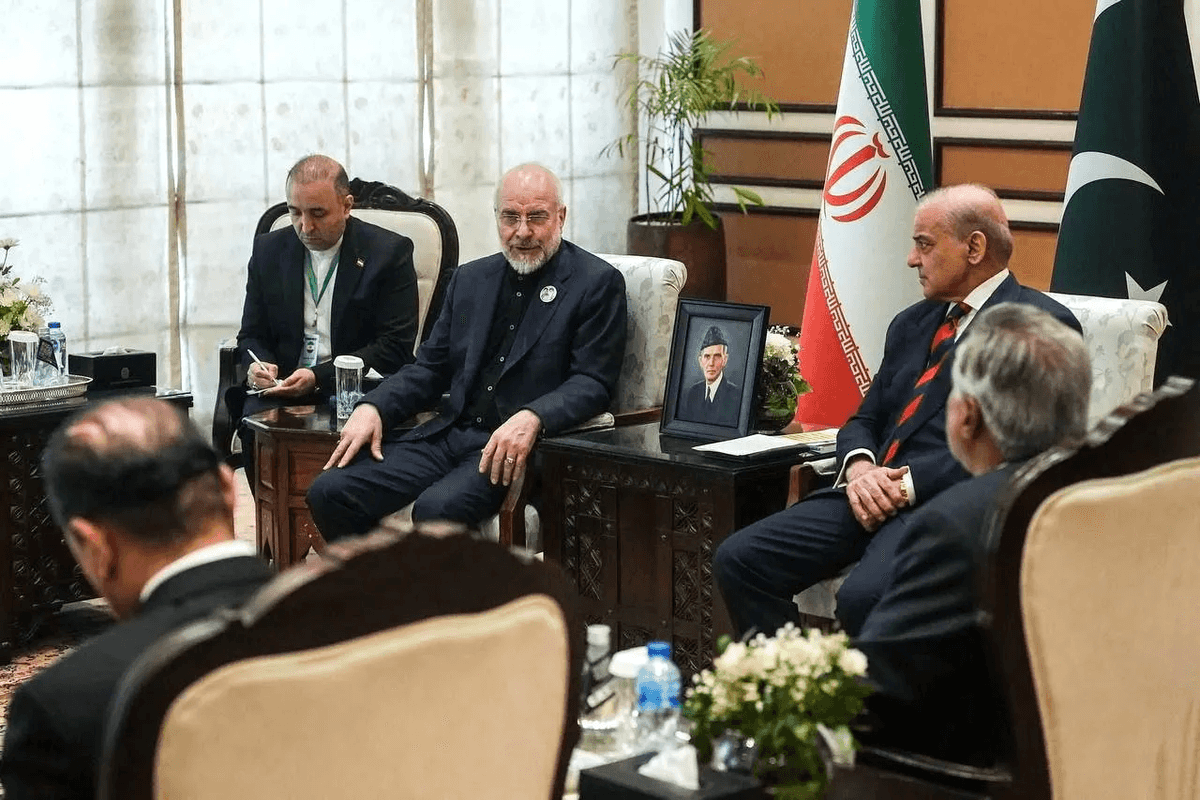
A successful resolution of the U.S.-Iran conflict could generate more than USD 20 billion in economic and strategic opportunities for Pakistan, which is uniquely positioned to serve as a credible intermediary between the two countries, according to a research report by KTrade Securities.
The brokerage house said Pakistan is at a "rare geopolitical inflection point" where it could transform a costly regional crisis into a long-term economic and strategic advantage.
According to KTrade, the recent conflict imposed severe economic costs on Pakistan after Iran's closure of the Strait of Hormuz disrupted global energy supplies and trade routes. The firm estimated the closure cost Pakistan between USD 10 billion and USD 14 billion, equivalent to 2% to 3% of gross domestic product.
The disruption contributed to inflation rising to 11.7% in May 2026, pushed the current account into deficit and prompted the State Bank of Pakistan to raise interest rates by 100 basis points in April 2026, the report said.
KTrade noted that even if a diplomatic settlement is reached, the Strait of Hormuz will remain a structural vulnerability for global energy markets. Existing bypass infrastructure, including Saudi Arabia's East-West Pipeline and the UAE's Habshan-Fujairah Pipeline, has a combined capacity of about 8.5 million barrels per day, well below the roughly 20 million barrels that pass through the Strait each day.
As a result, Gwadar Port has emerged as a strategically important alternative because of its location outside the Hormuz chokepoint. KTrade said Saudi Arabia is planning additional oil storage facilities at Gwadar after witnessing rapid storage build-ups during the disruption.
The report identified six major recovery channels that could benefit Pakistan following a settlement. These include a reduction in the country-risk premium of 75 to 150 basis points, foreign exchange reserves rising above USD 20 billion, recovery of approximately USD 4 billion in exports to Gulf Cooperation Council countries, inflation easing by 125 to 150 basis points as oil prices normalize, and an annual current account improvement of USD 3.75 billion to USD 5 billion.
KTrade also projected renewed labor demand under Saudi Arabia's Vision 2030 program, potentially creating annual employment opportunities for 700,000 to 800,000 Pakistani workers.
The report added that Pakistan's stock market retains significant upside potential, noting that the benchmark KSE-100 Index remains about 12% below its January 2026 peak.
Beyond the immediate economic recovery, KTrade highlighted three long-term structural opportunities.
The first is Gwadar Port's emergence as a viable regional logistics hub, with estimated annual revenues of USD 50 million to USD 80 million.
The second is Pakistan's vast mineral wealth, valued at an estimated USD 6 trillion to USD 8 trillion, including what the report described as the world's seventh-largest copper reserves, which could attract direct U.S. investment.
The third opportunity stems from the Pakistan-Saudi Arabia Strategic Mutual Defense Agreement. KTrade said the agreement supports a proposed USD 10 billion Saudi investment package and aims to increase bilateral trade threefold to USD 15 billion.
The report also pointed to the prospect of expanding trade with Iran if sanctions-related restrictions ease. Bilateral trade between the two countries peaked at USD 1.32 billion in fiscal 2009 before international sanctions constrained commercial activity.
KTrade said a sanctions-free environment could revive Pakistani exports of rice, meat, textiles, paper products, fruits and surgical goods to Iran, positioning Pakistan as one of Tehran's key regional trading partners.
"Pakistan's mediator role unlocks direct bilateral trade expansion with Iran while simultaneously strengthening its strategic relevance to both regional and global stakeholders," the report said.

Comments
See what people are discussing