

US strikes Iran to 'punish' Tehran after troops killed
US strikes Iran after American troop deaths in Jordan; Tehran hits back at two US bases in Kuwait as ceasefire talks collapse

News Desk
The News Desk provides timely and factual coverage of national and international events, with an emphasis on accuracy and clarity.
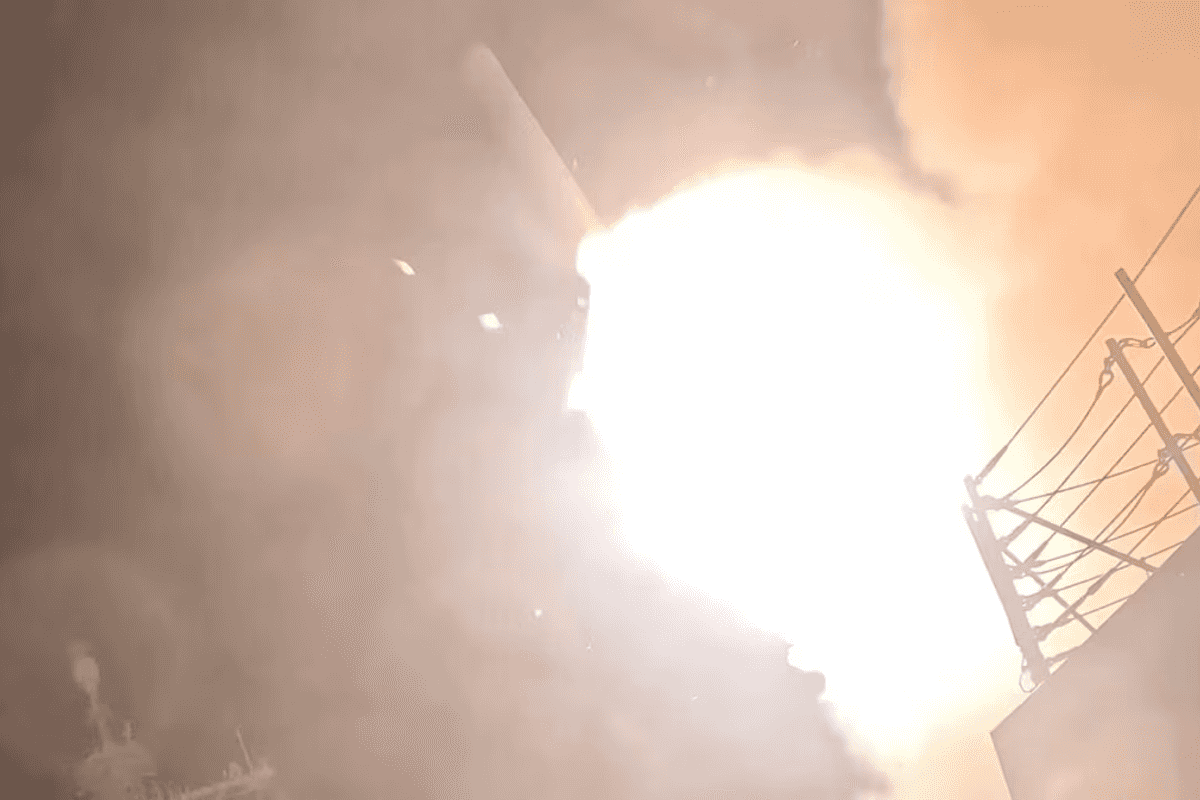
A munition is launched from a U.S. warship at an unknown location, during what U.S. Central Command (CENTCOM) says are strikes on Iran, in this screen grab taken from a handout video released on July 18, 2026.
Screenshot
The United States struck Iran on Sunday, saying the attacks were meant to punish Tehran for the first US military deaths since hostilities resumed with the Islamic republic. Iran responded within hours, striking two US bases in Kuwait. The exchange came as a preliminary deal to end the war collapsed over control of the Strait of Hormuz.
Why did the US strike Iran on Sunday?
The US struck Iran for an eighth consecutive night after two American service members were killed in Jordan on Friday. US Central Command said the strikes targeted the Islamic Revolutionary Guard Corps units responsible for that attack. A third US service member remains missing.
How did Iran retaliate against the US?
Iran's army said it hit two US bases in Kuwait with drones on Sunday, striking an ammunition depot at Camp Udairi and radar and air-defense systems at Ali Al Salem Air Base. Kuwait's military said the strikes were part of a wider round of Iranian drone and missile attacks. Sirens also sounded in Bahrain, and Iran said it struck a US base in Jordan and an air base used by American forces in Bahrain.
The confirmed US military death toll has now reached 16 since Israeli-US strikes began the war on February 28. Iran's health ministry said 50 people had been killed and more than 500 wounded since fighting resumed.
What is happening at the Strait of Hormuz?
The renewed violence began after Iran attacked ships in the Strait of Hormuz, a route that carries much of the world's oil supply. Iran then closed the strait, turning control of the waterway into a bargaining point in talks with Washington. The US reimposed its own blockade on Iranian ports this week, and a preliminary ceasefire deal has since fallen apart.
What have Iranian officials said in response?
Iran's supreme leader, Mojtaba Khamenei, who took over after his father was killed in the war's opening strikes, vowed to teach the US an "unforgettable lesson." Military adviser Mohsen Rezaei warned Tehran would resume full-scale offensive operations if US strikes continue. Iran's central military commander, Ali Abdollahi, said further US action would face a "decisive and devastating response."
How is the conflict affecting civilians?
Kuwait has accused Iran of targeting civilian sites and critical infrastructure, and residents say they are stocking up on essentials in case supply chains are disrupted. Iranian state media reported Saturday that US strikes killed three people and wounded eight in Hormozgan province. In Khuzestan province, officials said eight people had been killed over the past ten days. Iran also said US strikes cut drinking water to several southern villages after hitting power facilities and a desalination plant near Bonji.
President Donald Trump has threatened to strike Iranian infrastructure directly, though Washington has not confirmed whether US forces have begun doing so. Mediators are still trying to bring both sides back to the table, but for now, neither side shows signs of stepping back.



Comments
See what people are discussing