

US orders non-emergency personnel and families to evacuate Saudi Arabia
US ordered the mandatory departure of non-emergency government personnel and their families from Saudi Arabia and barred remaining staff from using Saudi airports without chief-of-mission clearance, citing an escalating campaign of Houthi missile and drone strikes

News Desk
The News Desk provides timely and factual coverage of national and international events, with an emphasis on accuracy and clarity.
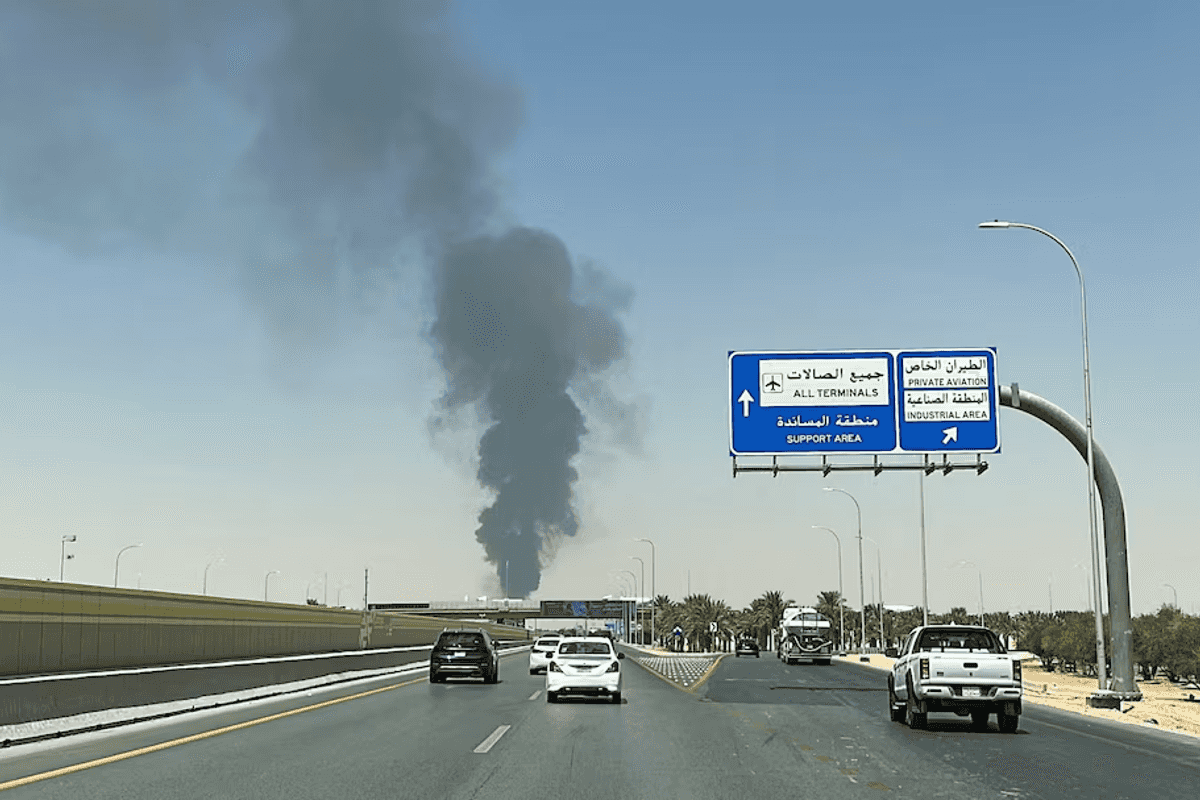
The U.S. Department of State has ordered all non-emergency American government personnel and their family members to evacuate Saudi Arabia immediately, citing acute security threats and an escalating campaign of ballistic missile and drone strikes by Iranian-backed Houthi forces targeting civilian airports and critical infrastructure.
What departure mandates and travel restrictions were issued by the State Department?
The mandatory departure order, which took effect October 23, 2026, marks a significant diplomatic drawdown amid growing concern that cross-border aerial hostilities between Yemeni rebels and regional air defenses could rapidly spiral beyond the immediate operational theatre. Under the updated security directive, remaining U.S. government personnel in the kingdom are barred from utilizing any commercial or military airport in Saudi Arabia without advance, explicit clearance from the Chief of Mission.
Security Alert: U.S. Mission Saudi Arabia (October 30, 2026)Effective October 23, 2026, the Department of State ordered non-emergency U.S. government employees and U.S. government employee family members to leave Saudi Arabia due to safety risks.Iranian-supported Houthis have engaged in hostilities against Saudi Arabia, including attacks on civilian airports and other critical infrastructure resulting in civilian casualties and severe travel disruptions. The hostilities have the potential to escalate rapidly beyond that immediate area.U.S. government employees working in Saudi Arabia require special authorization from Chief of Mission to use any airport in Saudi Arabia following recent missile and UAV attacks on airports in the Kingdom.U.S. citizens should be aware of potential attacks on airports, airspace closures, flight cancellations, and travel disruptions. Please take extreme caution if you choose to use airports in Saudi Arabia. We recommend checking your flight departure status directly with the airline and with the airport.Read more: https://t.co/cXZCGSfomE
— U.S. Embassy Riyadh (@USAinKSA) October 30, 2026
In an accompanying travel advisory, Washington urged private American citizens to reconsider commercial air travel and exercise extreme caution throughout the Arabian Peninsula.
The advisory warned of abrupt airspace closures, widespread flight cancellations, and potential strikes directly aimed at civil aviation hubs, advising travelers to independently verify flight statuses with airlines and airport ground operators before departing for terminals.
How attacks on commercial aviation hubs trigger emergency drawdown?
According to Reuters, the emergency evacuation was prompted in large part by a sequence of high-profile projectile and unmanned aerial vehicle (UAV) strikes targeting Saudi civilian aviation infrastructure.
These included a fatal October 10 attack that killed several civilians and forced the temporary closure of passenger terminals at King Khalid International Airport (KKIA) in Riyadh. Although civil aviation authorities subsequently attempted phased resumptions of passenger operations at Terminals 1 and 2, Houthi military spokesmen reiterated that civilian aviation facilities remain designated operational targets.
As reported by CBS News, the ordered departure applies to non-essential diplomatic staff and their dependents stationed at the U.S. Embassy in the Diplomatic Quarter of Riyadh, as well as consulates general in the Red Sea commercial center of Jeddah and the hydrocarbon hub of Dhahran.
Security officials cited intelligence reports indicating that rebel launch units have widened their targeting perimeter across the Gulf, utilizing synchronized multi-axis salvos to saturate and test regional air defense batteries.
How does Saudi drawdown connect to wider Middle East threat alerts?
The ordered departure in Saudi Arabia coincides with broader defensive adjustments enacted across the Middle East.
According to CNN, Washington recently authorized staff drawdowns and departure protocols at four additional regional diplomatic outposts—including embassies in Jordan, Lebanon, Qatar, and the United Arab Emirates—following unclassified intelligence memorandums warning of coordinated, advanced-stage plots directed against American personnel and assets throughout the region.
According to Al Arabiya, the Royal Saudi Air Defense Forces and allied coalition formations have intercepted dozens of ballistic missiles, cruise missiles, and loitering munitions in recent weeks over Riyadh, the western military enclave of Taif, the Red Sea export terminal at Yanbu, and the oil-rich Eastern Province.





Comments
See what people are discussing