

Warren Buffett steps aside at Berkshire, signaling end to an era
Investor known as the “Oracle of Omaha” leaves behind lessons on patience, ethics and generosity

Business Desk
The Business Desk tracks economic trends, market movements, and business developments, offering analysis of both local and global financial news.
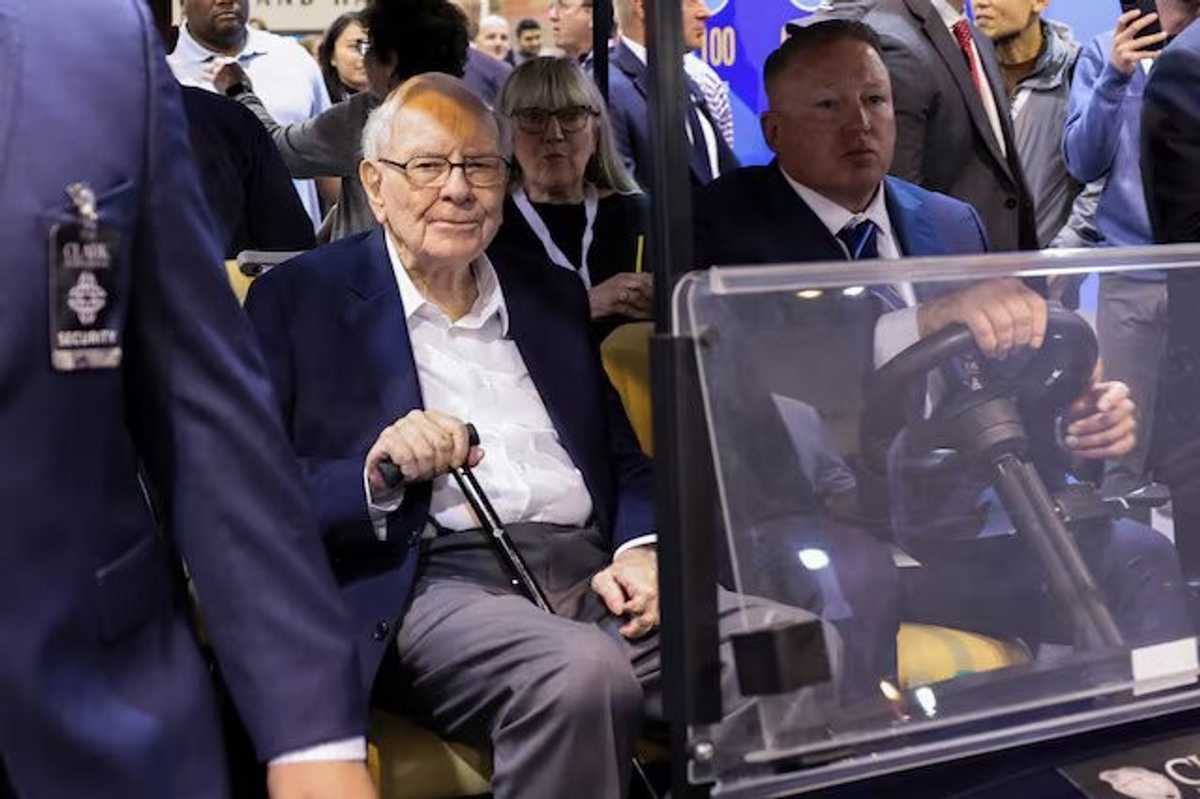
Warren Buffett’s announcement that 2025 would be his final year as chief executive of Berkshire Hathaway marked the end of one of the longest and most influential leadership tenures in modern business, capping a six-decade run in which he turned a struggling textile company into a conglomerate valued at more than $1 trillion.
Buffett, 95, confirmed he would step down as CEO, passing leadership to his longtime deputy Greg Abel. The transition closes a chapter that shaped generations of investors and executives, CNN reported.
Widely known as the “Oracle of Omaha,” Buffett became a symbol of American capitalism and one of the world’s most successful investors. Beyond his financial record, business leaders often described him as a teacher whose appeal lay in clear thinking, plain language and an emphasis on ethics.
“On the Mount Rushmore of business leaders in our country,” Eli Lilly CEO David Ricks told CNN, describing Buffett’s influence.
In his final year at the helm, Buffett remained firmly in the spotlight. He wrote two of his closely followed shareholder letters, oversaw a buildup of Berkshire’s cash holdings to more than $350 billion, disclosed a stake in Alphabet and introduced the most significant leadership changes at the company in decades. Along the way, he briefly became a meme — a reminder of his unlikely status as both elder statesman and pop-culture figure.
Over decades, Buffett shared lessons through annual letters that investors around the world studied closely, marathon shareholder meetings in Omaha and a personal style that favored simplicity and patience. Executives told CNN that those traits set him apart in a business world often driven by short-term pressures.
Steve Hafner, CEO of travel company Kayak, said Buffett had an unusual ability to translate complexity into everyday language. “It takes a lot of skill to take a complex issue and just split it to the bare minimum,” Hafner said, adding that Buffett’s shareholder letters were among his favorite reads.
Buffett’s writing frequently blended humor with blunt warnings. Among his most quoted lines: “It’s only when the tide goes out that you learn who’s been swimming naked,” and “Predicting rain doesn’t count; building arks does.”
Patience was another recurring theme. Buffett was known for holding large amounts of cash until the right opportunity appeared and then keeping investments for decades. “Our favorite holding period is forever,” he wrote in a 1989 letter.
Anthony Scaramucci, an investor and former White House communications director, told CNN that Buffett once challenged his understanding of long-term investing. When Scaramucci said he planned to hold Berkshire shares for his young daughter’s lifetime, Buffett replied that this still amounted to “short-termism,” explaining that his own intention was to hold the stock for 100 years.
Despite personal wealth estimated at about $150 billion by Bloomberg, Buffett repeatedly stressed the importance of reputation. “Lose money for the firm and I will be understanding,” he once told Congress. “Lose a shred of reputation for the firm, and I will be ruthless.”
Larry Restieri, CEO of wealth manager Hightower, said Buffett’s example underscored discipline. “Set a clear direction, stay true to your principles and execute patiently,” he told CNN.
Buffett also became a leading voice for philanthropy. In 2010, he joined Bill Gates and Melinda French Gates in launching the Giving Pledge, urging the world’s wealthiest people to donate most of their fortunes to charity.
Marcel Arsenault, CEO of Real Capital Solutions and a signatory to the pledge, told CNN that Buffett inspired him to think beyond wealth accumulation. Buffett once wrote, “Too often, a vast collection of possessions ends up possessing its owner.”
Generosity, Buffett argued, extended beyond money. “When you help someone in any of thousands of ways, you help the world,” he wrote in 2025. “Kindness is costless but also priceless.”
As Buffett steps away from day-to-day leadership, executives say his words — and the example he set — are likely to continue shaping corporate culture and investment philosophy long after his departure, CNN reported.




Comments
See what people are discussing