


Razi Wani
Producer - News Desk
Razi Ud Din Ahmed Wani is a multimedia journalist and digital storyteller with a strong background in fact-checking, South Asian politics, documentary filmmaking, scriptwriting, and digital content production. With an MA in Mass Communication from the University of Karachi, he has experience directing and scripting web series and socio-political satires. And has worked across various media and digital platforms, focusing on emerging trends and storytelling formats.
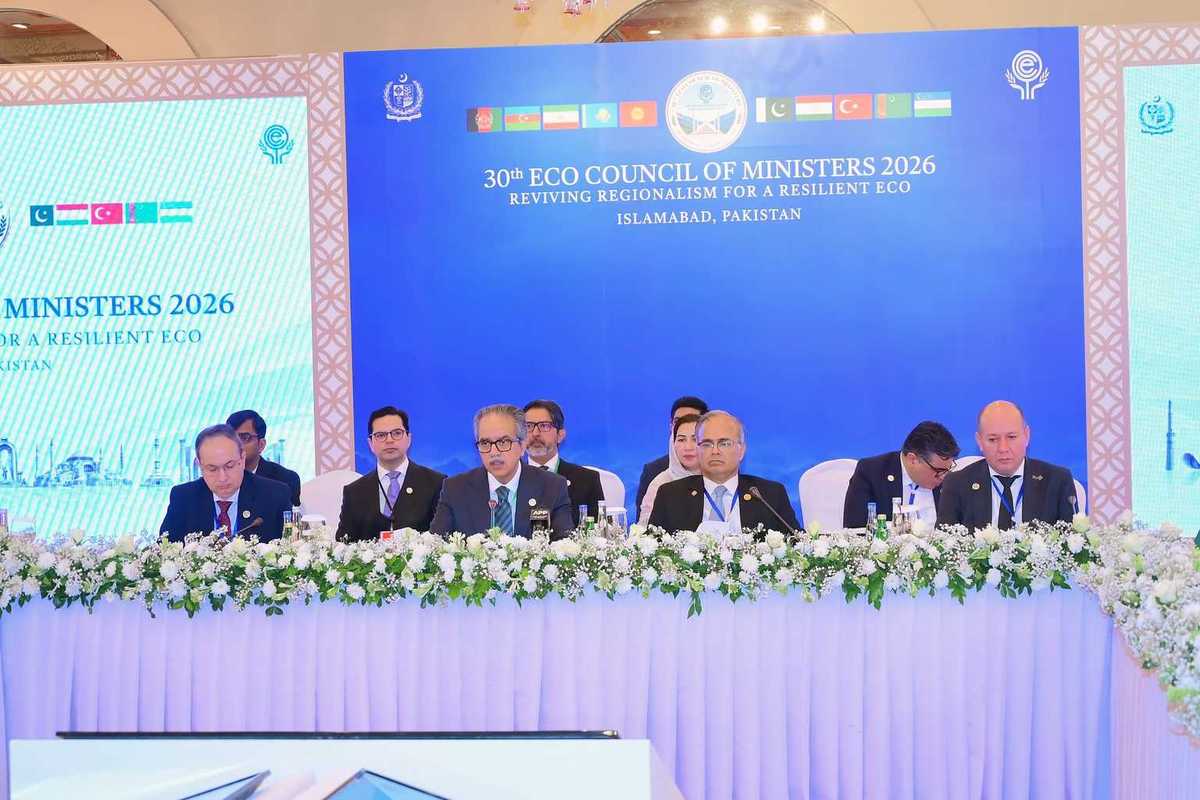
The ECO Senior Officials met today in Islamabad to finalize preparations for the 30th Meeting of the ECO Council of Ministers (COM), scheduled for November 16, 2026.
Picture Courtesy: ECO
Pakistan is hosting the 30th Council of Ministers meeting of the Economic Cooperation Organization (ECO) on November 15–16, bringing together foreign ministers and senior representatives from a 10-member regional bloc seeking to strengthen trade, transport links and economic cooperation across South Asia, Central Asia and the Middle East.
The meeting, chaired by Pakistan's Deputy Prime Minister and Foreign Minister Ishaq Dar, comes as Islamabad takes on ECO's chairmanship for 2026–27 under the theme "Reviving Regionalism for a Resilient ECO."
Pakistan is seeking to use the position to strengthen regional connectivity, facilitate trade and establish itself as a link between landlocked Central Asian economies and international markets.
But what exactly is ECO, why was it established, and how much has the organisation achieved since its formation more than four decades ago?
What is Economic Cooperation Organization?
The Economic Cooperation Organization is an intergovernmental regional organisation established to promote economic, trade, transport, energy and cultural cooperation among its member countries.
Headquartered in Tehran, Iran, ECO brings together 10 countries: Afghanistan, Azerbaijan, Iran, Kazakhstan, Kyrgyzstan, Pakistan, Tajikistan, Türkiye, Turkmenistan and Uzbekistan.
Together, these countries form a geographically connected region with significant energy resources, agricultural production, mineral wealth and access to important international trade routes.
The organisation's central objective is to make it easier for member countries to trade with one another, develop transport infrastructure, encourage investment and coordinate economic policies.
For example, Pakistan's ports could provide landlocked Central Asian countries with access to international shipping routes, while countries such as Kazakhstan, Uzbekistan and Turkmenistan offer markets for Pakistani exports and opportunities for energy cooperation.
Iran and Türkiye also occupy important geographical positions, connecting the region with the Middle East and European markets.
Unlike a military alliance or political union, ECO does not have the authority to impose policies on its members. Its decisions depend on agreements between governments and their willingness to implement them.
How and why was ECO established?
ECO's origins date back to 1964, when Pakistan, Iran and Türkiye established the Regional Cooperation for Development (RCD).
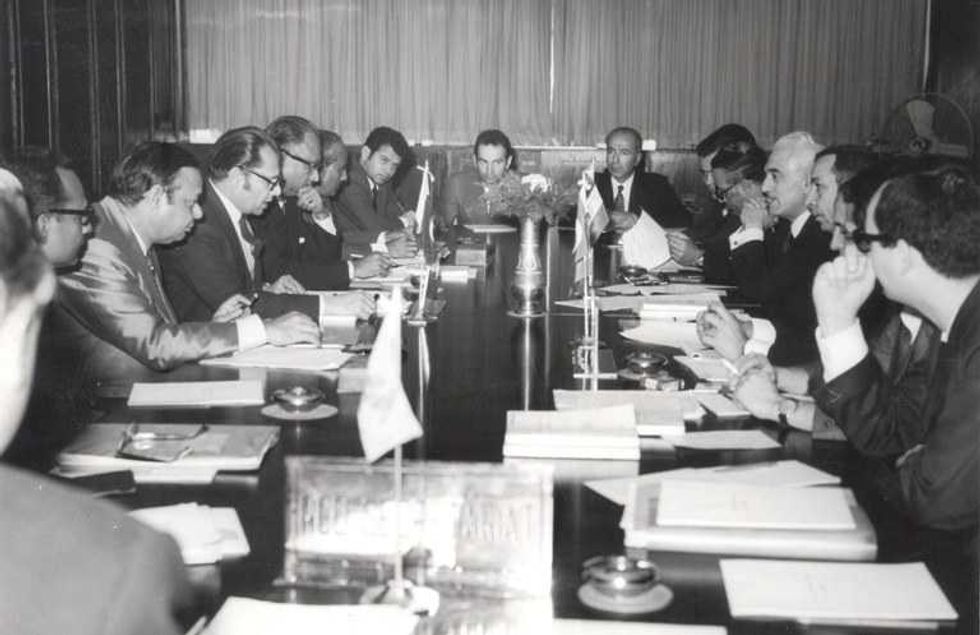 Founded as the Regional Cooperation for Development (RCD) in 1964 by the Islamic Republic of Iran, the Islamic Republic of Pakistan, and the Republic of Türkiye, the Forum was rechristened as the Economic Cooperation Organization (ECO) in 1985.Picture Courtesy: ECO
The initiative aimed to strengthen economic, technical and cultural cooperation among the three countries, particularly through trade, industrial development and transportation.
Following political changes in the region, including the Iranian Revolution of 1979, the RCD became inactive.
In 1985, Pakistan, Iran and Türkiye revived regional economic cooperation under a new organisation called the Economic Cooperation Organization.
The organisation expanded significantly in 1992 following the dissolution of the Soviet Union.
Seven countries, Afghanistan, Azerbaijan, Kazakhstan, Kyrgyzstan, Tajikistan, Turkmenistan and Uzbekistan, joined, increasing its membership from three to 10.
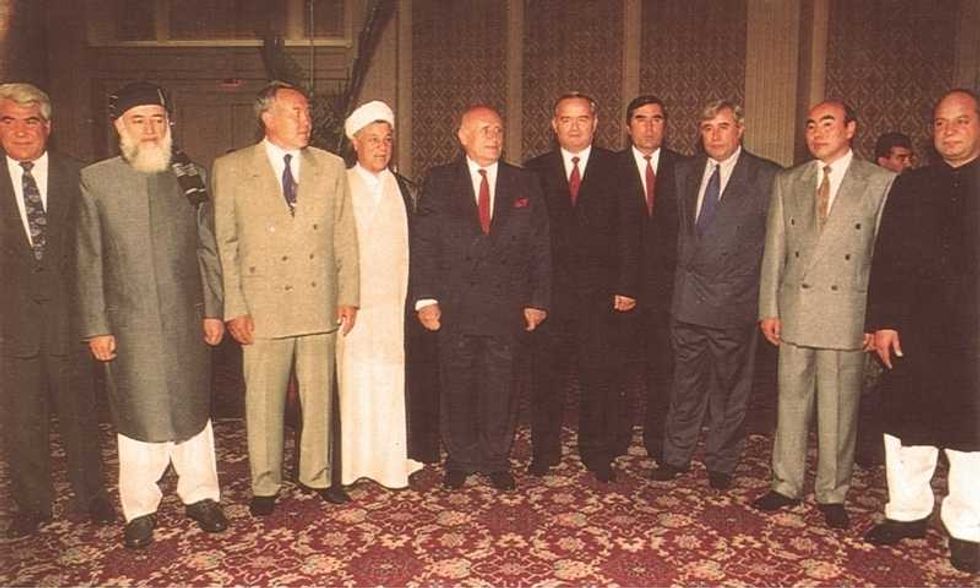 The ECO stretched the fabric of its cooperative partnership in the early 1990s, welcoming the Islamic Republic of Afghanistan and Republic of Azerbaijan, as well as five Central Asian nations.Picture Courtesy: ECO
The expansion was strategically important because it brought newly independent Central Asian states into an existing regional platform connecting them with South Asia, Iran and Türkiye.
ECO subsequently received observer status at the United Nations General Assembly in 1993, strengthening its international institutional standing.
What does ECO actually do?
ECO's work is centred on regional economic integration, with cooperation extending across several sectors.
Trade: The organisation seeks to reduce tariffs, remove trade barriers and increase commercial activity between member countries. Its ECO Trade Agreement (ECOTA) was designed to facilitate preferential trade among participating members.
Transport and connectivity: ECO promotes regional road and railway networks, transit arrangements and improved customs procedures to facilitate the movement of goods across borders.
Energy: Member countries have opportunities to cooperate on electricity transmission, oil and gas infrastructure and renewable energy.
Investment and development: The organisation seeks to encourage cross-border investment, industrial development and cooperation in agriculture, technology and education.
Tourism and culture: ECO also promotes tourism, cultural exchanges and cooperation based on the region's shared historical connections.
The organisation's Council of Ministers is its highest policy-making body. It generally comprises the foreign ministers of member states and meets to review the organisation's activities, set priorities and consider policy decisions.
This is the body meeting in Islamabad on November 15 and 16. It is different from an ECO summit, which brings together heads of state and government.
Why is Pakistan hosting this meeting?
Pakistan is one of ECO's three founding members and has long viewed the organisation as an opportunity to develop economic relationships with Central Asia.
Its geographical position gives it access to the Arabian Sea and places it at the intersection of important regional trade routes.
The ports of Karachi, Port Qasim and Gwadar could provide landlocked Central Asian countries with access to international maritime markets, potentially creating opportunities for Pakistan in shipping, logistics, warehousing and transit trade.
Pakistan could also expand exports of textiles, pharmaceuticals, surgical instruments, agricultural products and manufactured goods to Central Asian markets.
By assuming ECO's chairmanship for 2026–27, Islamabad will have an opportunity to influence the organisation's priorities and promote its regional connectivity agenda.
Pakistan's stated chairmanship theme, "Reviving Regionalism for a Resilient ECO," focuses on strengthening economic integration, transport connections and regional partnerships.
Islamabad is also expected to host the ECO Summit in 2027, following the 17th ECO Summit held in Khankendi, Azerbaijan, on July 3–4, 2025.
Pakistan's connectivity ambitions
One of the most significant opportunities for Pakistan lies in developing transport links between Central Asia and the Arabian Sea.
The proposed Uzbekistan-Afghanistan-Pakistan railway is one such initiative. The project aims to connect Uzbekistan through Afghanistan to Pakistan, potentially providing Central Asian countries with a shorter route to Pakistani ports and international shipping markets.
If developed, the railway could increase transit trade, create commercial opportunities and strengthen Pakistan's position as a regional logistics hub.
However, the project faces considerable challenges, including difficult terrain, financing requirements, security concerns and political tensions involving Afghanistan. Energy cooperation is another important area.
Projects such as CASA-1000, which aims to transmit electricity from Kyrgyzstan and Tajikistan through Afghanistan to Pakistan, and the proposed Turkmenistan-Afghanistan-Pakistan-India (TAPI) gas pipeline reflect the region's potential for cross-border energy trade.
Although these projects are not exclusively ECO initiatives, they illustrate the type of regional cooperation the organisation seeks to encourage.
Has ECO delivered on its economic promises?
Despite its ambitious objectives, ECO has struggled to translate regional cooperation into substantial economic integration.
One indication of this gap comes from the organisation's trade figures cited in Pakistan's ECO Vision 2025.
In 2015, total trade between ECO member countries and the rest of the world reached $648 billion. However, trade among ECO members accounted for just $58 billion, or approximately 9% of the total.
The figures highlighted how limited commercial activity remained between countries that share geographical proximity and significant economic interests.
ECO has also faced difficulties implementing agreements intended to facilitate regional trade.
The ECO Trade Agreement, designed to reduce trade barriers, has struggled to become fully operational across its membership. Differences in national regulations, customs procedures, banking restrictions, and protectionist policies have also impeded economic integration.
Political disagreements have added to these challenges. Pakistan and Afghanistan have faced persistent security and diplomatic tensions, while Iran's international sanctions have complicated its economic and financial relationships.
Member countries also maintain different strategic relationships with major powers, including China, Russia and Western countries.
These differences make it difficult to establish common economic policies and ensure that regional agreements are implemented consistently.
What comes next for ECO?
The Islamabad meeting provides an opportunity for member countries to reassess the organisation's priorities and address longstanding implementation challenges.
One of the important items on the regional agenda is the proposed ECO Vision 2035, intended to establish a framework for economic cooperation over the next decade.
The framework's broader objectives include strengthening trade, improving regional connectivity, encouraging investment and promoting sustainable development.
For Pakistan, the challenge will be to turn its chairmanship into tangible economic outcomes rather than limiting it to diplomatic engagement.
That would require progress on trade agreements, functioning transport corridors, cross-border energy projects and more efficient customs arrangements.
After more than 40 years, ECO continues to bring together countries with significant economic potential and shared geographical interests.
However, its long-term relevance will depend less on the number of meetings it holds and more on whether its members can turn regional cooperation into actual trade, investment and economic opportunities.
For Pakistan, hosting the meeting is an opportunity to advance its regional ambitions. Whether it can help deliver meaningful integration remains a much bigger question.




Comments
See what people are discussing