

Why Ergonomic Support Is Finding Its Way Into Pakistan’s Most Important Workspaces
The modern workplace is becoming less about where work happens and more about how people experience it.

Partner Content
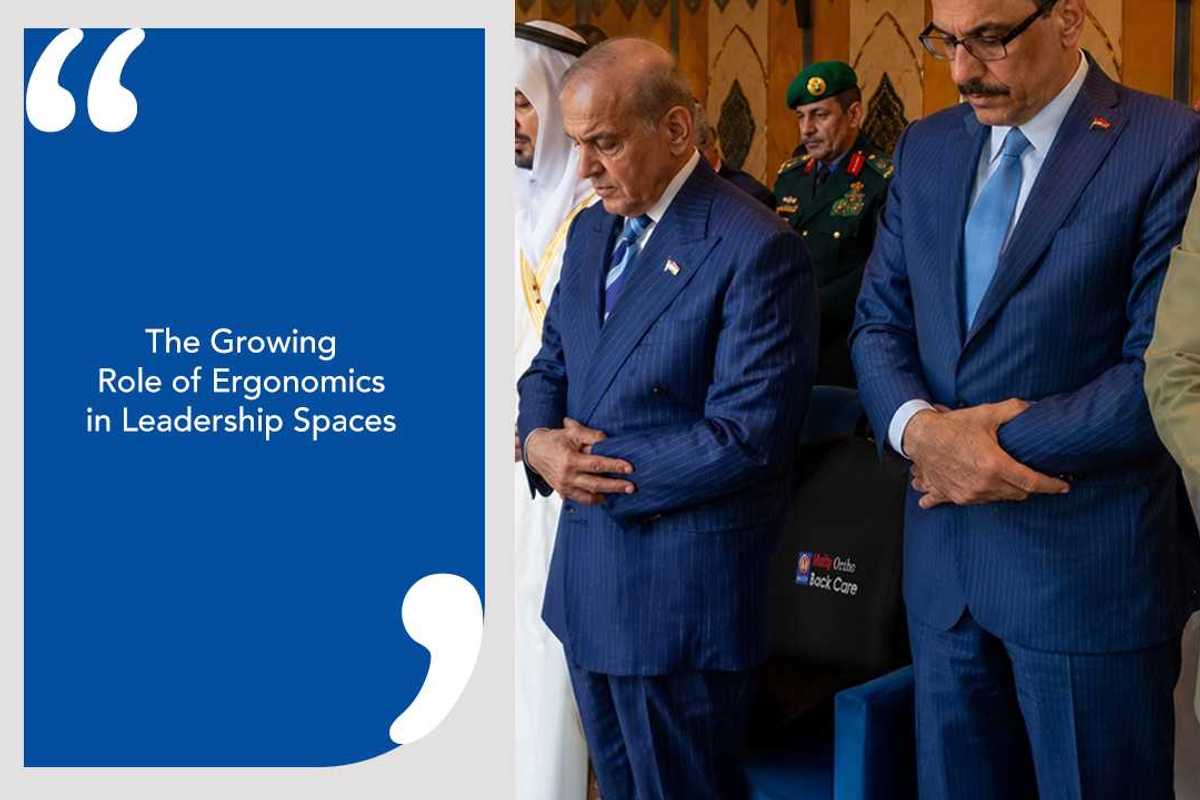
The modern workplace is becoming less about where work happens and more about how people experience it.
That distinction is especially relevant in roles where the day is built around movement, long meetings and sustained concentration. Senior professionals, executives and public officials often work across multiple settings, yet are expected to perform with the same level of focus in each.
This is where ergonomics is beginning to take on a broader role.
A recent image of Shehbaz Sharif using a MoltyOrtho Back Care Cushion by MoltyFoam during an official engagement offered a small but revealing example. The product was not the subject of the moment, but its presence suggested how naturally ergonomic thinking is entering even the most formal professional environments.
The Workplace Is Becoming More Responsive
For decades, office design asked people to adapt to the space around them.
The chair was fixed. The desk was fixed. The environment was fixed.
That model is gradually giving way to something more responsive.
Modern workplaces are being designed around the realities of different bodies, different routines and different working styles. Even when a full redesign is not possible, smaller interventions can help make a space more practical for the person using it.
This shift matters because work itself has become more fluid. The professional day rarely takes place in a single room.
Leadership Has Its Own Physical Demands
High-responsibility roles are often discussed in terms of pressure, decision-making and accountability. The physical side of those roles is easier to overlook.
Long briefings, official travel and continuous meetings create routines where prolonged sitting is unavoidable.
That does not make ergonomics a luxury. It makes it part of how a demanding workday is managed.
The recent Shehbaz Sharif sighting is interesting in this context because it places a very ordinary ergonomic need inside a very high-profile environment. It is a reminder that formal settings do not remove the practical realities of work.
Ergonomics Is No Longer a Specialist Conversation
The language around ergonomics is also changing.
It was once something discussed mainly in occupational health, HR departments or specialist office furniture circles.
Today, it is becoming part of everyday workplace thinking.
Professionals are paying more attention to how they sit, how long they remain in one position and how easily a workspace can be adjusted. Portable solutions, better seating and more thoughtful layouts are all part of this shift.
What was once treated as a technical concern is becoming a mainstream workplace consideration.
Pakistan’s Work Culture Is Driving New Expectations
There is also a local dimension to this conversation.
Professional life in Pakistan often involves long commutes, extended meetings and frequent movement between work settings. That creates a particular need for flexible workplace solutions that are not tied to a single desk or chair.
As these patterns continue, local businesses have an opportunity to respond with products designed around real working habits rather than generic assumptions.
A Different Standard for Important Workspaces
Perhaps the most significant change is how a good workspace is now being judged.
Visual authority still matters, particularly in leadership environments. But it is no longer enough on its own.
The strongest workplaces are increasingly those that balance formality with usability and appearance with function.
The quiet presence of an ergonomic product in an official setting is a small sign of that evolution.
It suggests that the future of important workspaces may not be defined by grand redesigns, but by a more practical question:
Does the space work well for the person doing the work?



Comments
See what people are discussing