

EU seeks human rights improvements to protect Pakistan's GSP+ trade benefits
The EU wants Pakistan to show short-term human rights and rule of law gains to keep GSP+ trade benefits, as textile leaders back a time-bound action plan.

Business Desk
The Business Desk tracks economic trends, market movements, and business developments, offering analysis of both local and global financial news.
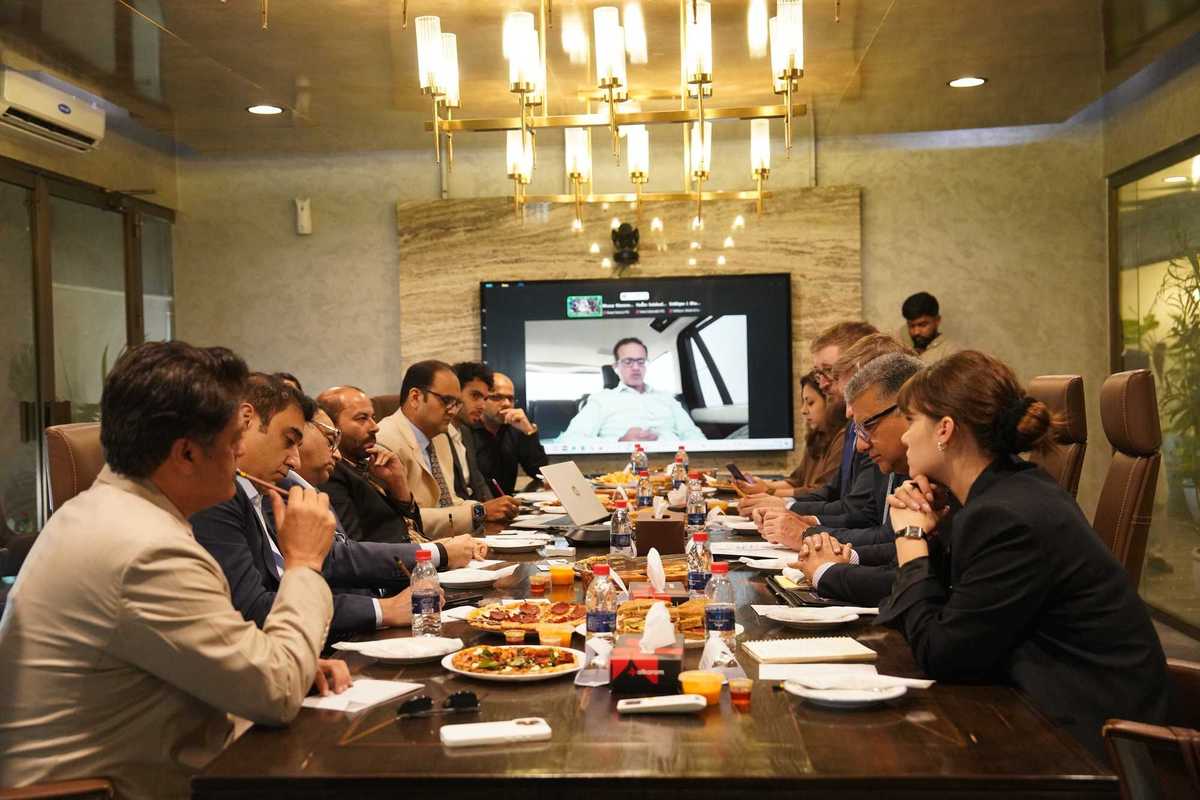
EU Ambassador Raimundas Karoblis meeting with Pakistan Textile Council leadership in Karachi.
Nukta
EU Ambassador Raimundas Karoblis said the European Union wants Pakistan to show tangible, short-term improvements in human rights and the rule of law to keep its GSP+ trade benefits. He made the remarks during a meeting with Pakistan Textile Council leadership in Karachi.
What does Pakistan need to do to keep GSP+ status?
Pakistan must implement its existing international commitments effectively, not just ratify conventions or pass laws. Karoblis said the EU's new Generalized Scheme of Preferences Plus framework places greater emphasis on enforcement. The European Commission plans to strengthen its engagement with Pakistan and work toward a time-bound action plan, the Pakistan Textile Council said.
Why does GSP+ matter for Pakistan's textile exports?
The meeting focused on the future of Pakistan-EU trade relations, the continuation of preferential market access and emerging compliance requirements for textile and apparel exporters. The EU remains Pakistan's largest export destination, the council said. Textiles and clothing account for about 70% to 76% of Pakistan's exports to the bloc.
Council Chairman Fawad Anwar said continuing GSP+ benefits was critical to exports, employment, tax revenues and industrial competitiveness. He warned that a proposed EU-India free trade agreement would intensify competitive pressure on Pakistani exporters, even if Pakistan retained its preferential access to the European market.
What did Pakistani textile leaders say about GSP+ compliance?
Anwar said the industry's competitiveness would depend not only on maintaining tariff advantages but also on meeting emerging trade requirements and improving efficiency. Council Vice Chairman Anees Khawaja said the EU's assessment had acknowledged progress in human rights, labor standards, environmental protection and governance. He stressed the importance of recognizing that progress while continuing efforts to meet GSP+ requirements.
Zaki Bashir, chief executive of textile manufacturer Gul Ahmed, said exporters' compliance performance should be assessed separately from broader national-level findings. A sector-specific assessment, he said, would help distinguish export-oriented industries' progress in meeting international standards from challenges elsewhere in the country. The council pledged full support for a time-bound action plan and called for close coordination between the government and the textile industry.
Council Chief Executive Muhammad Hasan Shafqaat said emerging EU requirements, including Digital Product Passports and supply chain due diligence, required greater clarity and proportionate implementation. Exporters need a clear understanding of the rules and sufficient guidance to prepare their businesses and supply chains for changing European regulations, he said.
What will the Pakistan Textile Council do next on GSP+?
The council said it would engage with the Prime Minister's Office, the Ministry of Foreign Affairs and the Ministry of Commerce to discuss Pakistan's GSP+ priorities and coordinate industry recommendations. Anwar will present the industry's recommendations to a government committee reviewing the GSP+ reapplication process.
At the Foreign Ministry's request, the council is also preparing an assessment of the potential economic impact of the proposed EU-India free trade agreement on Pakistan's exports. The study is expected to identify competitive risks for Pakistani exporters and help inform the government's response. The council reaffirmed its commitment to protecting Pakistan's preferential access to the European market.
What is GSP+?
GSP+ allows eligible developing countries to export a range of products to the EU at reduced or zero tariffs. Eligibility depends on compliance with international conventions covering human rights, labor rights, environmental protection and good governance.





Comments
See what people are discussing