

Yogi Adityanath emerges as BJP hardliner and potential Modi successor
Kamran Khan says Yogi’s rise in BJP reflects a strategy to cement hardline Hindutva beyond Modi

News Desk
The News Desk provides timely and factual coverage of national and international events, with an emphasis on accuracy and clarity.
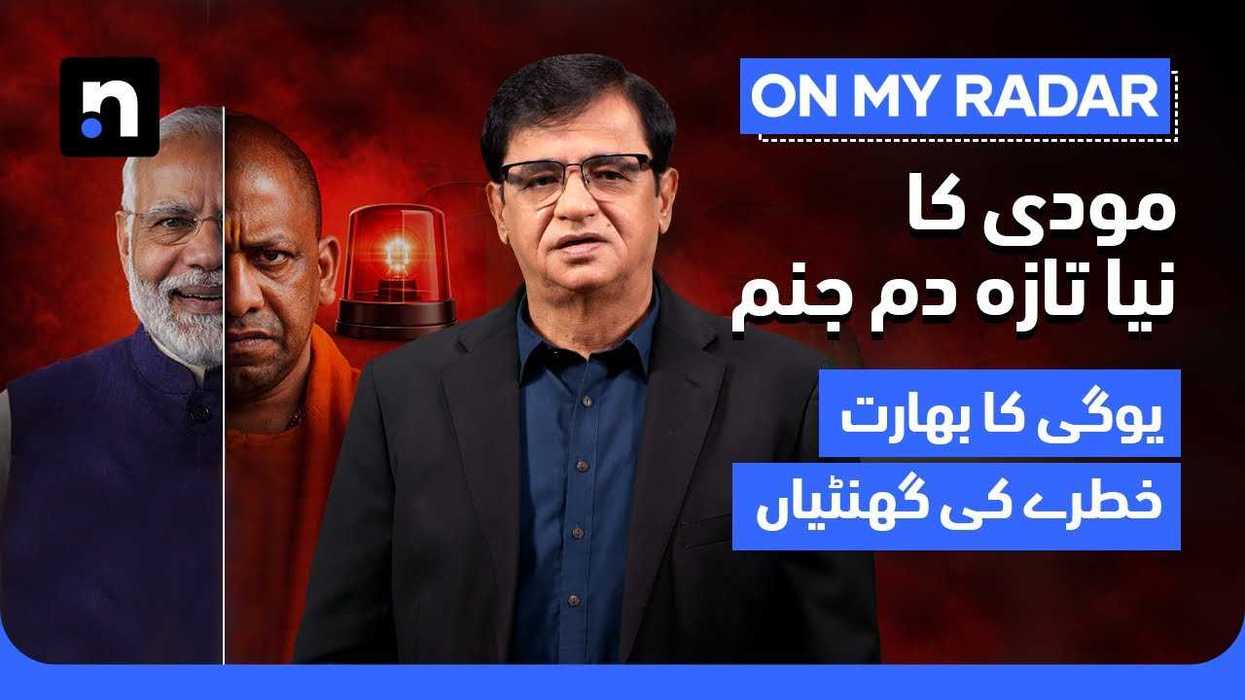
Uttar Pradesh Chief Minister Yogi Adityanath has emerged as one of India’s most powerful and influential political figures, widely seen as the potential successor to Prime Minister Narendra Modi.
Known for his hardline Hindutva stance, anti-Muslim rhetoric, and authoritarian governance style, Yogi has transformed Uttar Pradesh - the country’s most populous state - into a stronghold of Hindu nationalist politics, securing his position as a key player in India’s future political landscape.
In the latest episode of On My Radar, Kamran Khan said that Yogi’s rise within the Bharatiya Janata Party (BJP) reflects a broader strategy to consolidate hardline Hindutva politics beyond Modi’s tenure.
“Yogi Adityanath represents the next ideological phase of the BJP,” Khan noted, emphasizing his combination of religious authority, political influence, and strong voter base in Uttar Pradesh.
Born Ajay Mohan Singh Bisht in Uttarakhand, Yogi comes from a Rajput family, and his father was a forest ranger. He earned a degree in mathematics before joining the Ayodhya movement in the 1990s, which set him on a path into Hindu nationalist politics.
Moving to Gorakhpur, he became the head priest at a major monastery, adopting the name Yogi Adityanath and cultivating a following that combines religious leadership with political influence.
Yogi first entered the Lok Sabha in 1998 at age 26 and has been re-elected five times, making Gorakhpur his political stronghold. Through the youth organization Hindu Yuva Vahini, he developed a militant-supportive network linked with the RSS and BJP, while maintaining an independent power base.
In 2017, despite expectations that a technocrat or senior politician would lead Uttar Pradesh, internal lobbying and support from the RSS propelled Yogi to the chief minister’s office - a position he has held since, consolidating power and advancing hardline Hindutva policies.
Under Yogi’s administration, Uttar Pradesh has seen increased measures targeting minority communities, including anti-“love jihad” laws, strict policing, and demolition drives.
These policies, often criticized by international media and human rights groups as extrajudicial, have simultaneously strengthened his popularity among Hindu nationalist voters. While the state government touts achievements in job creation, industrial investment, and infrastructure projects - including the Lucknow Metro and expressways - Yogi’s ideological positioning remains the core of his political appeal.
Yogi’s consolidation of power in India’s most populous state, coupled with repeated electoral success and ideological alignment with Modi’s Hindutva agenda, positions him as a key contender to lead the BJP nationally.
Analysts say his emergence signals a continuation of hardline Hindu nationalist politics in India, raising questions about the country’s political and social direction beyond Modi’s tenure.




Comments
See what people are discussing