

On ‘Youm-e-Istehsal,’ Pakistan calls for global action on Kashmir dispute
August 5 marks India’s revocation of Article 370, which Pakistan views as 'illegal annexation' of Kashmir

News Desk
The News Desk provides timely and factual coverage of national and international events, with an emphasis on accuracy and clarity.
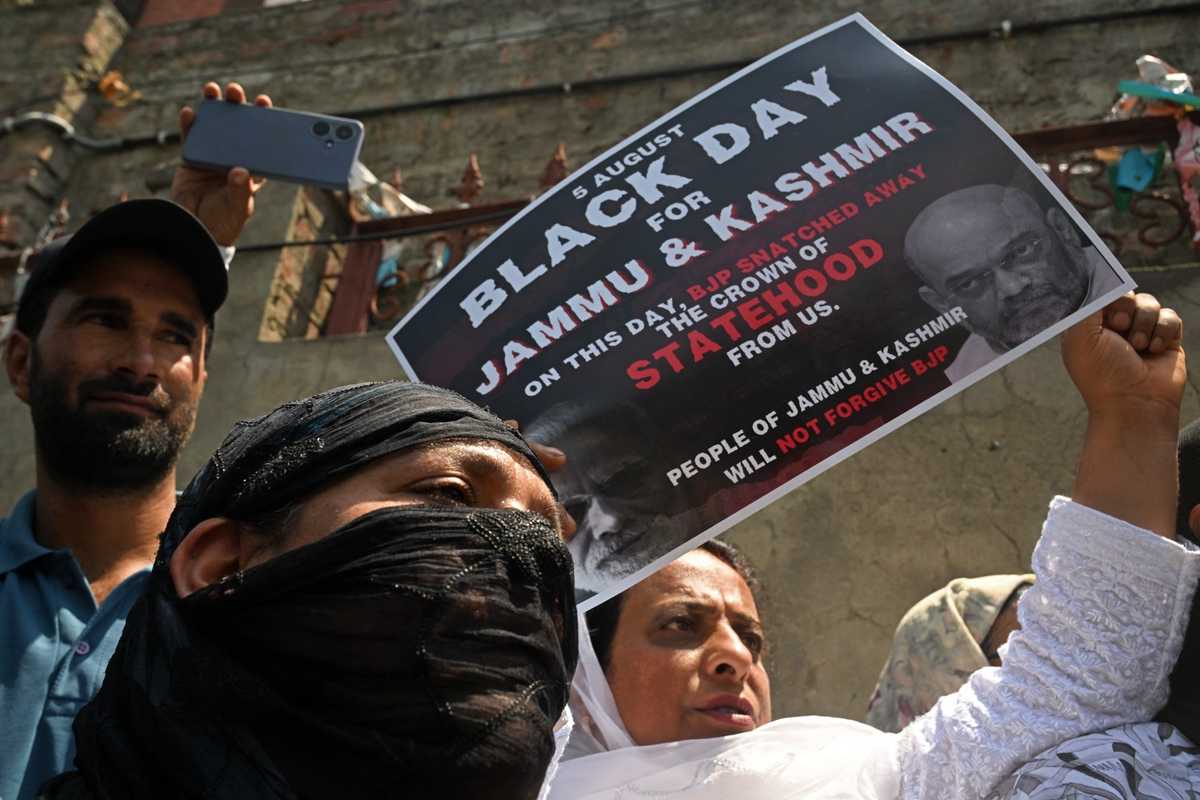
Congress supporters protest to demand statehood for Indian-administered Kashmir, in Srinagar on August 5, 2025, six years since New Delhi scrapped Article 370 in the Indian constitution that had granted Kashmir special status and autonomy.
AFP
Pakistan observed on Tuesday the sixth anniversary of India’s revocation of Indian-administered Kashmir’s special status, reaffirming its support for the region’s disputed status and calling for global attention to what it described as ongoing human rights violations.
Known in Pakistan as Youm-e-Istehsal, or the “Day of Exploitation,” the day marks India’s decision on August 5, 2019, to revoke Article 370 of its constitution, which had granted special autonomy to the region of Indian-administered Kashmir.
The move allowed non-residents to purchase land and removed constitutional protections that had been in place for decades. Pakistan has consistently condemned the decision, calling it an illegal annexation and a violation of United Nations Security Council resolutions.
“The people and Government of Pakistan are solemnly observing the Youm-e-Istehsal,” said a statement from the Ministry of Foreign Affairs, which also released messages from the country’s top leadership.
In their statements, President Asif Ali Zardari, Prime Minister Shehbaz Sharif and Deputy Prime Minister and Foreign Minister Ishaq Dar renewed what they described as Pakistan’s “unwavering diplomatic, political and moral support” for the Kashmiri cause.
They also accused India of pursuing policies aimed at turning the local population into “a disempowered community in their own land.”
On Monday, Pakistan’s Foreign Secretary briefed diplomats based in Islamabad about the situation in the region, focusing on legal, security and human rights developments in recent months.
Dar also sent letters to top international figures, including the presidents of the UN General Assembly and Security Council, the UN Secretary General, the UN High Commissioner for Human Rights, and the Secretary General of the Organization of Islamic Cooperation.
In the letters, Dar called for the implementation of UN Security Council resolutions that guarantee Kashmiris the right to self-determination. He also urged international attention to the human rights situation in Indian-administered Kashmir and the release of Kashmiri political prisoners.
“Youm-e-Istehsal is not just a political statement but also a reminder of Pakistan’s longstanding position on the Kashmir issue,” the ministry’s statement read.
What is Youm-e-Istehsal?
Since 2019, Pakistan has used August 5 as a focal point to spotlight the Kashmir dispute globally, describing the Indian government’s actions as a form of occupation and demographic change.
The day is marked annually with symbolic gestures such as a nationwide moment of silence, public displays of banners and posters, and addresses by key leaders. Officials say it is part of a broader campaign to keep international focus on the disputed Himalayan territory.
India and Pakistan both claim the region in full but administer separate parts. The two nuclear-armed neighbors have fought multiple wars over Kashmir since gaining independence from British rule in 1947.
India maintains that the revocation of Article 370 was a domestic matter aimed at integrating the region more fully into the Indian union and boosting development. Pakistan, however, sees it as an illegal act that undermines the rights of Kashmiris and violates international law.
Pakistan continues to advocate for a resolution of the conflict in accordance with UN resolutions and the wishes of the Kashmiri people.

Comments
See what people are discussing