

Pakistan reopens Parachinar Airport after nearly 20 years of closure
Pakistan Army Aviation completes six successful trial flights at Parachinar Airport, reopening it after nearly two decades of inactivity in Kurram district

Kamran Ali
Correspondent Nukta
Kamran Ali, a seasoned journalist from Khyber Pakhtunkhwa, Pakistan, has a decade of experience covering terrorism, human rights, politics, economy, climate change, culture, and sports. With an MS in Media Studies, he has worked across print, radio, TV, and digital media, producing investigative reports and co-hosting shows that highlight critical issues.
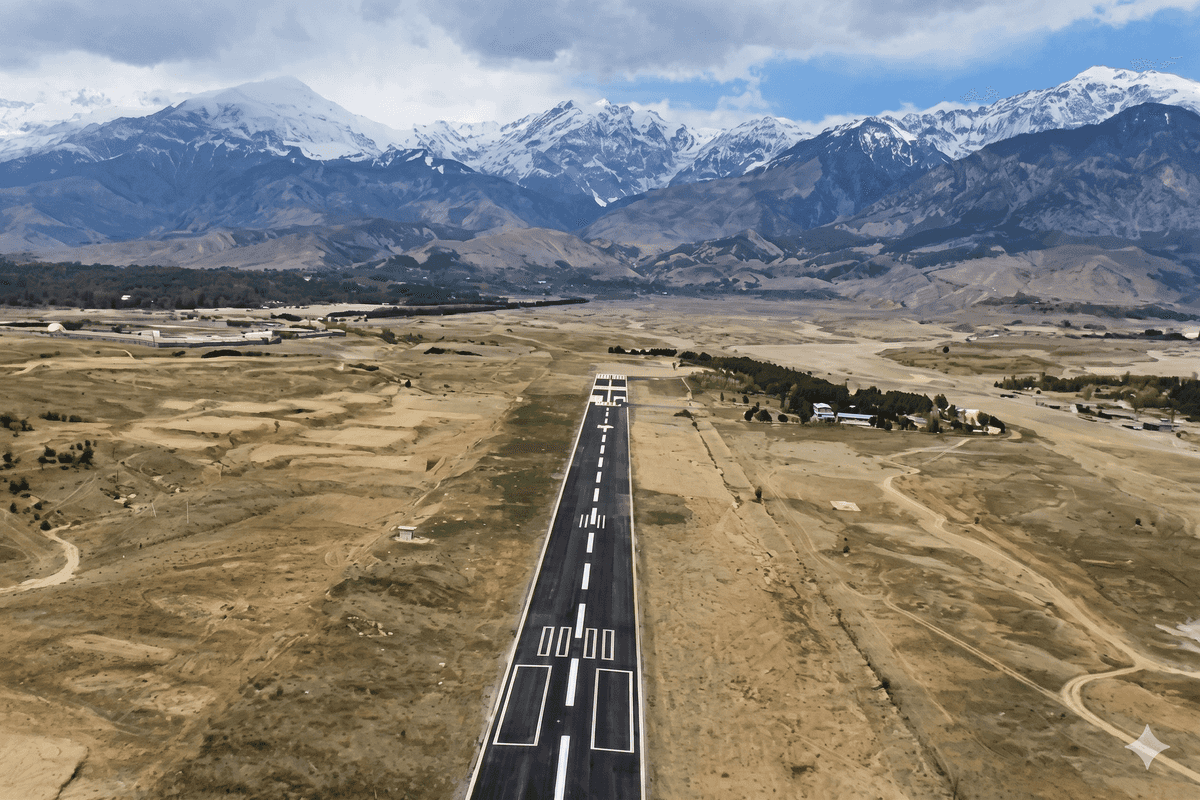
Parachinar Airport's reopening restores air access to a district cut off by prolonged road closures and sectarian violence.
Screenshot
After nearly two decades of inactivity, Parachinar Airport in Khyber Pakhtunkhwa's Kurram district has been restored to working condition.
Pakistan Army Aviation conducted trial operations, completing six successful takeoffs and landings. The military's media wing, ISPR, confirmed the facility now meets professional benchmarks and rigorous safety standards.
What does the reopening of Parachinar Airport mean for the region?
Parachinar Airport's reopening restores air access to a district cut off by prolonged road closures and sectarian violence.
The 50-minute flight to Peshawar replaces a six-to-eight-hour road journey on unpaved routes. An eight-member committee, formed on Ministry of Defense directives, is now overseeing the airport's full revival alongside a joint PAA and PIA assessment team.
How did residents respond to the airport's restoration?
Residents of Parachinar welcomed the development and expressed hope that commercial flights would resume soon. Musarat Hussain, a tribal elder from Parachinar, told Nukta that restoring flights had long been a public demand, particularly after sectarian violence erupted again in 2024.
He added that although roads had reopened, access remained limited to specified hours on a temporary basis.
Ali Jawad, chairman of Civil Society Kurram, said the restoration raised hopes for improved access and lasting peace. He said around 500 patients, including children, had died due to the absence of air services since the 2024 violence.
Mehmood Ali Turi, a lawyer who filed a petition seeking the restoration of flights, said the runway's condition had been cited repeatedly by authorities as the reason for delays.
"With the restoration of Parachinar Airport, air transport facilities will now be available to the region, significantly improving connectivity, enhancing emergency response capabilities, and facilitating relief operations," Turi said.
Why was Parachinar Airport closed in the first place?
PIA permanently suspended flights to Parachinar in 2002, citing escalating security risks and the high cost of operating in a conflict-prone zone.
During severe road blockades between 2008 and 2011, private jets and small aircraft occasionally served as a lifeline to the region, but those services were not sustained. The airport had no scheduled commercial operations for nearly two decades until this restoration.
The airport was originally built in the early 1980s for strategic purposes, following the Soviet invasion of Afghanistan in 1979. Pakistan developed the airfield to support military aircraft operations and strengthen surveillance of the border region. It was opened for civilian use in 1989, when PIA launched scheduled passenger services.
What triggered the crisis that made the airport's revival urgent?
Tensions in Kurram district escalated sharply after a deadly attack on a convoy traveling from Parachinar to Peshawar on November 21, 2024, killed 43 people.
Retaliatory violence left more than 150 people dead and over 200 injured, severing key road links and deepening the regional crisis. The violence effectively besieged residents, cutting off reliable access to medical care and essential supplies.
The Kurram Grand Jirga signed a 14-point peace agreement in January 2025, which included the removal of weapons and bunkers and the reopening of main transport routes.
Those routes later reopened on a restricted, temporary basis. Lasting peace in Kurram remains uncertain, making the airport's revival a critical alternative for the region.





Comments
See what people are discussing