

Imran's lawyer says £190m case caused no loss as recovered funds top Rs200m at SBP
Lawyer Salman Safdar told the IHC the £190m case caused no loss to Pakistan's exchequer and that funds nearly doubled, as appeals by Imran and Bushra resumed

News Desk
The News Desk provides timely and factual coverage of national and international events, with an emphasis on accuracy and clarity.

Aamir Abbasi
Editor, Islamabad
Aamir; a journalist with 15 years of experience, working in Newspaper, TV and Digital Media. Worked in Field, covered Big Legal Constitutional and Political Events in Pakistan since 2009 with Pakistan’s Top Media Organizations. Graduate of Quaid I Azam University Islamabad.
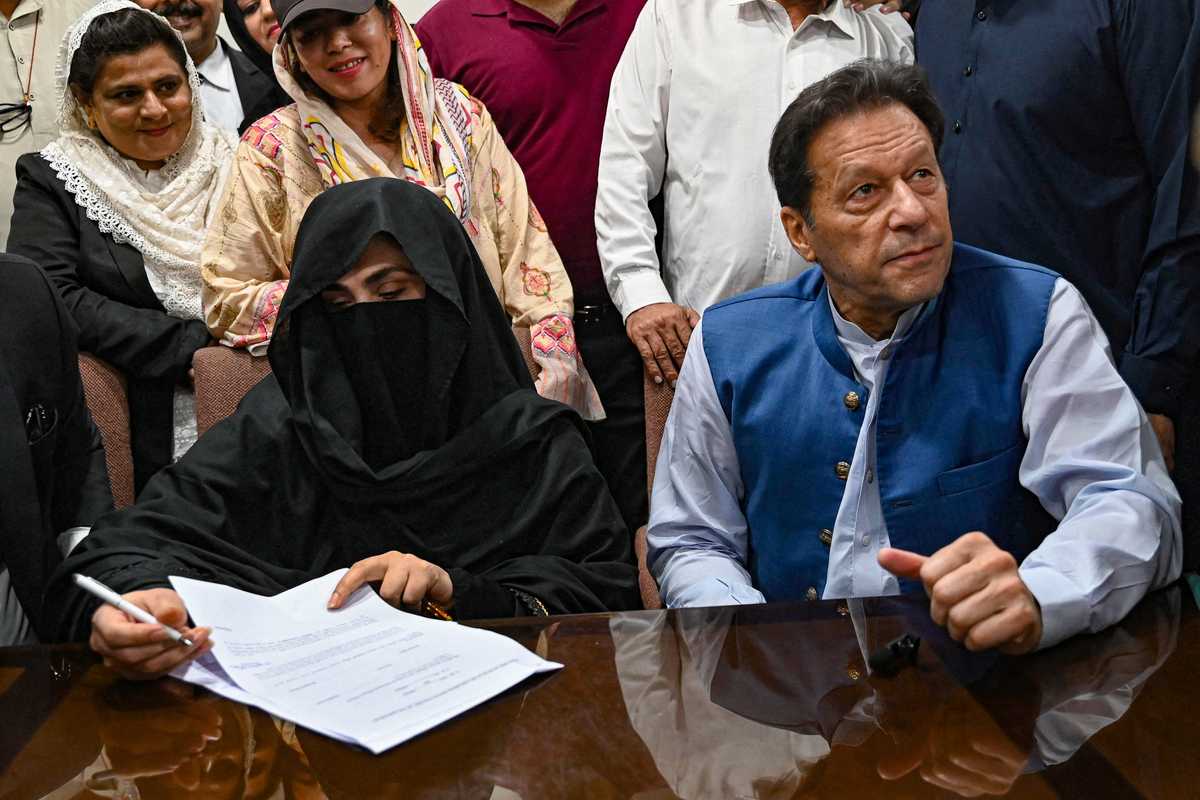
Barrister Salman Safdar, lawyer for former prime minister Imran Khan and his wife Bushra Bibi, told the Islamabad High Court on Wednesday that the £190 million case caused no loss to the exchequer. He said the recovered funds grew over four years and now exceed Rs200 million at the State Bank of Pakistan (SBP).
He was arguing the couple's appeals against their convictions.
Why does the lawyer say the £190m case caused no loss to Pakistan?
Safdar argued that the funds had stayed within the banking system and nearly doubled through investments. He said the case itself had burdened taxpayers through the cost of pursuing it. Outside court, he said the money, held for four years in the Supreme Court registrar's account, now stands at more than Rs200 million at the SBP.
Explaining how the amount increased, Safdar said the money remained in the account of the Supreme Court registrar for four years, during which it accumulated substantial profits. He said the funds, which he noted were being described as illegal money, had since been transferred to the State Bank of Pakistan.
"In the State Bank of Pakistan, not Rs171 million, not Rs191 million, much more money than that, more than Rs200 million," he said, adding that the defense would explain the increase when it presented the relevant testimony.
In court, he also challenged the role of the Assets Recovery Unit. Chief Justice Sardar Muhammad Sarfraz Dogar observed that the unit was an independent entity. Safdar replied that it included officials from the National Accountability Bureau (NAB), the Federal Investigation Agency and the State Bank of Pakistan.
"If these officials were unaware of any wrongdoing, how could Imran Khan have known about it?" the lawyer questioned.
After the hearing, Safdar, a Pakistan Tehreek-e-Insaf (PTI) leader as well as a lawyer, spoke to reporters outside the court and gave more detail on the funds. He said the money had grown substantially through profit, that the evidence supported this, and that the defence would show it when it reads the testimony.
He also addressed the origin of the money. The Islamabad High Court had been told, he said, that "the money of Malik Riaz Sahib that came from there to Pakistan" had not been shown to be unlawful. In his view, based on the government's own evidence, "the government failed miserably to prove that it was proceeds of crime, or in simple words, that it was dirty money."
He said the government could not prove the money was illegal at all. In that case, he argued, "whoever that money belongs to can use that money however they wish," including sending it to any account. He described this as his first point.
He added that the Al-Qadir Trust's welfare work remains in place, with no financial irregularity within the trust, "not a penny". Given that, he asked, what the case was about. He argued that NAB should not have launched it in haste when the main accused in its charge were neither available nor arrested, no loss to the exchequer had been shown, and nothing suggested the project was a sham.
Safdar said the real loss to the exchequer came from NAB's decision to prosecute. In his view, spending government money on a baseless case is itself a loss.
Was the £190m case appeal hearing live-streamed?
No. Before turning to the merits, Safdar had asked for the proceedings to be live-streamed. He argued that public access to court hearings was an established practice in Pakistan and other countries. He said the aim was transparency in a case of significant public interest, and that he wanted an online stream rather than a broadcast on state-run Pakistan Television.
He also pointed out that the original trial had been held behind closed doors at Adiala jail. Live coverage of the appeals, he said, would allow greater public scrutiny.
Chief Justice Dogar observed that the hearing was already open to the public and that the courtroom was crowded. He said the rules governing live streaming were yet to be finalised, so the application could not be allowed at this stage. He asked the defence to concentrate on the application and the relevant legal questions, saying arguments about the May 9 events and other general issues had no bearing on the matter before the bench.
When Safdar referred to Imran's age of 74 and his imprisonment, the chief justice again urged him to focus on legal submissions rather than the general circumstances surrounding the appellant.
Outside court, Safdar thanked the bench for hearing the request, saying it came after the defence repeatedly approached the court. He said the case of a 74-year-old man and his wife was being placed before the public. Where public money is involved, he said, citizens have a right to know the facts and proceedings. He added that live streaming was consistent with the freedom of expression guaranteed under Article 19 of the Constitution.
"Open court proceedings and live streaming are necessary to restore public confidence in the judicial system," Safdar said. He said the defence's application remains pending before the chief justice. The defence stepped back, he said, on the judge's assurance that the final arguments would be live-streamed on the IHC website. In Pakistan and elsewhere, he added, cases of public importance are shown to viewers at home on television or phones.
What are Imran Khan and Bushra Bibi appealing against?
The couple is challenging convictions handed down by an accountability court in Islamabad on January 17, 2025, in the case also known as the Al-Qadir Trust case. Imran was sentenced to 14 years in prison, while Bushra received a seven-year term.
Safdar described the verdict as an "unsafe decision". He claimed the public already had an idea of the outcome before it was announced. He also said national and international media had expressed serious concern about Imran Khan's health.
The arguments were presented before a division bench of Chief Justice Dogar and Justice Muhammad Asif, which resumed proceedings on the appeals. Safdar said the defence was ready to begin reading the evidence and the reference in connection with the appeal.
The Islamabad High Court adjourned the hearing for one week. Safdar said the matter is now sub judice, and he expected the evidence to be considered. He urged NAB to seek withdrawal of the case at the next hearing, saying there would be no room left for it to proceed by then.
Why does the lawyer say the £190m case caused no loss to Pakistan?
Safdar argued that the funds involved had remained within the banking system and that their value had nearly doubled through investments. He said the case had also placed an extra burden on taxpayers because of the costs of pursuing it, questioning the financial basis of the prosecution.
Turning to the role of the Assets Recovery Unit, Chief Justice Sardar Muhammad Sarfraz Dogar observed that it was an independent entity. Safdar responded that the unit included officials from the National Accountability Bureau, the Federal Investigation Agency and the State Bank of Pakistan.
"If these officials were unaware of any wrongdoing, how could Imran Khan have known about it?" the lawyer questioned.
Was the £190m case appeal hearing live-streamed?
Before addressing the merits of the appeals, Safdar asked for the proceedings to be live-streamed. He argued that public access to court hearings was an established practice in Pakistan and other countries. He said the aim was transparency in a case of significant public interest, and that he was seeking an online stream rather than a broadcast on state-run Pakistan Television.
Safdar also pointed out that the original trial had been held behind closed doors at Adiala jail. Live coverage of the appeals, he said, would allow greater public scrutiny.
Chief Justice Dogar observed that the hearing was already open to the public and that the courtroom was crowded. He asked the defence to concentrate on the application and the relevant legal questions, saying arguments about the May 9 events and other general issues had no bearing on the matter before the bench.
When Safdar referred to Imran's age of 74 and his imprisonment, the chief justice again urged him to focus on legal submissions rather than the general circumstances surrounding the appellant.
What are Imran Khan and Bushra Bibi appealing against?
The couple is challenging convictions handed down by an accountability court in Islamabad on January 17, 2025, in the case also known as the Al-Qadir Trust case. Imran was sentenced to 14 years in prison, while Bushra received a seven-year term.
The arguments were presented before a division bench of Chief Justice Dogar and Justice Muhammad Asif. The bench resumed proceedings on the appeals against the sentences.




Comments
See what people are discussing