

ADB sees Pakistan growth picking up to 4.5% by FY27
Recovery gains pace on reforms, though inflation and global risks loom

Haris Zamir
Business Editor
Experience of almost 33 years where started the journey of financial journalism from Business Recorder in 1992. From 2006 onwards attached with Television Media worked at Sun Tv, Dawn Tv, Geo Tv and Dunya Tv. During the period also worked as a stringer for Bloomberg for seven years and Dow Jones for five years. Also wrote articles for several highly acclaimed periodicals like the Newsline, Pakistan Gulf Economist and Money Matters (The News publications)
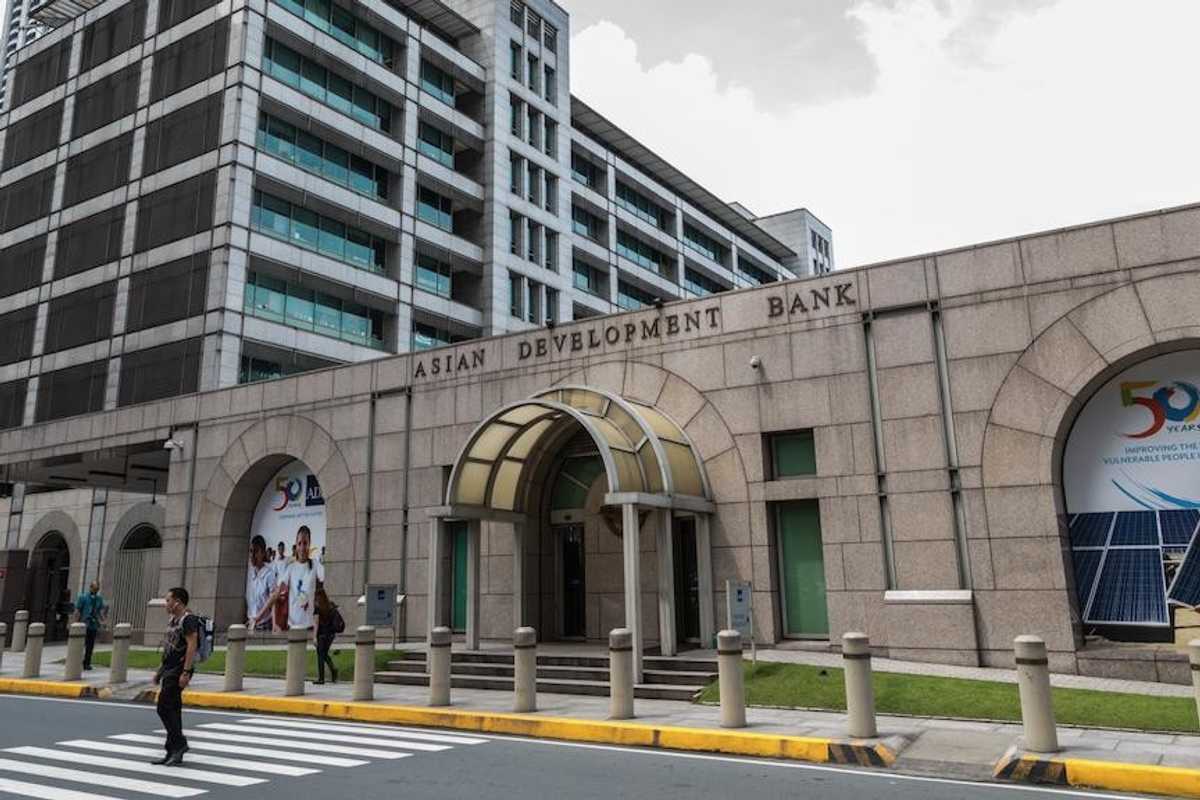
Pakistan’s economy recovered as growth strengthened and inflation declined in fiscal year 2025, supported by tight macroeconomic policies and progress in economic reform, the Asian Development Bank (ADB) said in a report.
According to the Asian Development Outlook (ADO) April 2026, ADB’s annual flagship economic publication, Pakistan is expected to sustain its economic performance in the medium term, with real gross domestic product (GDP) growth forecast at 3.5% in FY2026 and 4.5% in FY2027, from 3.1% in FY2025, as manufacturing recovers and investment increases.
“Pakistan’s economy has stabilized and begun to show stronger momentum, supported by progress in implementing key economic reforms amid a challenging global environment,” said ADB Country Director for Pakistan Emma Fan. “Growth is expected to continue in 2026 and 2027, but downside risks are significant. Sustained reform efforts are critical to preserve the growth momentum and bolster fiscal and external buffers against global shocks.”
Average inflation is projected to rise to 6.4% in FY2026 and 6.5% in FY2027 due to surging oil prices and disrupted trade routes amid the Middle East conflict, as oil and gas constitute a large share of Pakistan’s imports. The central bank is expected to ease monetary policy cautiously to stabilize inflation within its medium-term target range of 5-7%.
A prolonged Middle East conflict could weigh significantly on the economic outlook by slowing growth through higher energy and fertilizer costs, weakening agricultural and industrial output, reducing remittances, and widening the current account deficit.
Adherence to the economic adjustment program is therefore critical to strengthening resilience and enabling sustainable and inclusive growth.
In FY2026, growth will be supported by a rebound in private-sector investment, driven by the recent progress on reform measures and a stable foreign exchange market. The effective implementation of the reform program is expected to foster a more stable macroeconomic environment and gradually remove structural barriers to growth.
Economic activity in both industry and services will benefit from monetary easing. Construction activity will be backed by fiscal incentives introduced in the FY2026 budget, alongside post‑flood reconstruction efforts.
Despite recent stabilization and recovery, Pakistan’s economic outlook faces significant downside risks from global economic uncertainty, leading to elevated inflationary, fiscal, and external account pressures. Addressing these challenges requires prudent macroeconomic policies and steadfast implementation of structural reforms, according to the report.



Comments
See what people are discussing