

August hottest month ever recorded globally, EU monitor says
August was the hottest month ever recorded globally, the EU's Copernicus service says, as record ocean heat capped western Europe's hottest summer

News Desk
The News Desk provides timely and factual coverage of national and international events, with an emphasis on accuracy and clarity.
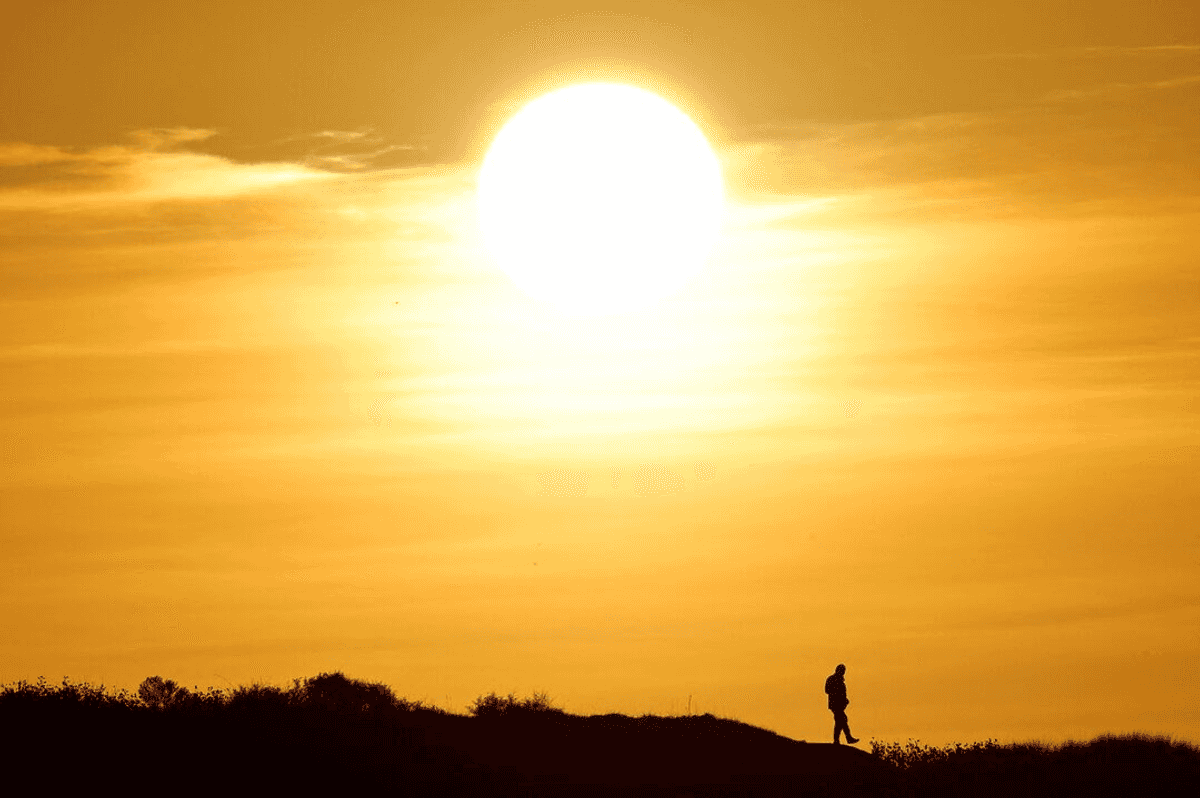
A man enjoys the sunset on a warm and sunny autumn day on the beach of Calais, France, October 30, 2022.
Reuters
The EU's climate monitor said Thursday that August was the hottest month ever recorded globally, with ocean temperatures reaching unprecedented highs as western Europe capped its warmest summer.
The Copernicus assessment prompted a UN warning that the planet will keep entering uncharted territory until humanity stops burning fossil fuels.
Why was August the hottest month ever recorded?
Global average air temperatures in August reached 16.96C, just 0.01C above the previous record set in July 2023. Copernicus tracks temperatures back to 1940, but ice cores, tree rings and coral records let scientists compare today's climate against roughly the last 100,000 years.
Copernicus said the narrow gap between the two months meant it considered them joint-highest on record. "Humans haven't seen temperatures as hot as today for, arguably, at least the last 100,000 years," Samantha Burgess from the European Centre for Medium-Range Weather Forecasts, which oversees Copernicus, told AFP.
How much has human activity warmed the planet?
Scientists say human activity, primarily the burning of coal, oil and gas, has warmed the planet by roughly 1.4C since pre-industrial times. This has increased both the severity and the likelihood of extreme weather events worldwide.
Heat-trapping greenhouse gas emissions rose to new highs in 2025 despite that warning. "The evidence is irrefutable: this is the spiraling price of humanity's fossil fuel addiction, and the global climate crisis it is fueling," UN climate chief Simon Stiell said of the Copernicus report.
What role is El Nino playing in the record heat?
Global sea surface temperatures set a new daily high in August and tied equal-hottest for the month, extending a three-month streak of record ocean warmth. More than 90 percent of the excess heat trapped by greenhouse gases has been absorbed by the oceans, sparing land but harming marine life, reefs and coastal communities.
Records fell across the Atlantic, the Mediterranean and the tropical Pacific, where the strongest El Nino of the modern era is gathering strength. El Nino episodes bring unusually warm Pacific waters and raise the odds of extreme weather elsewhere, from floods in Peru to droughts in Africa and wildfires in Australia.
The warmer phase of a natural climate cycle, El Nino typically delivers a temporary spike on top of long-term background warming. Scientists expect records to keep falling as this "super" El Nino nears peak intensity around December, with 2027, and possibly even 2026, on track to become the hottest years ever observed. "Climate change makes every El Nino hotter, and until we stop burning coal, oil, and gas these record-shattering months will simply keep on coming," said Friederike Otto, a climate scientist at Imperial College London.
Was Europe's summer the hottest on record?
Copernicus said August marked the end of western Europe's warmest summer, surpassing the long-standing record set in 2003. The June-to-August season brought severe, back-to-back heatwaves that shut schools, dried up rivers and primed the land for destructive wildfires.
Between mid-July and mid-August, Europe's EuroMomo monitoring platform estimated more than 32,000 excess deaths across the continent. Scientists from the World Weather Attribution network concluded that a particularly strong June heatwave would have been "virtually impossible" without the influence of climate change.
How hot was it elsewhere in the world?
Extraordinary heat was not confined to Europe. On Wednesday, the National Oceanic and Atmospheric Administration said the contiguous United States endured its hottest summer on record, while regions home to around 900 million people lived through the hottest July ever observed, according to AFP's analysis of Copernicus data.
"We've had an exceptional summer, not only in Europe, but in other parts of the world where records that have existed for close to a century have fallen," said Burgess, an ocean scientist and strategic lead at ECMWF. She added that the climate would "continue to get more extreme unless we turn off the tap to global emissions."





Comments
See what people are discussing