

Bangladesh fights world's worst measles outbreak as vaccination gaps fuel spread
Bangladesh fights the world's worst measles outbreak as vaccination gaps from political upheaval fuel the spread, with nearly 1,000 dead

News Desk
The News Desk provides timely and factual coverage of national and international events, with an emphasis on accuracy and clarity.
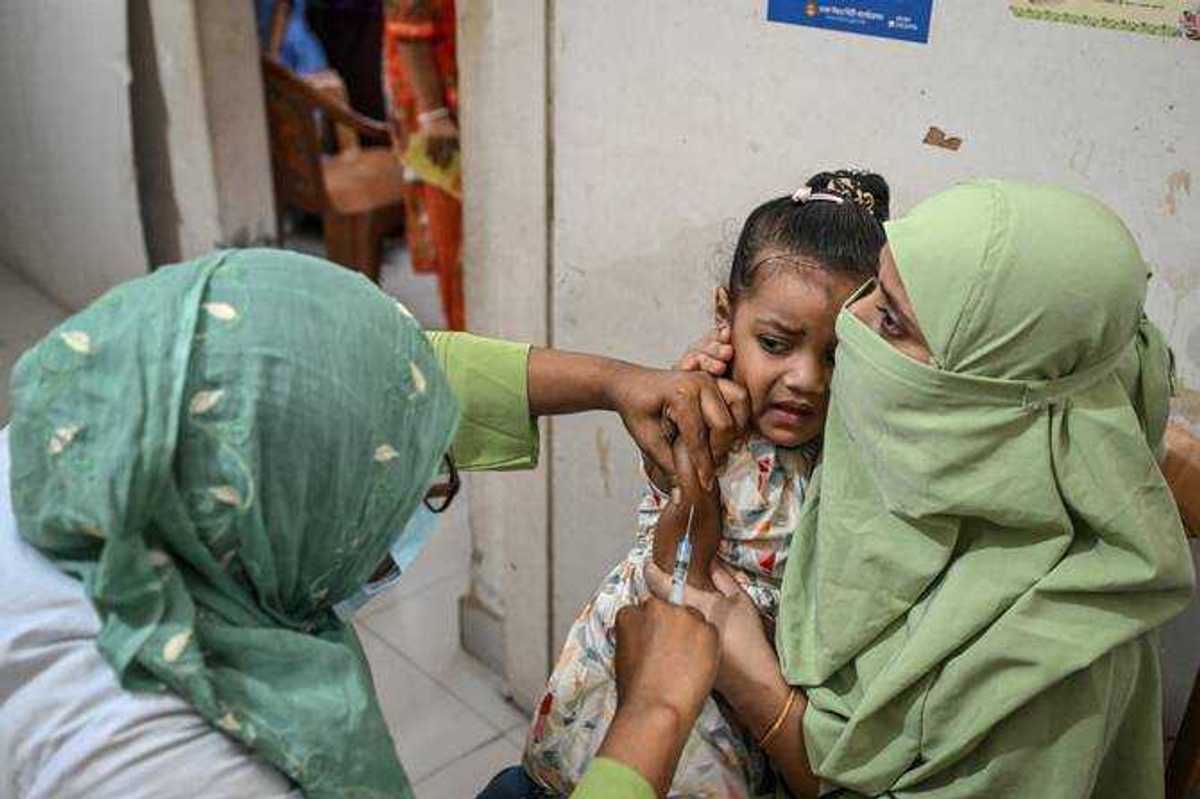
Bangladesh is fighting the world's worst measles outbreak on record, with 999 suspected and confirmed deaths reported since March.
Vaccination gaps from political upheaval in 2024 and 2025 have fueled the disease's spread, leaving hospitals struggling with overcrowding and shortages as sick children continue pouring in.
Why is Bangladesh having a measles outbreak?
Vaccination gaps caused by political upheaval in 2024 and 2025 left many children unprotected, particularly infants under nine months who are too young for routine immunisation. Procurement changes, a postponed vaccination programme and a cancelled measles-rubella campaign under the interim government disrupted vaccine supply. The resulting immunity gaps allowed the highly infectious disease to spread rapidly across age groups.
The outbreak has persisted despite a nationwide emergency vaccination campaign launched in April. It follows disruption to routine immunisation during the political turmoil that followed a deadly uprising against then prime minister Sheikh Hasina. Bangladesh is currently experiencing the biggest measles outbreak in the world, according to a list on the United States Centers for Disease Control and Prevention website.
How many people have died in Bangladesh's measles outbreak?
Since the outbreak emerged in March, Bangladesh has recorded more than 166,000 suspected measles cases, including 19,835 laboratory-confirmed infections, according to Health Ministry data. The outbreak has been linked to 999 deaths, including 100 confirmed measles fatalities. More than 146,000 suspected patients have been hospitalised since the outbreak began.
Health officials and experts said missed vaccinations and vaccine supply problems, both consequences of the political upheaval, left children vulnerable to infection. Under-fives accounted for about 80% of cases during the early stages of the disease's spread.
What caused the vaccination gaps in Bangladesh?
Experts blamed the outbreak on weak programme oversight, insufficient monitoring and procurement policy changes under the interim government that replaced Hasina. These disruptions affected vaccine availability and left many children unprotected against the disease. Health Minister Sardar Md. Sakhawat Husain told parliament on Monday that procurement changes triggered a vaccine shortage.
The 2024 postponement of a vaccination programme and the cancellation of a nationwide measles-rubella campaign the following year left more children vulnerable to infection, Husain said. The World Health Organization, UNICEF and other health agencies have also pointed to the disruption to immunisation schedules as a driver of the outbreak.
How did Bangladesh nearly eliminate measles before this outbreak?
Bangladesh maintained high measles vaccination coverage for much of the past decade, with rates staying at or above the 95% level recommended by the WHO for most of the period. The only major dip came during the COVID-19 pandemic. "Bangladesh missed its measles elimination target because of vaccination gaps in 2024 and 2025," said Professor Mahmudur Rahman, an epidemiologist and former director of the Institute of Epidemiology, Disease Control and Research.
"To my knowledge, Bangladesh has never witnessed so many children dying from measles. Nor have we ever seen such a high number of patients in a single year. This is a truly terrible situation, and the saddest part is that the victims are children," Rahman said. He said closing immunity gaps, increasing vaccination coverage and stepping up public awareness were immediate priorities to contain the outbreak.
Is measles vaccine available in Bangladesh?
Bangladesh's emergency measles-rubella vaccination campaign targeted about 18 million children aged six months to under five years. More than 19.7 million children have since been vaccinated, according to health ministry data. Experts said stronger routine immunisation and catch-up campaigns were still needed to close remaining gaps.
But vaccine access has not been consistent for every family. Nasima Begum, 35, a house help, said her son missed his vaccination because he was sick, and when the family returned to the vaccination centre later, they were told the vaccine was unavailable. Her four older children had received their routine vaccinations, unlike her youngest son.
How are Bangladesh hospitals coping with the measles outbreak?
Hospitals are struggling to cope with the surge in measles cases at a time when growing numbers of dengue patients are putting additional pressure on an already overstretched healthcare system. More than 45,000 people have been admitted to hospital for dengue this year, according to health ministry data. On Tuesday, dengue deaths rose to nine, while admissions climbed to 1,571, both daily highs for the year.
"Patients are pouring in, and it is very difficult to accommodate everyone," said Dr. Nanda Dulal Saha, acting director of the state-run Shaheed Suhrawardy Medical College Hospital in Dhaka. He said the hospital currently had 60 beds for measles patients, but many were being treated on the floor, and a shortage of paediatric saline was complicating the situation. The hospital, designed for 1,350 patients, is currently caring for more than 2,350, he said.
How has the outbreak affected Bangladeshi families?
For families, the outbreak has meant weeks of uncertainty, repeated hospital visits and mounting costs. Begum's 13-month-old son contracted measles nearly two months ago. After failing to secure a bed at four hospitals, he was finally admitted and discharged 10 days later, but continues to suffer recurring fever and has yet to fully recover.
Mohammad Ripon, a factory worker, said his eight-month-old daughter developed a rash and other measles-like symptoms days after being discharged from hospital. The family sought treatment at multiple facilities before turning to a dedicated measles hospital for answers. "We are just hopping around from one hospital to another," Ripon said. "We are not getting the correct information at all."
The twin health crises of measles and mosquito-borne dengue, a debilitating illness linked to warmer temperatures and urbanisation, underscore the challenge facing Bangladesh's health system in maintaining routine services while responding to preventable infectious diseases. Measles is one of the world's most contagious diseases and typically causes fever and a tell-tale rash, but it can be prevented with two doses of vaccine.
"We are poor and cannot afford treatment. I only pray that my son recovers," Begum said. "I don't want any other mother to see her child suffer or die from this disease."





Comments
See what people are discussing